

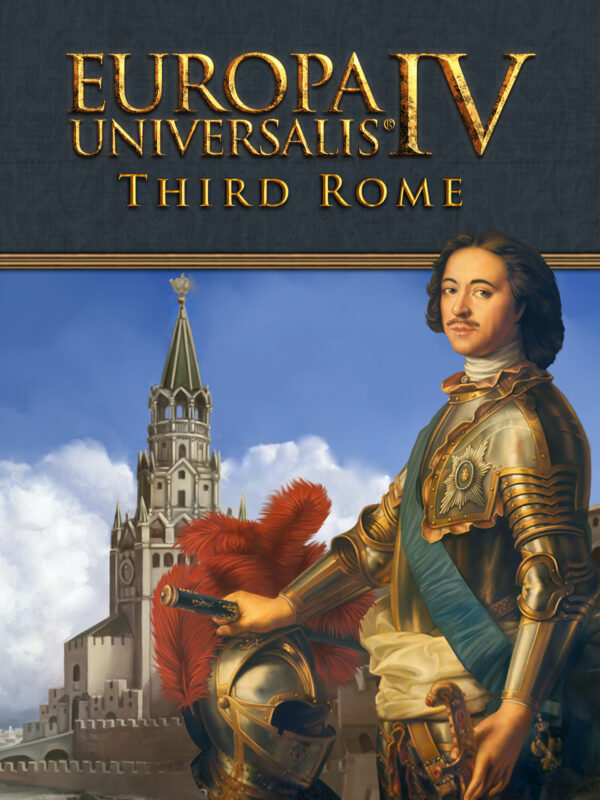
Europa Universalis IV – Third Rome DLC PC Steam CD Key
1 in stock
copies left1 in stock
Sold by: OMG Gamer






Delivery24/7
supportVerified
Sellers

Product Description
Europa Universalis IV – Third Rome DLC PC Steam CD Key
Quck Intro
Europa Universalis IV – Third Rome DLC expands Paradox Interactive’s grand strategy experience by focusing on the rise of Russia and the Orthodox world during the early modern era. It adds new depth to governing the Russian principalities, allowing players to shape a growing Tsardom through unique government reforms, religious mechanics, and regional missions. The expansion introduces systems like Patriarch Authority, Streltsy regiments, and special Russian government interactions that influence stability and expansion across vast territories. Players interested in historical strategy games will find a more detailed portrayal of Eastern Europe’s political and religious landscape, where decisions around faith, expansion, and internal control shape long-term outcomes. Designed for those who enjoy deep nation-building and complex strategic planning, this DLC enriches Europa Universalis IV with a focused regional experience that changes how Russia evolves across centuries.
About
Europa Universalis IV – Third Rome is a grand strategy expansion for Europa Universalis IV, developed by Paradox Interactive, that focuses on the rise and consolidation of Russia during the early modern period. It expands the base game’s deep political simulation by adding new mechanics centered around Orthodox Christianity and the formation of a powerful Tsardom. Players step into the role of ambitious rulers guiding fragmented principalities into a unified empire, balancing diplomacy, warfare, and internal stability across vast territories. The core gameplay loop revolves around expansion, state management, and strategic decision-making, where every choice influences long-term growth, religious authority, and regional control. What makes Third Rome stand out in the grand strategy genre is its focused attention on Russian identity, Orthodox mechanics, and historically grounded nation-building systems. This DLC appeals most to players who enjoy deep strategic planning, historical simulation, and long-form campaign experiences that reward patience and careful thinking over fast action. Whether guiding Moscow’s rise or defending against powerful neighbors, the experience is about shaping history through layered systems and unpredictable global dynamics. For strategy enthusiasts, it offers a thoughtful and immersive way to engage with early modern geopolitics, where every decision carries lasting consequences. It remains a compelling addition for players who want to explore one of Europe’s most transformative eras through a deeply interactive sandbox experience. Each campaign unfolds differently, driven by alliances, conflicts, and the shifting balance of power across the continent. Third Rome ultimately enhances Europa Universalis IV by giving Russia a distinct strategic identity within the wider global map. Altogether, it creates a slower, thoughtful style of play that rewards long-term vision, careful diplomacy, and the ability to adapt as history shifts around you, making every campaign feel personal, unpredictable, and deeply strategic from start to finish each time you play again.
Key Features
Europa Universalis IV – Third Rome DLC builds on the grand strategy foundation of EU4 by focusing on the rise of Russia and the Orthodox world. Players experience a nation-building simulation where political expansion, religion, and internal control work together to shape a growing empire across centuries.
Core gameplay revolves around managing provinces, expanding territory, and balancing diplomatic relations while maintaining stability. Every decision affects long-term growth, from taxation and unrest to alliances and wars, creating a slow, strategic rhythm typical of historical grand strategy games.
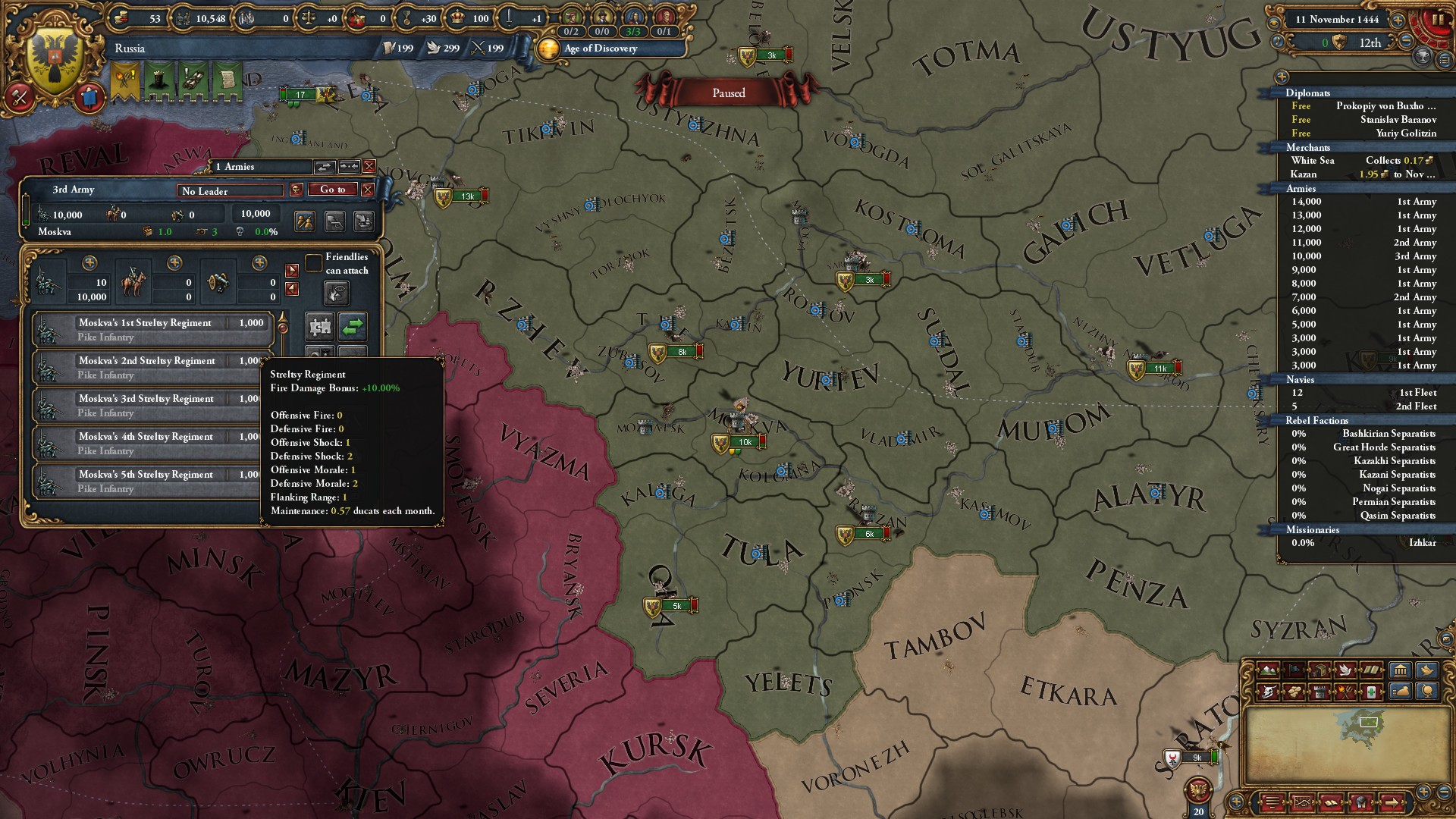
A defining feature of Third Rome is its focus on Orthodox mechanics, including Patriarch Authority, which influences stability and national strength. Players can also deploy Streltsy regiments, giving Russia a unique military identity that changes how early wars and expansion are approached in Eastern Europe.
The expansion introduces new government reforms for Russian states, allowing greater control over succession, administration, and centralization. These systems help players shape a more stable and powerful Tsardom, gradually transforming fragmented territories into a unified political structure with long-term strategic depth.
Players interact with mission trees that guide expansion goals while still leaving freedom to adapt strategies based on regional threats and opportunities. This creates replayability, as each campaign can evolve differently depending on alliances, rivalries, and timing of conquests across the map.
Designed for players who enjoy deep strategy, political simulation, and long-form campaigns, Third Rome rewards careful planning over fast decisions. It appeals to those who like historical sandbox gameplay where every choice has lasting consequences on power, borders, and influence.
Overall, the DLC strengthens Europa Universalis IV by adding a focused regional experience that deepens Russia’s role in global history. It blends strategic freedom with structured progression, giving players a detailed, replayable path through one of the most complex eras of early modern Europe overall experience.
Gameplay
Europa Universalis IV – Third Rome DLC expands the grand strategy gameplay of EU4 by focusing on the rise of Russia and Orthodox nations. Players control developing states during the early modern period, guiding them through diplomacy, warfare, internal management, and territorial expansion. The experience is centered on decision-making at a national scale, where every choice influences stability, economy, and long-term survival in a changing geopolitical world.
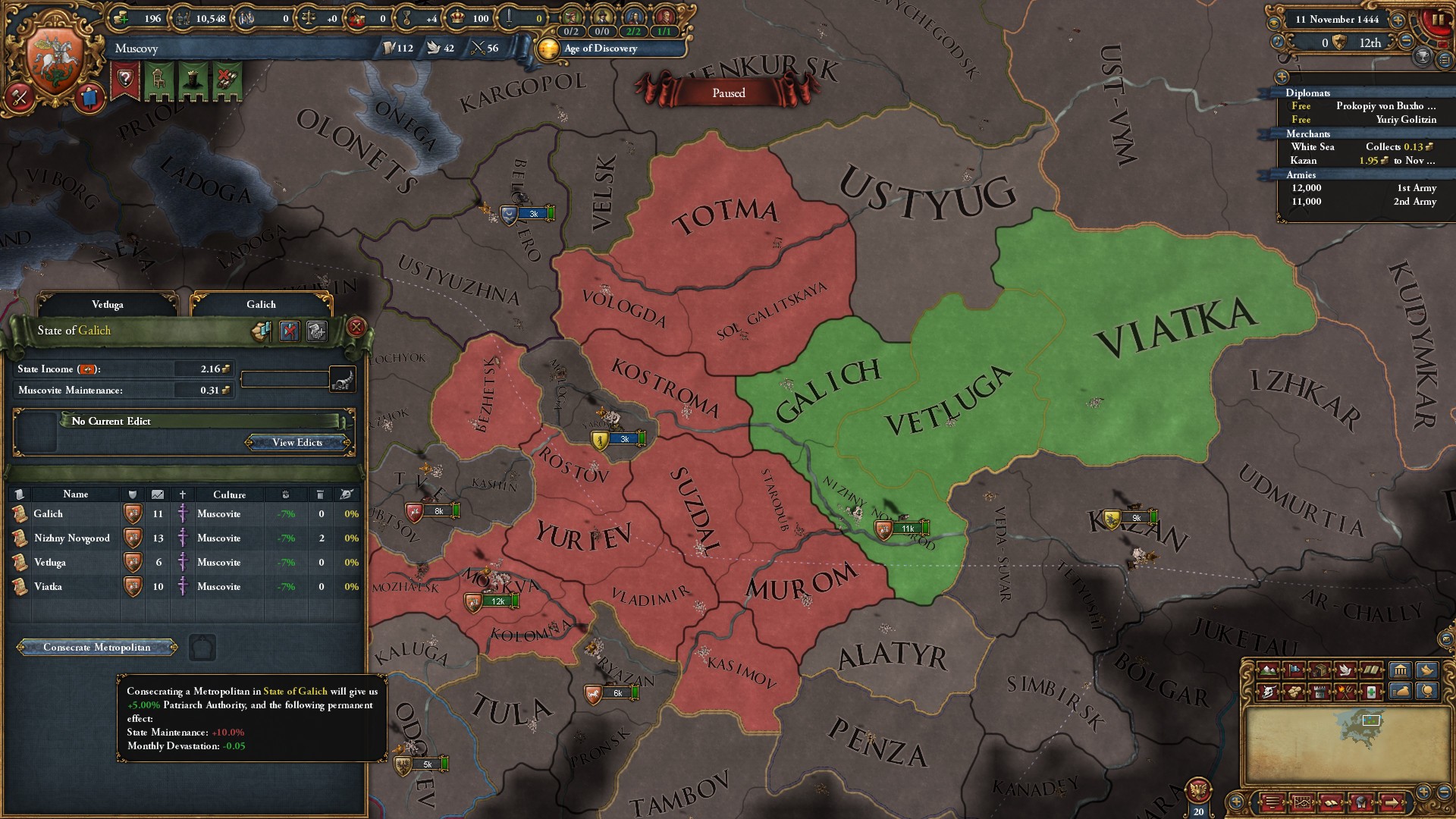
At its core, the gameplay loop revolves around expanding territory, managing provinces, and maintaining political stability while balancing religious influence through Orthodox mechanics. Players interact with systems like Patriarch Authority, which affects national resilience, unrest reduction, and overall state strength. Military decisions also play a key role, with unique units such as Streltsy offering Russia-specific tactical advantages during wars and defensive campaigns.
Progression is driven by mission trees and government reforms that guide expansion paths without removing player freedom. As campaigns unfold, players adapt to shifting alliances, regional threats, and opportunities for conquest across Eastern Europe and beyond. Each run develops differently depending on strategic choices, creating strong replayability and varied outcomes across long campaigns.
While primarily a single-player grand strategy experience, Third Rome also fits seamlessly into EU4’s broader multiplayer ecosystem, where human-driven diplomacy and conflict create unpredictable political landscapes. Over time, players see their nation evolve from a fragile collection of provinces into a structured empire with stronger administration, improved military capacity, and more efficient economic systems. This gradual progression rewards long-term planning, patience, and adaptability, especially as global dynamics shift with technological advancements and regional power changes. The gameplay remains grounded in strategic simulation, offering a slow, thoughtful pace where every decision builds toward a larger historical trajectory that feels unique to each campaign. Each session feels distinct, shaped by timing, alliances, and strategic priorities across the campaign map it.
Story & World
Europa Universalis IV – Third Rome DLC is set in the early modern world of Eastern Europe and Eurasia, a period defined by shifting borders, fragile kingdoms, and the slow emergence of centralized powers from fractured medieval states. The focus of this expansion is the region that would become Russia, a land stretching across forests, rivers, and vast open plains where small principalities, nomadic tribes, and emerging kingdoms all compete for survival and influence. It is a world still shaped by the legacy of the Byzantine Empire, where faith, identity, and authority are deeply intertwined with political power.
At the center of this setting is the idea of the “Third Rome,” a historical belief that Moscow would inherit the spiritual and political legacy of fallen empires. This concept gives the region a distinct atmosphere within the broader grand strategy sandbox of Europa Universalis IV, where the collapse of old orders creates space for ambitious rulers to redefine what empire means. The player steps into this world as a guiding force behind one of the emerging Russian states, navigating a landscape where legitimacy is fragile and expansion is both opportunity and necessity.
The world feels alive through its tension between tradition and transformation. Orthodox Christianity plays a defining cultural role, shaping how societies view authority and unity, while neighboring powers such as fragmented khanates, European kingdoms, and steppe confederations create constant pressure from every direction. The environment is not just a backdrop but a living political map, where every region carries its own identity, history, and strategic importance.
What makes this setting stand out is its sense of scale and gradual change. Russia begins as a collection of competing regions rather than a unified empire, and the wider world reacts dynamically to its growth. The Baltic coastlines, the dense forests of the north, the contested steppe corridors, and the fortified cities of Eastern Europe all form a layered geopolitical stage where cultures meet, clash, and evolve over time. The mood is often uncertain, shaped by the struggle between survival and expansion in a world where power is never guaranteed to last.
The narrative tone of Third Rome is not driven by a single storyline, but by the historical momentum of a region trying to define itself. Every shift in control over cities, trade routes, and religious influence reflects a larger question of identity: what does it mean to become an empire in a world where empires are constantly rising and falling? This creates a sense of historical immersion that feels grounded rather than scripted, allowing the world to breathe and respond to change organically.
As time progresses, the setting evolves from fragmented territories into a more structured political landscape, reflecting centuries of transformation across Eurasia. This long horizon of change gives the world a unique rhythm, where early uncertainty gradually gives way to consolidation, ambition, and larger geopolitical consequences. It is this slow unfolding of history, combined with its culturally rich and politically complex environment, that makes the world of Third Rome feel both intimate in its regional focus and vast in its global impact.
Game Modes
Europa Universalis IV – Third Rome DLC is experienced through the broader structure of Europa Universalis IV, which is primarily a grand strategy sandbox rather than a traditional mode-based game. Instead of fixed “game modes,” players engage with different styles of campaigns that naturally shape how the experience unfolds over time, especially when focusing on the Russian and Orthodox regions introduced in this expansion.
The most common way to play is the single-player grand campaign, where you guide a rising Russian state through centuries of political change, territorial expansion, and internal reform. This mode is ideal for players who enjoy thoughtful pacing, long-term strategy, and experimenting with different historical outcomes. Each campaign feels distinct because the world reacts dynamically to your decisions, making every run a unique political story rather than a scripted path.
For players who prefer shared experiences, multiplayer campaigns allow multiple participants to control different nations in the same world. Here, diplomacy becomes more unpredictable, as alliances, betrayals, and coordinated wars are shaped by real human decisions instead of AI behavior. In the context of Third Rome, this can create intense regional competition over Eastern Europe and steppe territories, especially when multiple powers contest the rise of Russia.
There are also custom sandbox-style campaigns where players choose starting nations, adjust difficulty, or set specific goals to create more controlled or experimental runs. This appeals to those who want a more relaxed or challenge-focused experience, whether that means rapid expansion, defensive survival, or roleplaying a historically inspired Russian state.
Across all these approaches, the experience remains flexible and replayable, driven by systems that encourage experimentation rather than fixed progression. Whether playing solo or with others, the game continuously evolves through shifting alliances, wars, and internal reforms, keeping each campaign unpredictable. Third Rome adds depth to this structure by giving Russia-focused playthroughs a more defined identity, making every mode feel like a different interpretation of early modern history shaped directly by the player’s choices.
Visuals & Art Style
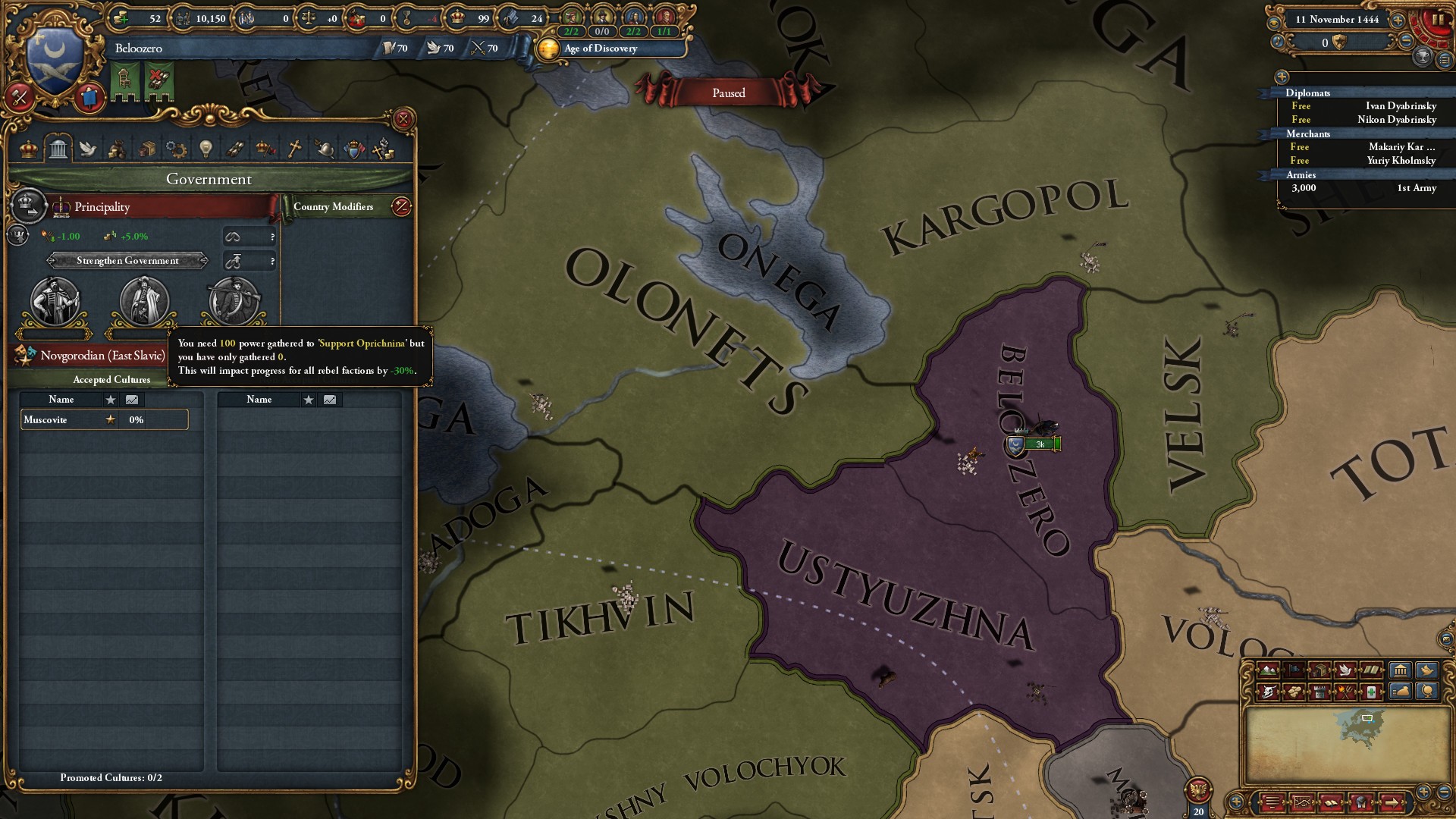
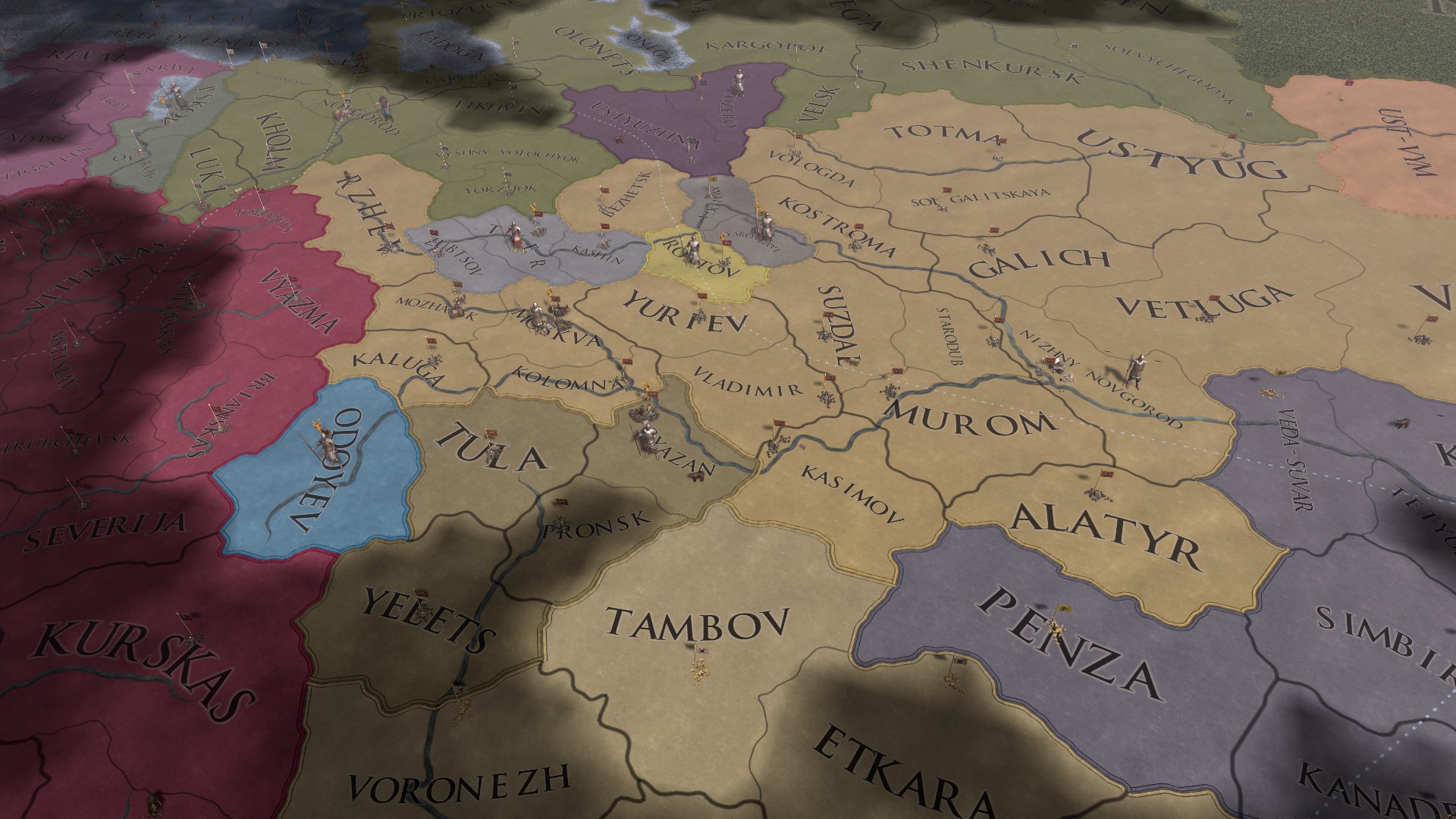
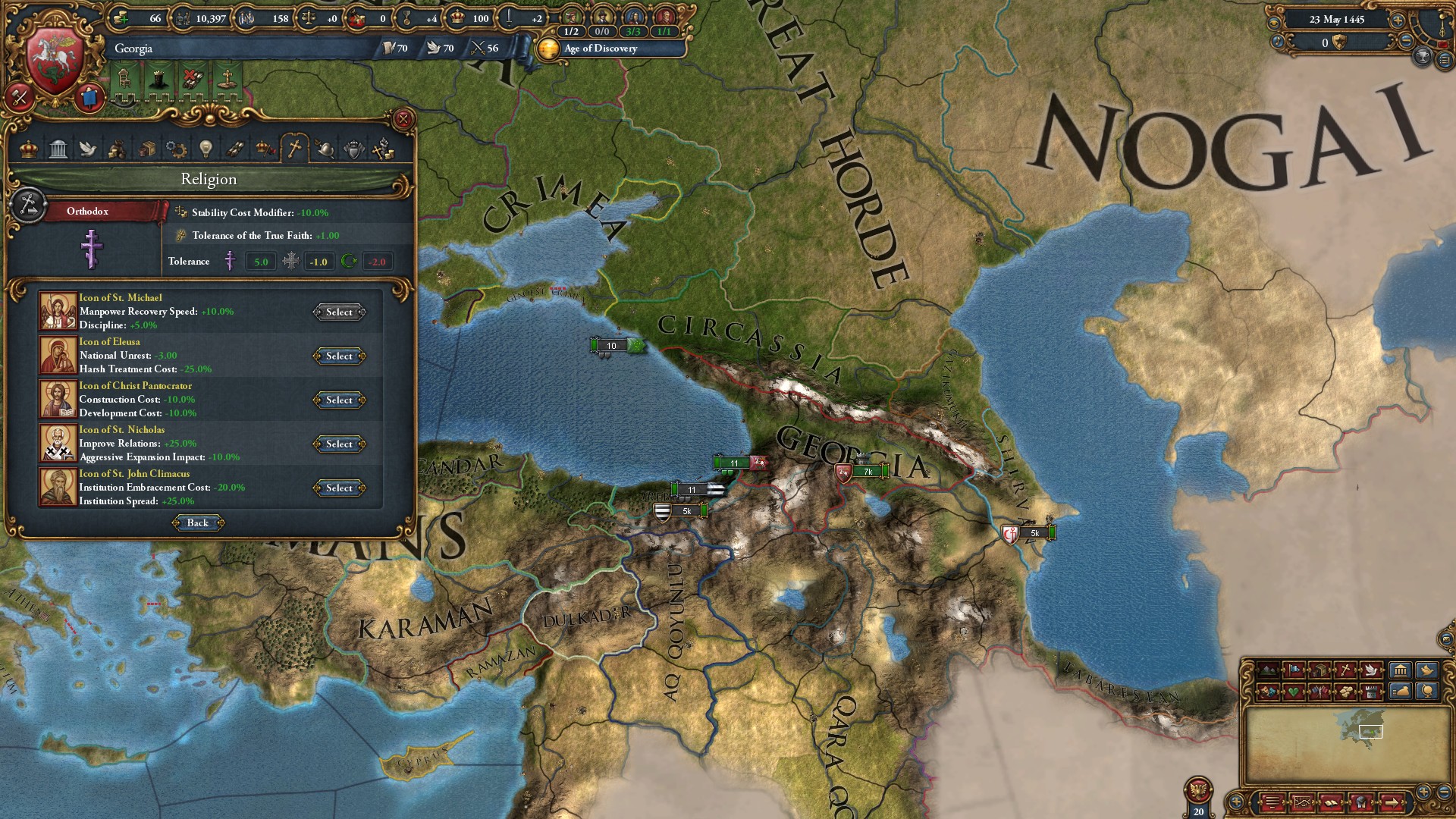
Europa Universalis IV – Third Rome DLC carries forward the distinctive visual identity of Europa Universalis IV, where the world is presented through a detailed strategic map that prioritizes clarity, readability, and historical atmosphere over cinematic realism. From the moment the campaign begins, the map becomes the main visual stage, showing a living interpretation of early modern Eastern Europe and Eurasia. Provinces are carefully illustrated with soft textures, muted color palettes, and subtle regional variations that help players immediately understand political boundaries, cultural zones, and terrain without overwhelming visual noise.
The Third Rome focus adds a stronger sense of regional identity to this map-driven presentation. Russia and its surrounding territories are visually framed through colder tones, dense forest regions, and expansive steppe landscapes that emphasize scale and isolation. Snow-covered northern provinces, river networks, and fortified city icons give the region a grounded, historical tone that reflects both its geographic vastness and political fragmentation during the era. These visual cues are not just decorative; they naturally support strategic decision-making by making borders, supply routes, and expansion paths easy to interpret at a glance.
Rather than relying on character-driven visuals or cinematic cutscenes, the game expresses its atmosphere through layered UI design, animated map transitions, and dynamic overlays that respond to wars, alliances, and religious influence. Orthodox regions, for example, are subtly distinguished through iconography and interface elements that reinforce cultural identity without disrupting readability. When conflicts erupt or borders shift, the map smoothly updates, creating a sense of a world constantly in motion.
What makes the visual style effective is its consistency with the game’s slow, thoughtful pacing. Nothing feels overly stylized or exaggerated; instead, everything is designed to communicate information clearly while still maintaining a historical mood. The result is a presentation that feels both functional and atmospheric, allowing players to focus on long-term strategy while still feeling connected to the evolving world around them.
Technical Requirements
Europa Universalis IV – Third Rome DLC is a PC-based grand strategy expansion available through Steam and the Paradox Launcher, and it runs on Windows, macOS, and Linux as part of the broader Europa Universalis IV experience. Since it is an add-on rather than a standalone title, it relies on the base game’s system requirements, making it accessible to a wide range of modern and older PCs.
On minimum settings, players can expect smooth performance on systems with a dual-core processor, 8 GB RAM, and integrated graphics, while recommended setups with a modern quad-core CPU, 16 GB RAM, and a dedicated GPU provide more stable late-game performance, especially in large campaigns with many nations active at once.
Performance in Europa Universalis IV is heavily CPU-driven due to its deep simulation of diplomacy, economy, and warfare across a global map. Early and mid-game runs are generally smooth, but as empires expand and the world becomes more complex, simulation speed can slow on lower-end systems. Fortunately, adjustable speed settings, pause controls, and optimized map rendering help maintain a responsive experience across different hardware tiers.
Controls are designed around precise mouse-and-keyboard input, with extensive hotkey support for map navigation, diplomacy, and army management. Players can fully remap controls to match their preferences, making long campaign sessions more comfortable and efficient.
While traditional controller support is not a core focus, the interface is highly customizable, with scalable UI elements, detailed tooltips, and layered information panels that improve readability. Accessibility options include adjustable text sizes, language support, and visual clarity settings that help reduce strain during long play sessions.
Overall, the game is designed to remain stable across long sessions, with performance tools and flexible settings ensuring that both low-end and high-end systems can enjoy a consistent, readable, and strategically focused experience from start to finish.
Who Is This Game For?
Europa Universalis IV – Third Rome DLC is best suited for players who enjoy slow, thoughtful strategy games where success comes from planning, patience, and long-term decision-making rather than fast action. It is designed for fans of grand strategy gameplay who like managing nations, shaping political systems, and watching how small early choices grow into large historical outcomes over time. If you enjoy games where you can step back, analyze the world map, and carefully decide your next move, this expansion fits naturally into that mindset.
Players who are especially drawn to historical simulation, political strategy, and nation-building experiences will find a lot to engage with here. Third Rome adds a focused lens on Russia and Orthodox regions, so it appeals strongly to those interested in Eastern European history or alternate historical paths. The experience rewards curiosity about how empires form, expand, and stabilize across centuries, making it a good match for players who enjoy systems-driven gameplay and evolving sandbox worlds.
It is also a strong fit for strategy players who like replayability and experimentation. Each campaign can unfold differently depending on alliances, wars, and internal reforms, which makes it appealing for those who enjoy testing new approaches over multiple playthroughs. Multiplayer strategy fans who like diplomacy and long-form competition may also appreciate how unpredictable human-driven politics can become in shared campaigns.
However, this type of game may feel overwhelming for players looking for immediate action, fast pacing, or heavily guided storytelling. The learning curve is gradual, and much of the enjoyment comes from understanding interconnected systems over time. It is less about quick rewards and more about long-term satisfaction built through gradual mastery.
For players who enjoy deep strategy experiences, historical worldbuilding, and freedom to shape their own path through complex systems, Third Rome offers a rewarding and intellectually engaging experience that continues to evolve with every session you invest in.
FAQ
What is Europa Universalis IV – Third Rome DLC?
It is an expansion for Europa Universalis IV, a grand strategy game where you guide nations through centuries of political, military, and economic development. Third Rome focuses on Russia and Orthodox regions, adding deeper systems for managing and expanding these states within the broader world map.
What kind of gameplay does it offer?
The gameplay is slow-paced and strategic, centered on managing provinces, diplomacy, warfare, and national development over long time periods. Players make decisions that shape the growth of an empire, with a strong emphasis on planning, timing, and adapting to changing political situations.
Is it single-player or multiplayer?
It supports both. Single-player campaigns offer a sandbox historical experience, while multiplayer lets you compete or cooperate with other players in shared world campaigns where diplomacy and alliances become unpredictable.
What platforms is it available on?
This DLC is available on PC through platforms like Steam and requires the base game Europa Universalis IV. It is also compatible with macOS and Linux as part of the main game ecosystem.
What are the system requirements?
It runs on a wide range of PCs since it is an expansion. Most modern systems with a dual-core processor, 8 GB RAM, and basic graphics support can run it, though larger late-game campaigns perform better on stronger CPUs.
How long does a typical campaign last?
Campaigns can span many hours depending on your goals. Since it is a sandbox strategy experience, replay value is very high, with each run unfolding differently based on your choices and global events.
Is it suitable for casual players?
It is better suited for players who enjoy deep strategy and are willing to learn complex systems. Casual players can still enjoy it, but the experience is most rewarding for those who enjoy slower, thoughtful gameplay and long-term planning.
FAQ
Operating System (OS)
Other Details

Languages

Reviews
There are no reviews yet.