

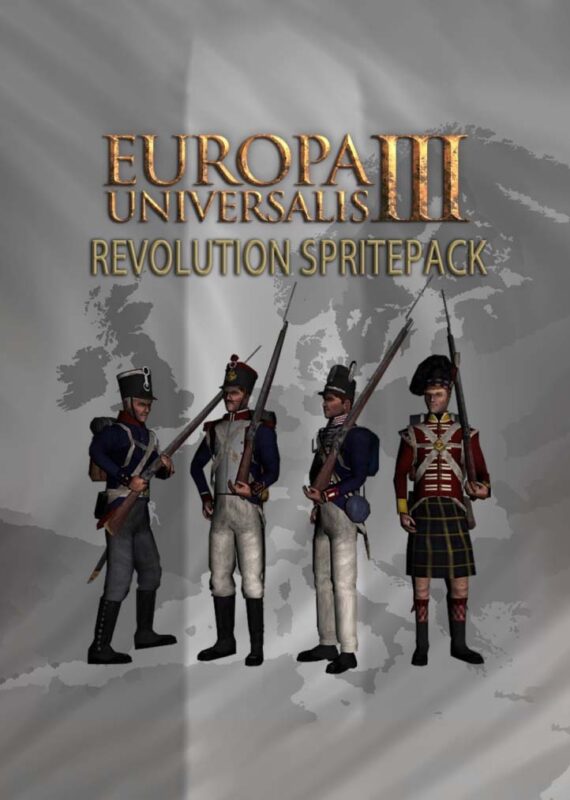
Europa Universalis III – Reformation SpritePack DLC Steam CD Key
1 in stock
copies left1 in stock
Sold by: OMG Gamer






Delivery24/7
supportVerified
Sellers

Product Description
Europa Universalis III – Reformation SpritePack DLC Steam CD Key
Quck Intro
Europa Universalis III – Reformation SpritePack DLC adds a subtle but meaningful visual layer to the grand strategy experience set during one of Europe’s most transformative eras. Designed for players who enjoy deep historical simulation, this expansion enhances the Reformation period with new unit sprites that reflect the shifting religious and political landscape of the 16th and 17th centuries. As you manage sprawling empires, navigate diplomatic tensions, and guide nations through war and reform, the updated visuals help ground each decision in its historical context. Built for fans of real-time strategy and empire-building gameplay, it blends seamlessly into the base game without altering core mechanics. The result is a more immersive and atmospheric journey for players who value historical authenticity, strategic depth, and long-term nation management across evolving global dynamics.
About
Europa Universalis III – Reformation SpritePack DLC is a visual expansion for the grand strategy game that explores one of the most turbulent and defining periods in European history. Built for players who enjoy deep historical simulation, it enhances the Reformation era with updated unit sprites that reflect shifting religious identities and political tensions. While it does not change core mechanics, it strengthens the atmosphere of empire management, diplomacy, and large-scale warfare that defines the base game.
At its core, Europa Universalis III places you in control of a nation navigating centuries of change. You shape economies, forge alliances, manage internal stability, and expand influence across a dynamic world map. The gameplay loop revolves around long-term planning, real-time decision-making, and adapting to evolving global events, where every choice can shift the balance of power between kingdoms and empires.
What makes this experience stand out in the grand strategy genre is its scale and historical depth. Rather than focusing on fast-paced action, it emphasizes patience, foresight, and consequence-driven gameplay. The SpritePack DLC adds a layer of historical flavor that helps each conflict and political shift feel more grounded, especially during the Reformation period where ideology and power collide across Europe.
This experience is best suited for strategy enthusiasts, history lovers, and players who enjoy complex simulation systems that reward thoughtful planning over quick reflexes. Whether you are a long-time grand strategy fan or someone exploring the genre for the first time, the game offers a slow-burn sense of progression where your decisions echo across generations.
If you enjoy building empires, shaping history, and watching the world respond to your leadership, this is a journey that invites you to think bigger, plan longer, and step into an era where every move leaves a lasting mark.
Key Features
Europa Universalis III – Reformation SpritePack DLC focuses on enhancing the visual identity of one of the most important historical periods in the grand strategy genre. It builds on the core experience of Europa Universalis III, where players guide a nation through centuries of political change, religious conflict, and global expansion in a real-time, map-based strategy environment.
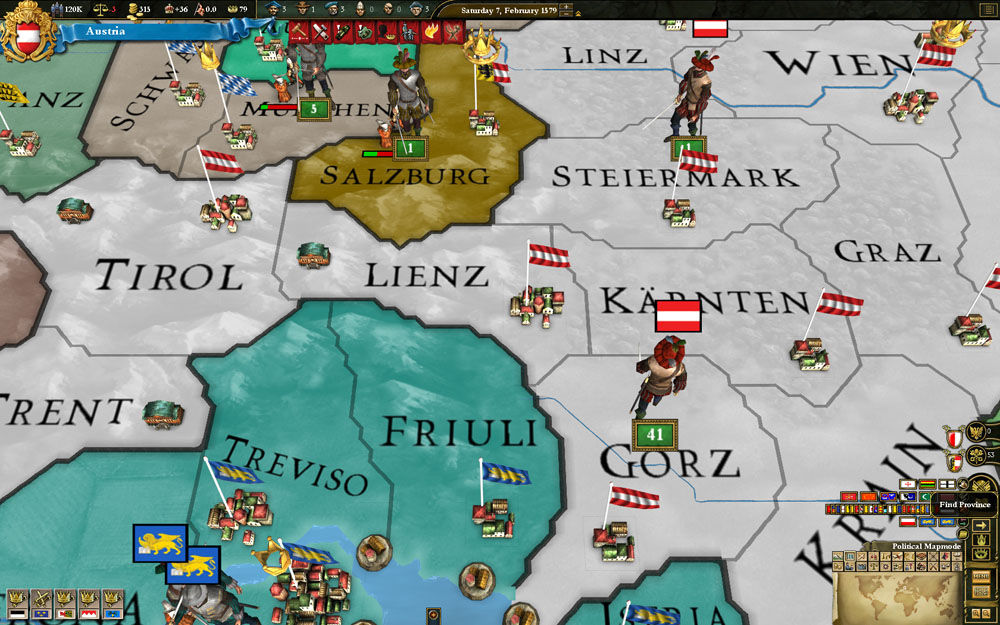
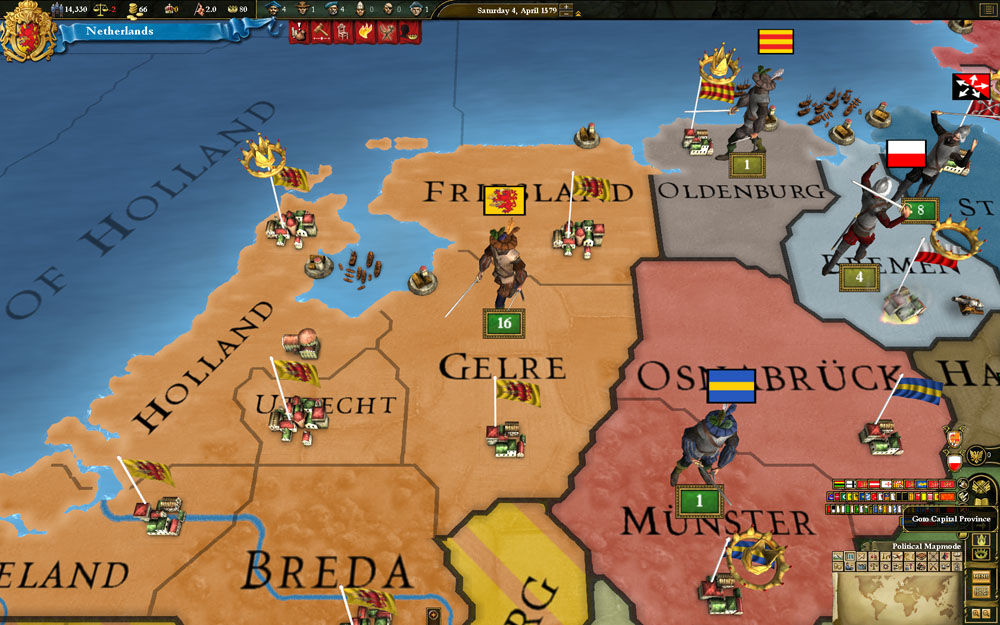
The main value of this DLC is its Reformation-era unit sprite overhaul, which visually distinguishes armies and factions during a time when Europe is deeply divided by shifting beliefs and emerging powers. As players manage diplomacy, warfare, and internal governance, the updated sprites help make each conflict feel more historically grounded and easier to interpret on the campaign map.
The gameplay loop remains centered on long-term strategic planning, where players balance economy, military strength, exploration, and diplomacy. While this pack does not alter mechanics, it strengthens immersion during critical mid-game transitions, especially when religious changes begin to reshape alliances and rivalries across regions.
One of the standout aspects of the overall Europa Universalis III experience is its open-ended structure. There are no fixed paths to victory, allowing players to experiment with alternate histories, from minor regional powers to dominant global empires. The Reformation SpritePack complements this freedom by making visual feedback clearer during large-scale wars and shifting political landscapes.
Players who enjoy deep strategy games on PC, historical simulation, and empire-building systems will find this DLC adds clarity and atmosphere without changing the core balance of gameplay. It is especially meaningful for those who appreciate attention to historical detail and want their campaigns to feel more connected to the era they represent.
Across multiple playthroughs, the enhanced visuals support better readability and immersion, making long campaigns easier to follow while preserving the complexity and freedom that define grand strategy gameplay.
Gameplay
Europa Universalis III – Reformation SpritePack DLC is a visual enhancement built for the grand strategy gameplay experience of Europa Universalis III, where players control a nation and guide it through centuries of political, economic, and religious transformation. While this DLC does not change core systems, it directly supports gameplay clarity during one of the most complex and dynamic eras in the game.
At its foundation, Europa Universalis III revolves around a continuous gameplay loop of managing your nation on a global map. Players handle diplomacy with other countries, negotiate alliances, declare wars, manage internal stability, and develop economies over long historical timelines. Every decision connects to a larger simulation where political choices and military actions shape the balance of power across regions.
Combat plays out on a strategic level, with armies moving across provinces and engaging in battles influenced by terrain, leadership, and national strength. As the Reformation period unfolds, religious divisions add another layer of tactical decision-making, affecting alliances, rebellions, and long-term stability. The SpritePack enhances this phase visually, making unit distinctions clearer and helping players quickly interpret battlefield situations.
Progression in the game is not linear but driven by expansion, technological development, and shifting national priorities. Over time, players unlock new capabilities, adapt to emerging global challenges, and refine their strategies to maintain influence in an evolving world. This creates a strong sense of long-term strategic growth and replayability, as no two campaigns develop in exactly the same way.
Although primarily a single-player experience, Europa Universalis III also supports multiplayer, where human opponents introduce unpredictable diplomacy and rival strategies. The gameplay naturally evolves as empires grow, collapse, or reform, encouraging flexible thinking and adaptive planning.
The Reformation SpritePack adds subtle but meaningful visual feedback to this complex system, helping players better read the map, understand conflicts, and stay immersed in a historically rich grand strategy experience that rewards patience, foresight, and careful decision-making.
Story & World
Europa Universalis III – Reformation SpritePack DLC is set within the early modern world of grand strategy, a period where Europe stands at a fragile turning point shaped by religion, politics, and expanding global ambition. The DLC itself refines the visual identity of the Reformation era, but the world it belongs to is already deeply layered, built on centuries of tension between tradition and change. It is a world where kingdoms are not static maps, but living systems constantly reshaped by belief, trade, war, and diplomacy.
At the heart of this setting is a Europe fractured by the Reformation, a movement that divides churches, challenges monarchies, and reshapes alliances across the continent. Nations once bound by shared faith begin to split into competing ideologies, creating an atmosphere where trust is fragile and every diplomatic gesture carries long-term consequences. Beyond Europe, expanding global connections bring new wealth, conflict, and cultural exchange, turning the wider world into a stage of competition between emerging empires.
The player exists not as a single character, but as the guiding force behind an entire nation. You are the strategist, the decision-maker, and the architect of history, shaping how your chosen country reacts to an evolving geopolitical landscape. Whether steering a small regional power or managing a dominant empire, your influence stretches across generations, affecting how borders shift and how cultures interact over time.
What makes this world feel distinct is its scale and its sense of continuity. There is no isolated storyline, but rather an unfolding historical simulation where every region is connected through diplomacy, religion, and trade routes. Cities rise in importance, provinces shift loyalty, and long-standing rivalries evolve into new alliances or open conflict. The Reformation period intensifies this dynamic by introducing ideological divides that influence not only politics, but also identity and stability across nations.
The atmosphere is grounded, reflective, and often tense, capturing a world in transition rather than stability. Medieval structures give way to early modern ambitions, and every region carries its own cultural tone, from heavily centralized monarchies to fragmented territories struggling for unity. This diversity creates a living political landscape where no two regions behave the same way for long.
The SpritePack DLC enhances this historical world by visually distinguishing the armies and forces that represent these shifting identities. While subtle, this detail strengthens the sense of immersion, making large-scale conflicts feel more readable and grounded in their historical context. As a result, the world feels not only expansive but also more coherent during moments of transformation.
For players who enjoy historical strategy worlds, political simulation, and long-form empire-building narratives, this setting offers a space where curiosity and planning are rewarded. It is a world defined by change, where every decision contributes to an ongoing historical flow, and where the Reformation stands as one of the most defining turning points in shaping the modern era.
Game Modes
Europa Universalis III – Reformation SpritePack DLC builds on the grand strategy structure of Europa Universalis III, where the experience is shaped less by fixed levels and more by how you choose to approach ruling a nation across centuries of change. The DLC itself does not introduce new modes, but it enhances how existing playstyles feel during one of the most politically and religiously complex eras in the game.
In single-player campaigns, the core experience is a long-form sandbox where you guide a nation through historical eras at your own pace. This mode is ideal for players who enjoy strategic planning, historical simulation, and gradual progression. You can focus on diplomacy, expansion, internal management, or a balanced mix of all systems, with the world reacting dynamically to your decisions over time. The Reformation-era visuals add clarity during these campaigns, making large-scale conflicts and shifting alliances easier to read and interpret.
For players who prefer shared experiences, multiplayer mode introduces a more unpredictable layer of strategy. Competing or cooperating with other human rulers changes the rhythm of the game significantly, as diplomacy becomes less scripted and more reactive. Alliances shift quickly, rivalries intensify, and long-term planning must account for human decision-making rather than AI behavior alone. This mode appeals to competitive strategy players who enjoy testing their planning skills against others.
There is also a flexible sandbox approach that many players treat as a personal historical experiment. Here, the focus is not on winning in a traditional sense, but on exploring alternate outcomes, such as guiding smaller nations into major powers or reshaping historical conflicts in unexpected ways. The game naturally supports replayability because each nation, starting position, and political environment creates a different narrative flow.
Across all modes, the experience remains consistent in its emphasis on long-term strategy, national management, and evolving world politics. The SpritePack DLC enhances these modes visually, helping players better distinguish factions during the Reformation period while maintaining immersion in a living, changing historical world.
Visuals & Art Style
Europa Universalis III – Reformation SpritePack DLC presents a visual identity rooted in clarity, historical tone, and readability, designed to support one of the most information-dense strategy experiences in grand strategy gaming. The base game already leans toward a functional, map-driven aesthetic, but this DLC refines that presentation during one of its most visually complex eras: the Reformation period.
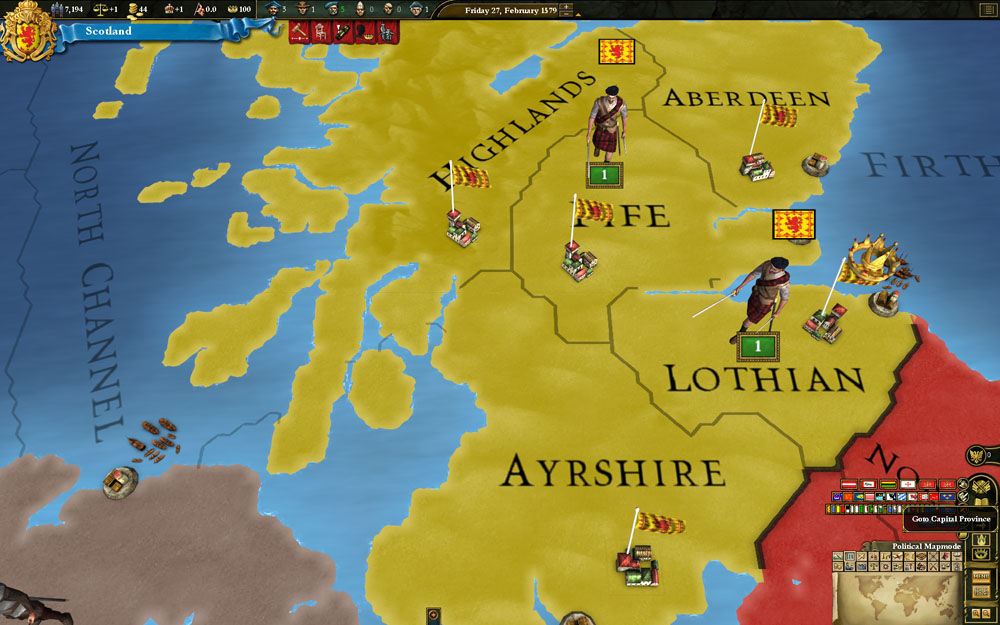
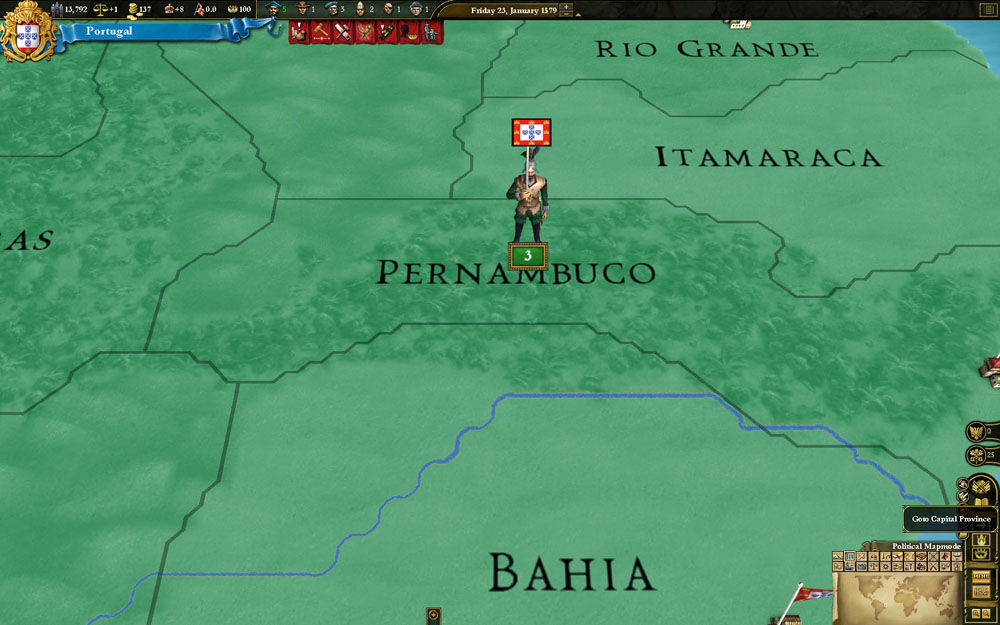
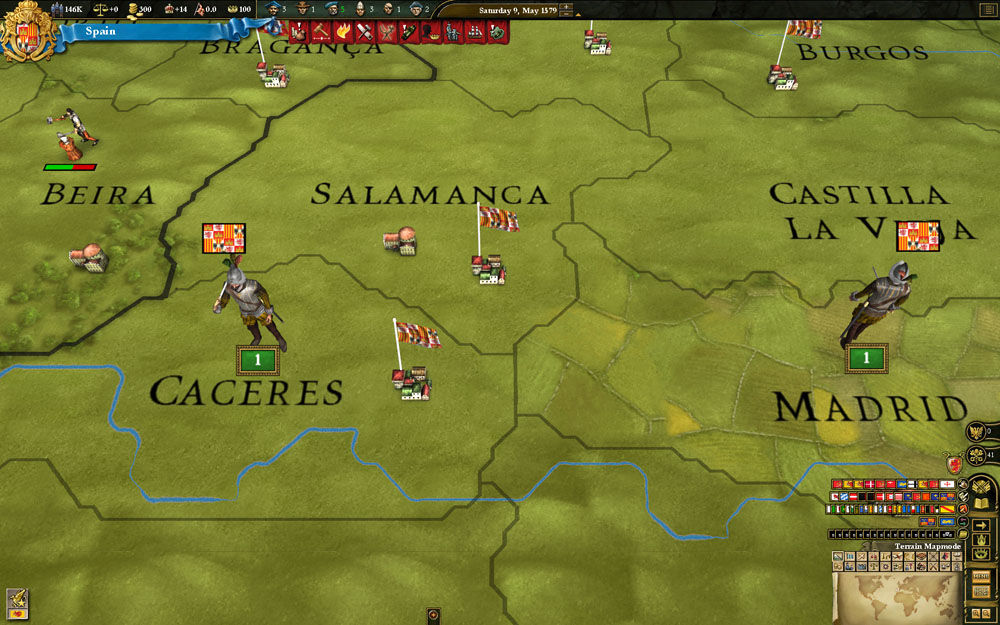
The SpritePack focuses on unit design, introducing updated troop visuals that reflect the religious and political fragmentation of early modern Europe. These sprites are not just decorative; they help distinguish competing factions at a glance, making large-scale wars and shifting alliances easier to interpret during extended campaigns. The result is a battlefield presentation that feels more coherent, especially when multiple nations converge across shared borders.
The overall art direction of Europa Universalis III is clean and map-centric, with a muted, parchment-inspired color palette that reinforces its historical foundation. Provinces are clearly defined, borders shift dynamically, and the visual hierarchy keeps attention on strategic decision-making. The Reformation-era enhancements complement this structure by adding subtle variety to armies without overwhelming the interface or distracting from the larger geopolitical view.
Lighting and environmental presentation remain understated, but effective. Rather than cinematic realism, the game uses restrained visual cues—seasonal shifts, province shading, and iconography—to communicate change across time. This approach keeps the focus on long-term planning while still giving the world a sense of movement and evolution as centuries pass.
What makes this visual style stand out in the grand strategy genre is its consistency and purpose. Every visual element is designed to reduce confusion while reinforcing immersion in a living historical simulation. The SpritePack builds on this philosophy by giving the Reformation period a more identifiable identity on the map, helping players emotionally register the scale of conflict unfolding across Europe.
For players who appreciate strategy games where visuals support thinking rather than distract from it, this DLC enhances readability and atmosphere in equal measure. It strengthens the sense that you are not just moving pieces on a map, but witnessing a world slowly transform through ideology, war, and diplomacy.
Technical Requirements
Europa Universalis III – Reformation SpritePack DLC is designed as a lightweight visual enhancement built for the PC version of the grand strategy base game, and it carries very modest system demands compared to modern titles. Since this DLC focuses on updated unit sprites rather than new gameplay systems, it does not significantly change performance requirements. Players running Europa Universalis III on a standard Windows PC through digital storefronts can expect smooth performance as long as their system already handles the base game comfortably. It is compatible with a wide range of setups, including older hardware and modern machines running Windows through compatibility support.
The game is primarily available on PC, where it is played through classic strategy platforms such as Steam or similar digital distribution services. While not natively designed for consoles, it remains fully accessible on desktop environments, and can often be run on Linux-based systems using compatibility layers, depending on configuration.
In terms of performance and optimization, Europa Universalis III is not graphically intensive by modern standards. The SpritePack DLC adds improved visual variety during the Reformation era, but it is optimized to maintain stable frame rates even during large-scale wars involving multiple nations. Load times remain consistent with the base game, and the visual update is designed to integrate seamlessly without causing additional strain on CPU or memory usage. Players using high-resolution displays will find that the interface scales adequately, though the experience is primarily designed around traditional strategy map viewing rather than high-fidelity 3D rendering.
Controls are centered around a classic keyboard and mouse setup, which remains the most effective way to navigate the game’s detailed map interface, menus, and diplomacy systems. The control scheme is straightforward, with point-and-click interactions that support both beginners and experienced grand strategy players. Key bindings can be adjusted to suit personal preferences, offering a degree of customization for comfort and efficiency.
Accessibility options are modest but functional, including readable UI scaling, pause-and-play strategic pacing, and adjustable audio levels for background music and effects. Subtitles and text-based event descriptions ensure that narrative and system feedback remain clear for all players. Overall, the DLC maintains the accessibility standards of the base game while enhancing visual clarity, ensuring that players can focus on strategy without technical barriers interrupting their experience.
Who Is This Game For?
Europa Universalis III – Reformation SpritePack DLC is best suited for players who enjoy slow-burn strategy, historical simulation, and long-form decision-making rather than fast-paced action. At its core, this experience appeals to fans of grand strategy gameplay who like stepping back and thinking in decades instead of minutes. If you enjoy building systems, managing nations, and watching complex political landscapes evolve over time, this is the kind of game where patience becomes part of the reward.
Players who appreciate single-player strategy campaigns will find the most comfort here. The experience is ideal for those who enjoy planning, experimenting with different nations, and exploring alternate historical outcomes without being pushed by strict objectives. It also works well for multiplayer strategy fans who like unpredictable diplomacy, where human decisions create tension, alliances shift naturally, and long-term planning is constantly tested.
This DLC specifically enhances the visual experience during the Reformation era, so it adds extra value for players who care about historical atmosphere and clarity during large-scale conflicts. If you are someone who enjoys immersive strategy worlds where even small visual details help you read the battlefield more clearly, the SpritePack adds a subtle but meaningful layer to your experience.
However, players looking for fast progression, direct action combat, or highly cinematic storytelling may find the pacing more deliberate than expected. Europa Universalis III is not built around instant rewards or short sessions. It asks for time, attention, and a willingness to engage with complex systems that unfold gradually.
The game is also a strong fit for history enthusiasts who enjoy seeing how real-world political and religious shifts can be simulated and reshaped through player choice. Creative strategists, sandbox players, and those who enjoy experimenting with different outcomes will find long-term replay value in how each campaign develops differently.
Ultimately, this is a game for thoughtful players who enjoy strategy over spectacle, depth over speed, and evolving worlds over fixed narratives. The Reformation SpritePack DLC simply enhances that experience visually, making an already detailed historical simulation easier to read and more immersive to navigate.
FAQ
What type of game is Europa Universalis III – Reformation SpritePack DLC?
It is a visual expansion for a grand strategy PC game focused on managing nations across centuries of political, economic, and religious change. The DLC itself does not change gameplay mechanics but enhances the Reformation-era visuals, improving clarity and immersion during large historical conflicts.
Do I need the base game to play this DLC?
Yes, this is an add-on content pack and requires Europa Universalis III to run. It works as a visual upgrade rather than a standalone experience.
What does the gameplay feel like overall?
The core experience is slow-paced and strategic. Players manage diplomacy, warfare, economy, and internal stability while guiding a nation through long historical timelines. It is designed for thoughtful planning rather than fast action.
Is it single-player or multiplayer?
Europa Universalis III supports both single-player and multiplayer. Most players enjoy long single-player campaigns, while multiplayer offers unpredictable diplomacy and competitive strategy between human players.
What platforms is it available on?
This DLC is available on PC versions of Europa Universalis III, typically through digital platforms like Steam. It is not designed for consoles and runs on standard Windows-based systems, with compatibility possible on Linux setups depending on configuration.
How demanding is it on system performance?
It is lightweight since it only updates visual assets. If your system runs the base game smoothly, this DLC will not affect performance, frame rates, or load times in any significant way.
Is it suitable for casual players?
It is better suited for players who enjoy complex strategy and historical simulation. Casual players can still enjoy it, but the experience rewards patience and long-term thinking.
Does it add new content or story?
No new story or mechanics are added. It focuses entirely on improving unit visuals during the Reformation period for better immersion and readability.
Is it worth replaying the game with this DLC?
Yes, especially for players who enjoy multiple campaigns. The visual updates make large-scale wars and political shifts during the Reformation era easier to follow across repeated playthroughs.
FAQ
Operating System (OS)
Other Details

Languages

Reviews
There are no reviews yet.