

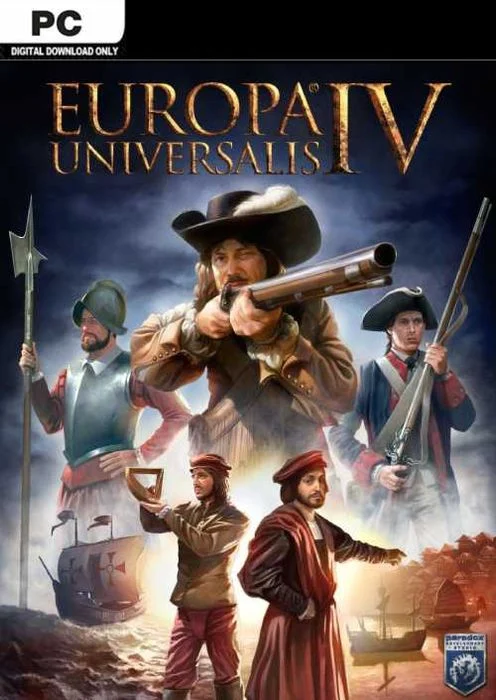
Europa Universalis IV PC Steam Gift
2 in stock
copies left2 in stock
Sold by: OMG Gamer






Delivery24/7
supportVerified
Sellers

Product Description
Europa Universalis IV PC Steam Gift
Quck Intro
Europa Universalis IV invites players into a sprawling, historically rich strategy experience where every decision shapes the destiny of a nation. From the rise of small European states to global empires, you’ll navigate diplomacy, warfare, trade, and colonial expansion across centuries. The game emphasizes deep strategic planning and long-term thinking, offering a sandbox where careful management of resources, alliances, and military campaigns can alter the course of history. Whether negotiating treaties, exploring new territories, or leading armies into battle, every choice carries weight, making each playthrough unique. Europa Universalis IV stands out for its intricate simulation of global politics and economics, giving strategy enthusiasts a chance to test their skills in an expansive, open-ended world. Players looking for an immersive grand strategy experience on PC will find a rich blend of historical depth and tactical freedom that rewards both patience and creativity.
About
Europa Universalis IV is a grand strategy game for PC that places you in control of a nation at the dawn of the modern era, guiding its growth across centuries of global change. As a player, you feel the weight and thrill of leadership every decision, from diplomacy and trade to military conquest, shapes the destiny of your country and its place in history. The game offers a deeply strategic sandbox where you balance domestic management, foreign relations, and wartime strategy, creating a sense of ownership over a living, breathing world.
Most of your time in Europa Universalis IV is spent analyzing the geopolitical landscape, negotiating alliances, expanding territories, and managing resources to strengthen your position. The gameplay loop blends long-term planning with immediate tactical choices, rewarding patience, foresight, and adaptability. What sets it apart from other strategy games is its intricate simulation of global politics, economics, and culture, which allows for highly personalized and emergent narratives in each playthrough. Whether you prefer methodical empire-building, complex diplomacy, or testing your tactical skills in war, the game accommodates a wide range of strategic styles and ambitions.
Europa Universalis IV is ideal for players who enjoy thoughtful, story-driven strategy, as well as those who love exploring historical scenarios with freedom to experiment. Its open-ended design ensures that no two campaigns feel the same, offering endless replayability for both casual strategists and competitive thinkers. The game’s combination of historical depth, detailed management systems, and emergent storytelling creates a rich, engaging experience that encourages players to think creatively while exploring the possibilities of shaping a nation’s fate. Step into Europa Universalis IV, and immerse yourself in a living world where every choice carries weight, and every campaign tells a story worth discovering.
Key Features
Europa Universalis IV offers a deep grand strategy experience where players guide a nation through centuries of history, balancing diplomacy, trade, and warfare. At its core, the game revolves around managing resources, forging alliances, and expanding territories, giving players a sense of control and agency over the rise and fall of empires. Each decision carries weight, making strategic thinking and careful planning essential to success.
Players can engage in complex diplomacy, negotiate treaties, and navigate international politics, creating dynamic interactions that respond to your choices. Warfare is tactical but flexible, allowing you to organize armies, plan campaigns, and respond to threats in real time while considering terrain, troop composition, and economic constraints.
Exploration and colonial expansion offer another layer of gameplay, letting players discover new territories, establish trade networks, and shape global influence over decades. The world is alive, with evolving political landscapes, shifting alliances, and emergent stories that make each campaign unique.
Europa Universalis IV also emphasizes long-term progression and strategic customization. Players can adapt national policies, manage economies, and invest in technological or cultural development, tailoring their approach to match their play style. This open-ended structure ensures high replayability, whether you prefer methodical empire-building, competitive conquest, or experimenting with alternate historical paths.
The PC platform enhances the experience with detailed maps, mod support, and robust interface tools, allowing players to dive into complex systems without losing clarity. Time can flow at your pace, and the game accommodates both casual strategists and dedicated, detail-oriented players.
With its blend of historical depth, strategic freedom, and emergent gameplay, Europa Universalis IV gives players the chance to craft their own stories on a global stage, balancing short-term challenges with long-term ambitions in a living, evolving world of strategy.
Gameplay
In Europa Universalis IV, players take command of a nation at the start of the early modern period, guiding it through centuries of political, economic, and military challenges. The core gameplay revolves around strategic decision-making, where every choice from managing diplomacy and trade to raising armies and waging war directly shapes your country’s growth and global influence. Players spend their time balancing immediate tactical needs with long-term planning, creating a gameplay loop that rewards thoughtful strategy and careful timing.
Combat in Europa Universalis IV blends tactical depth with strategic oversight. You organize armies, position forces across regions, and respond to evolving threats, all while considering terrain, troop composition, and resources. Outside the battlefield, players explore opportunities for expansion, establishing colonies, trade networks, and alliances that can tip the balance of power. This combination of exploration, conquest, and economic management provides a sense of agency, letting players define the path their nation takes.
Player progression unfolds naturally through experience and experimentation. Nations develop technologically, culturally, and economically, while new mechanics and events emerge as the game advances. The open-ended design accommodates multiple playstyles, from careful empire-builders and diplomatic tacticians to players who enjoy aggressive, fast-paced conquest. Multiplayer options further expand the strategic possibilities, allowing players to negotiate, compete, and collaborate in a shared, evolving world.
Over time, gameplay evolves into a complex, rewarding simulation where historical systems interact in unexpected ways. Each campaign encourages players to adapt, rethink strategies, and explore alternative outcomes, ensuring high replayability. Europa Universalis IV’s immersive mechanics, strategic depth, and player-driven progression make the experience engaging for both newcomers to grand strategy and veterans seeking intricate, long-term gameplay. It’s a game where planning, adaptation, and creative thinking directly shape the story of your nation, giving players a powerful sense of ownership over every decision and outcome.
Story & World
Europa Universalis IV unfolds in a world defined by ambition, diplomacy, and the sweeping tides of history. Set during the early modern era, the game spans continents, from the bustling ports of Europe to the distant shores of the Americas, Africa, and Asia. This is a world in constant motion, where the rise and fall of nations are shaped by political maneuvering, cultural exchange, and the pursuit of power. Every region carries its own distinct identity, from thriving city-states and mercantile hubs to vast empires rich with history and tradition. The global map is alive with diversity, reflecting the languages, religions, and political systems that define each society.
At the heart of this expansive world is the player, entrusted with the leadership of a nation. You are both architect and executor, shaping the destiny of your people through diplomacy, trade, and strategy. The central tension of the world comes from competing ambitions neighboring powers seek to expand their influence, shifting alliances and rivalries ripple across borders, and the unpredictable currents of history challenge even the most careful planners. Within this dynamic landscape, players are not passive observers; every choice, from forging treaties to asserting dominance, carries weight and alters the political and cultural fabric of the world.
Europa Universalis IV’s world feels alive because it is constantly evolving. Factions rise and fall, empires expand and fracture, and distant territories offer opportunities for exploration and influence. Trade routes teem with merchants, courts buzz with negotiation, and military campaigns echo across continents, creating a sense of ongoing, emergent storytelling. The game’s narrative is not linear; it emerges organically from the interplay of nations, leaders, and events, allowing the player to experience history as a series of interconnected decisions. Each region’s culture, economy, and political structure inform the story, giving depth and authenticity to the global stage.
The scope of Europa Universalis IV encourages players to consider both the local and the global. You might witness the struggles of a small kingdom defending its borders or manage the complex diplomacy of a sprawling empire with colonies on distant continents. The interplay of cultures, religions, and political ideologies gives the world texture, while the sense of scale and historical weight makes exploration and decision-making feel meaningful. Players inhabit a living, breathing simulation of a historical era, where the narrative unfolds based on their actions and strategic vision.
In this world, every choice tells a story. The delicate balance between power, influence, and survival creates a rich, immersive atmosphere where history feels immediate and consequential. Europa Universalis IV invites players to step into a living historical tapestry, where the clash of nations, the flow of ideas, and the ambitions of leaders converge to create a vast, complex, and endlessly engaging world waiting to be shaped. It is a setting where strategy and storytelling intertwine, offering a deep, reflective experience that rewards curiosity, foresight, and imagination.
Game Modes
Europa Universalis IV offers multiple ways for players to engage with its sprawling historical sandbox, catering to a wide range of playstyles and experience levels. For those drawn to solitary, contemplative strategy, the single-player mode provides the freedom to lead any nation of your choice through centuries of diplomacy, war, and empire-building. Here, pacing is entirely in your hands, letting you plan long-term strategies, experiment with alternate historical outcomes, or simply explore the complexities of global politics at your own speed.
For players seeking social interaction and competitive dynamics, the multiplayer mode opens the world to friends or global opponents. Players can form alliances, negotiate treaties, and wage wars in real time, creating emergent stories shaped by human ingenuity and unpredictability. Multiplayer campaigns reward adaptability and foresight, as rival nations respond dynamically to your decisions, making each session distinct and highly replayable. Cooperative multiplayer also allows friends to collaborate on managing empires, combining strengths and strategies in a shared experience that blends teamwork with the game’s open-ended nature.
The sandbox structure of Europa Universalis IV ensures that no two campaigns are alike. You can focus on expansion and conquest, immerse yourself in diplomacy and trade, or experiment with cultural and technological progression. Optional challenge-based scenarios, such as guiding a small state through turbulent eras or attempting to dominate the globe against powerful neighbors, offer a more structured approach for players who enjoy targeted objectives alongside open-world freedom.
Across all modes, the game’s pacing, decision-driven narrative, and emergent historical events maintain engagement over long campaigns. Each mode highlights different aspects of the grand strategy experience, from reflective planning in single-player to dynamic interaction in multiplayer, ensuring variety, replay value, and a sense of meaningful impact with every choice. Europa Universalis IV adapts to the player, offering multiple lenses through which to explore history, strategy, and global influence.
Visuals & Art Style
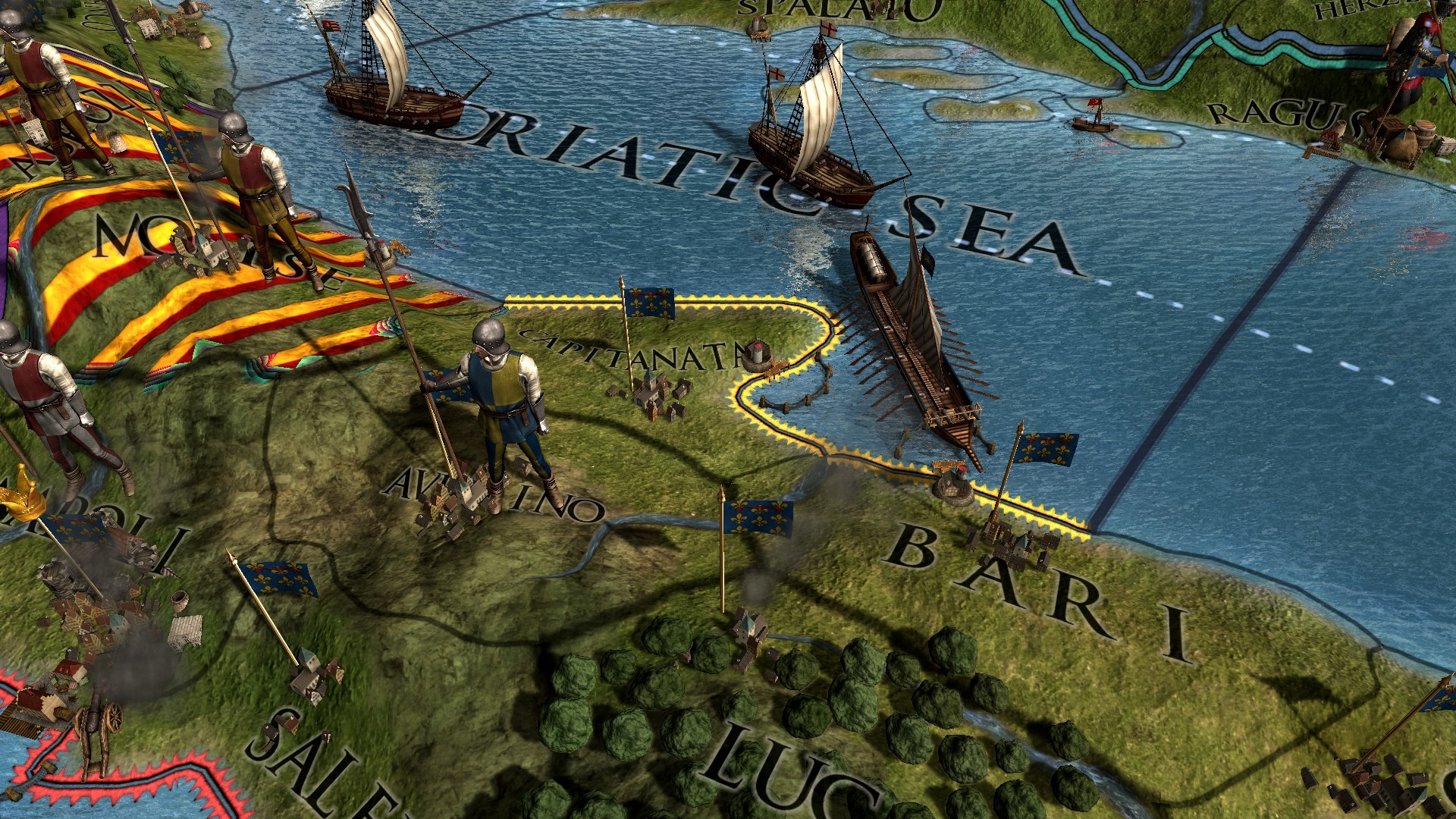
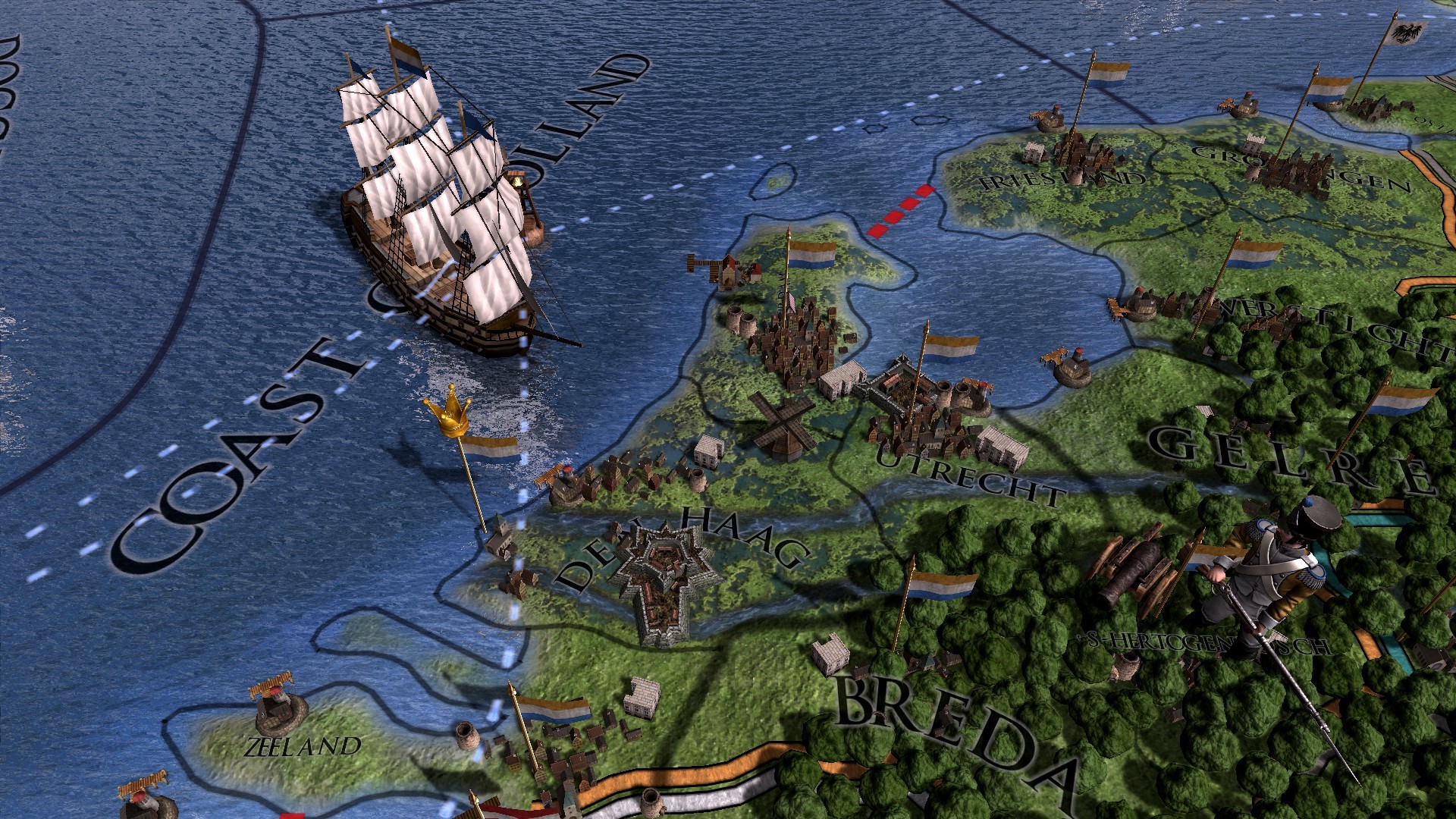
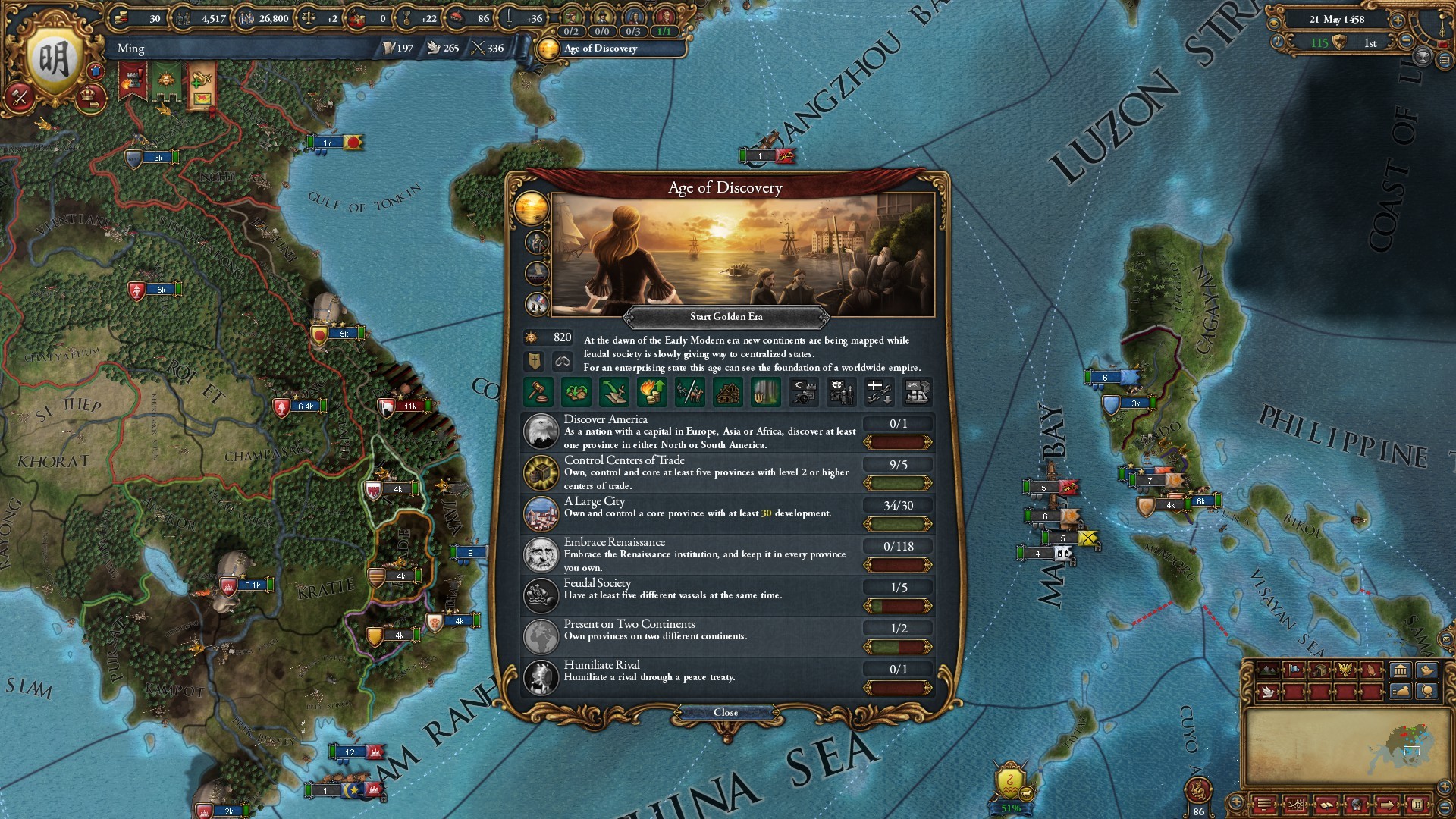
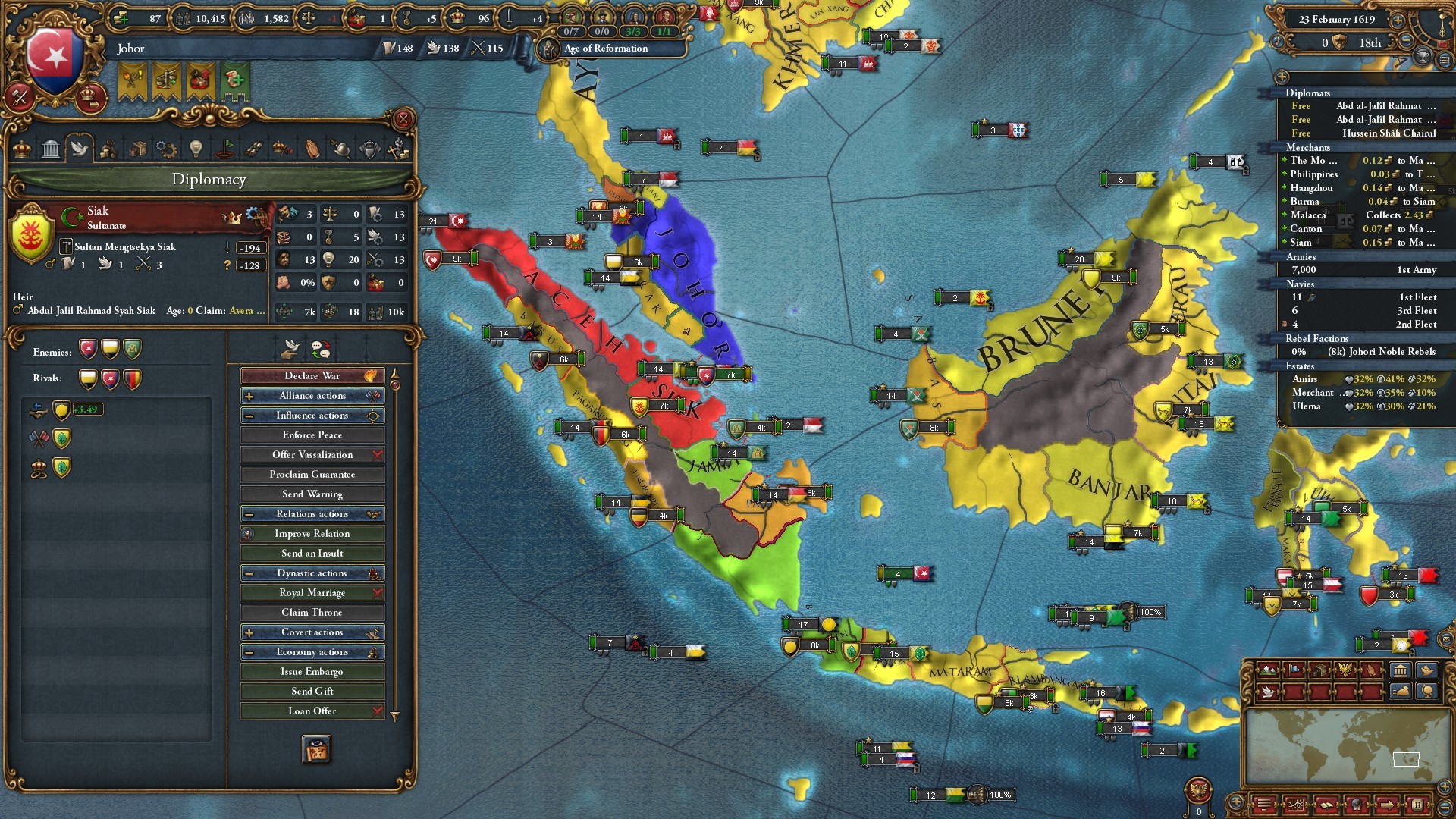
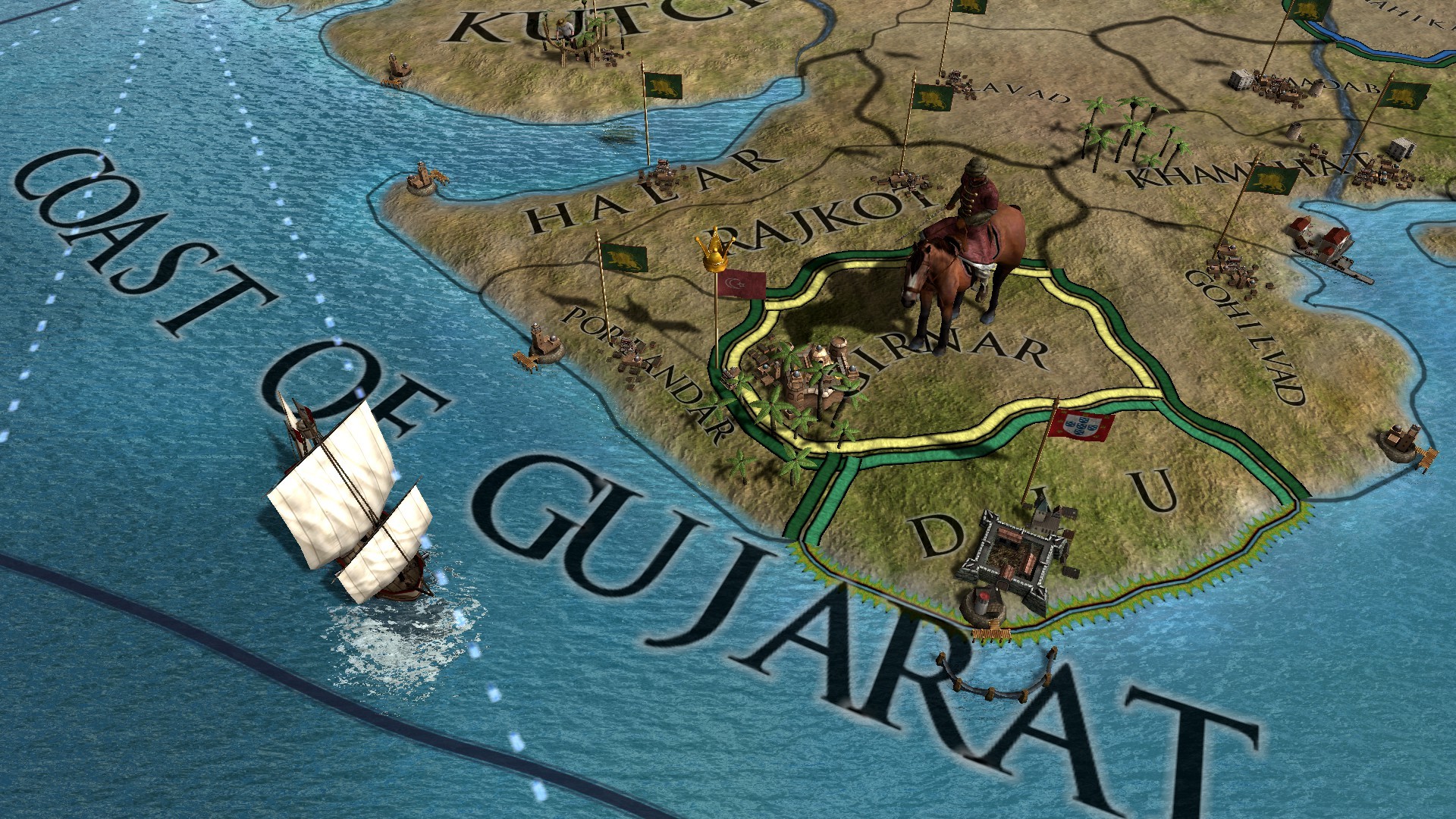
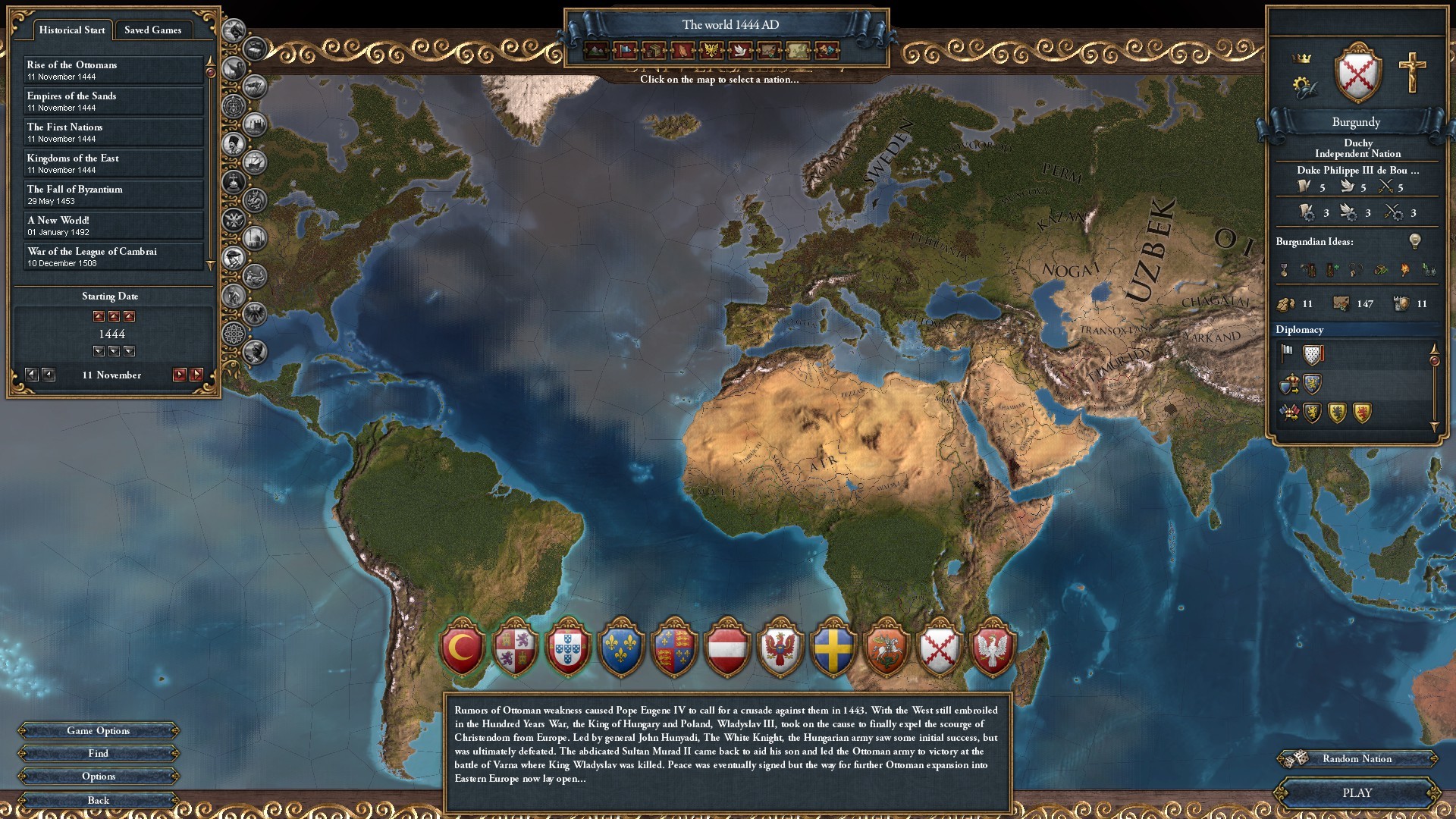
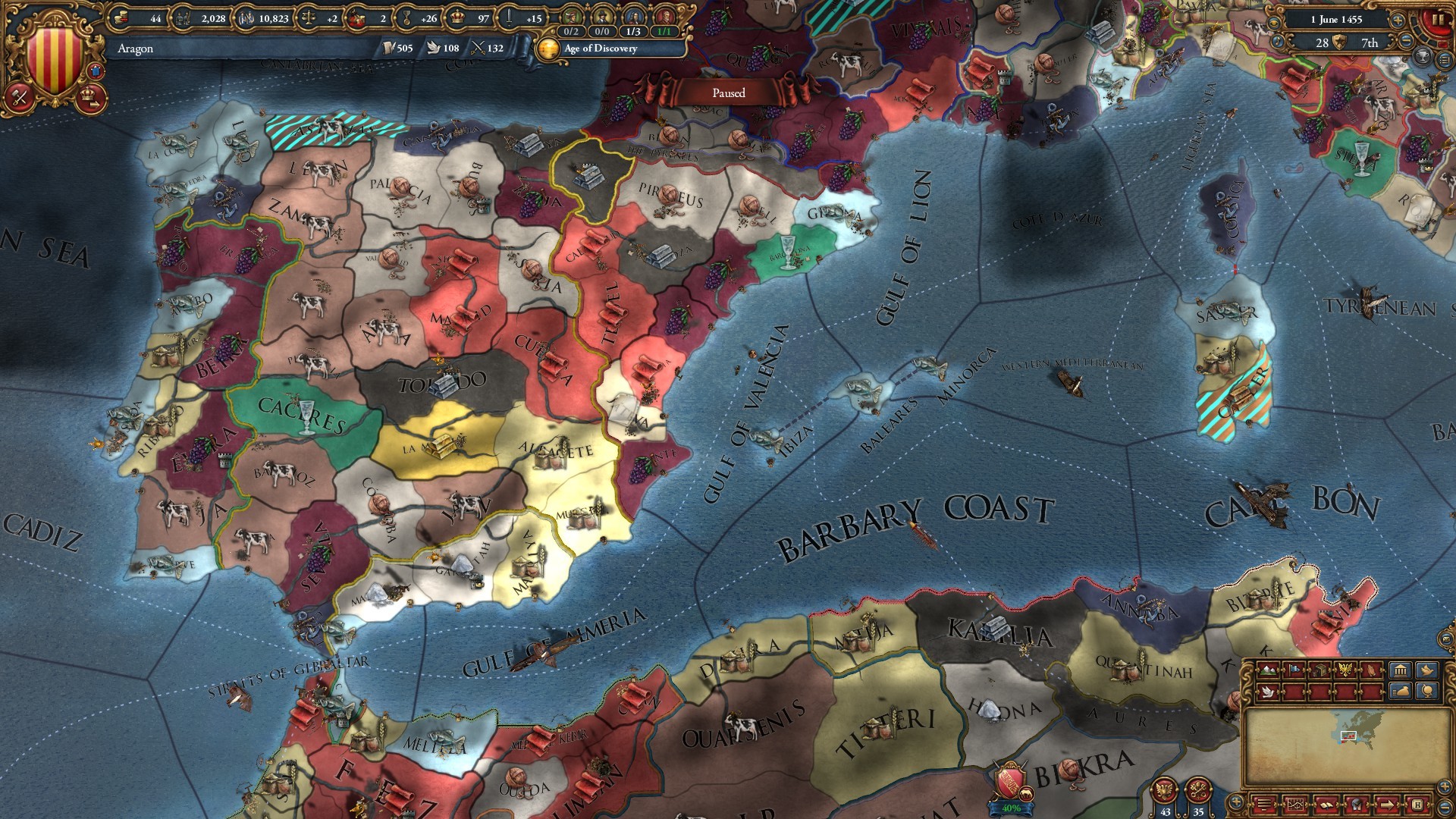
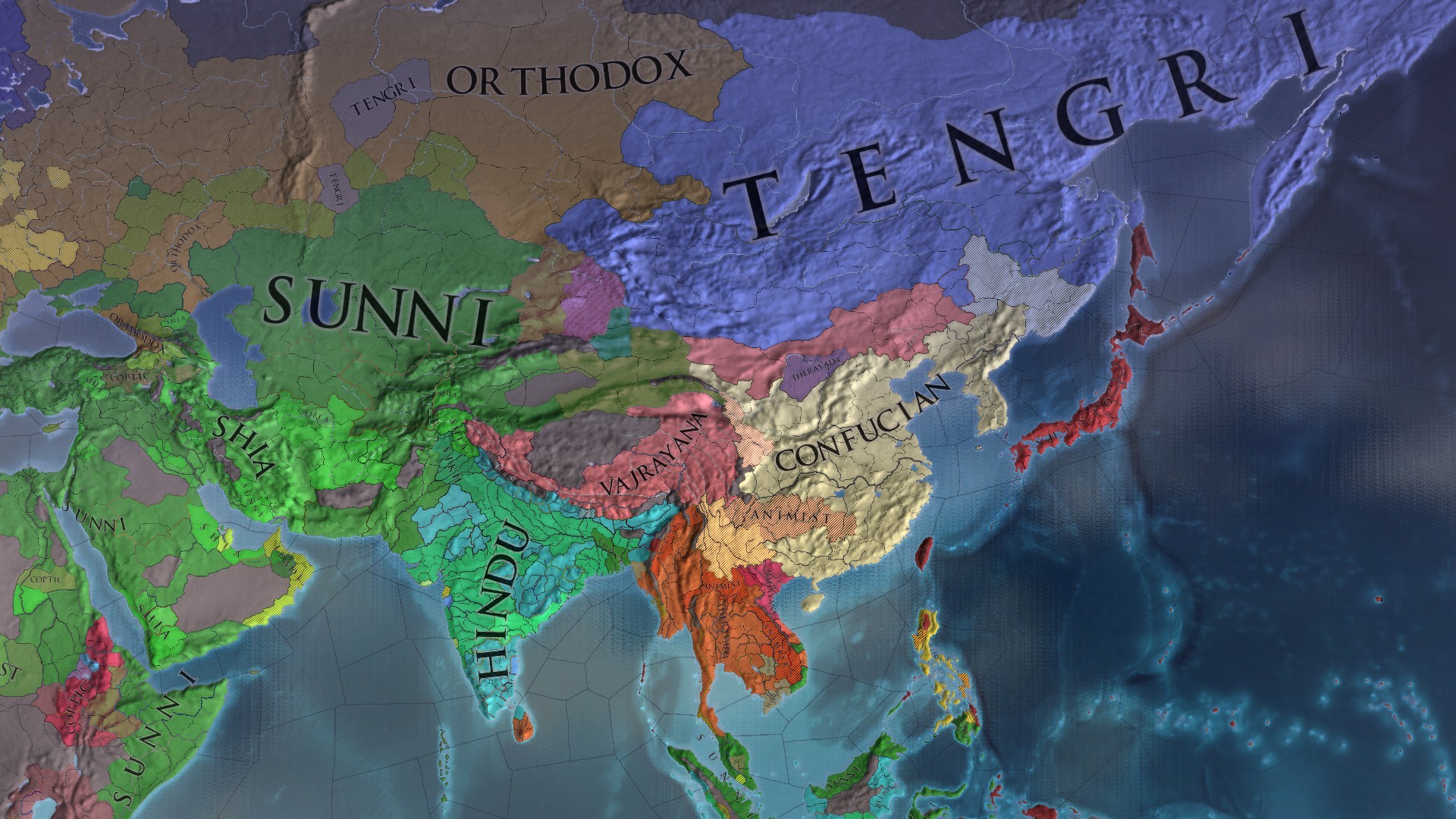
Europa Universalis IV presents a map-driven visual identity that immediately conveys the scope and scale of its historical world. The art style balances clarity with detail, using a muted yet rich color palette to differentiate regions, political boundaries, and terrain types, which helps players intuitively read the global stage at a glance. Seas, rivers, and mountains are rendered with subtle texture and shading, giving the impression of a living, evolving planet where geography shapes strategy.
Cities, forts, and armies are represented with carefully designed icons and animated units that, while not hyper-realistic, convey movement, growth, and activity in a way that feels meaningful without overwhelming the player. The lighting and map overlays create a sense of depth and atmosphere, suggesting the passage of time, seasonal changes, and historical progression across centuries. This restrained, painterly aesthetic ensures that the focus remains on strategy while immersing the player in a cohesive, believable world.
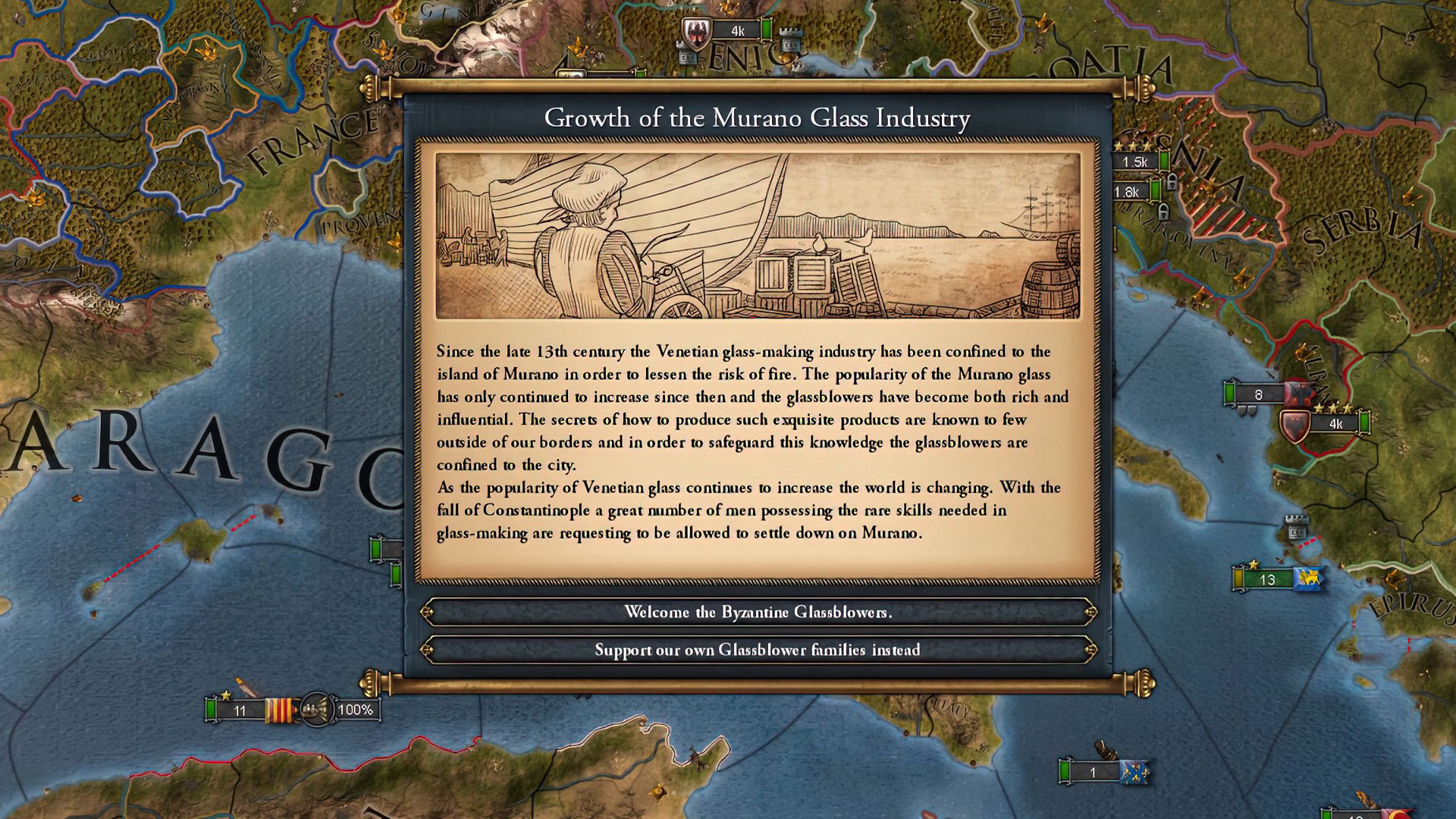
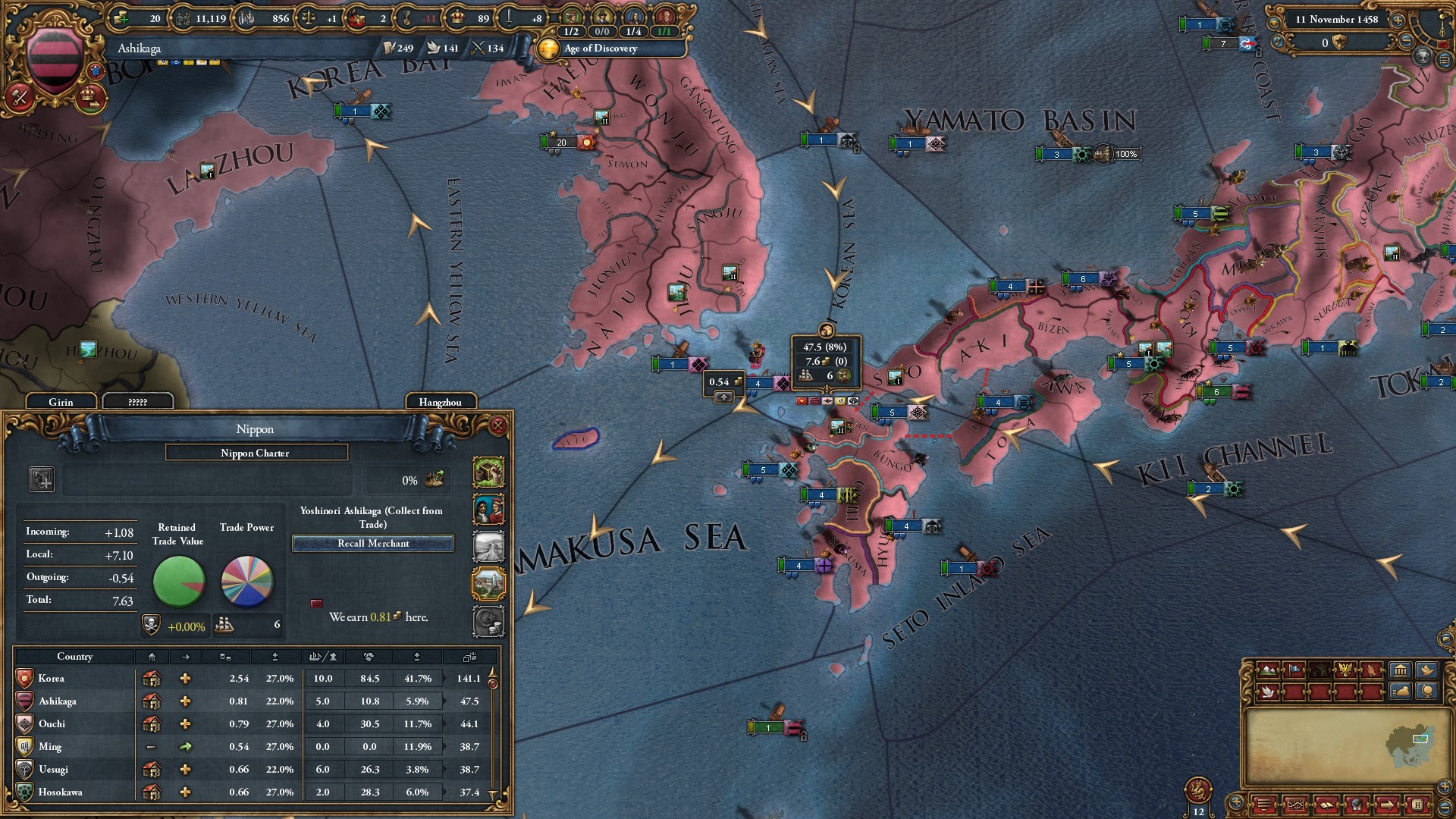
Europa Universalis IV’s interface and visual feedback are tightly integrated with the art style, allowing complex systems trade networks, alliances, and military campaigns to feel visually intuitive. Borders pulse with political tension, armies march with weight, and icons for diplomacy or economy respond fluidly, reinforcing the game’s emergent storytelling. The consistency of the visuals, from detailed regional maps to subtle event pop-ups, supports the player’s sense of agency and immersion, making each decision feel connected to a tangible world.
The overall presentation emphasizes atmosphere and readability, drawing players into a living historical simulation where the visual cues themselves communicate power, influence, and conflict. This artistic approach allows Europa Universalis IV to stand out in the grand strategy genre, providing a map and environment that are as informative as they are evocative, helping players feel both the weight and excitement of guiding a nation across centuries.
Technical Requirements
Europa Universalis IV is primarily designed for PC, offering full support on Windows and Linux, and is accessible through major digital storefronts such as Steam. The game is built to scale across a wide range of systems, making it approachable for both casual players on modest rigs and strategy veterans with high-end hardware. On a minimum setup, players will need a dual-core processor, 2 GB of RAM, and a basic graphics card capable of handling 3D map rendering, which allows the game to run smoothly at lower resolutions and moderate frame rates. For a more comfortable experience with larger empires, faster simulation, and smoother animations, recommended specifications include a quad-core CPU, 4 GB of RAM, and a mid-range GPU, enabling higher resolutions and stable performance even during late-game scenarios with dozens of active provinces and armies.
Performance is optimized for long campaigns, with short load times for standard maps and fluid frame rates that maintain responsiveness during complex diplomatic and military calculations. The interface scales cleanly across different screen sizes and resolutions, allowing players to comfortably manage sprawling empires without visual clutter. Europa Universalis IV supports standard keyboard and mouse controls, providing precise control over menus, unit management, and diplomacy, while full controller support and customizable key bindings make it accessible for players who prefer alternate input methods.
Accessibility is integrated thoughtfully: text-heavy menus feature adjustable font sizes and subtitles for in-game events, while difficulty settings and gameplay pacing options allow newcomers to gradually adapt to the depth of grand strategy. Visual and audio cues help track important events, and the game’s interface can be customized to highlight key information, making it easier for players to focus on strategic decisions rather than navigating complex systems. Overall, Europa Universalis IV balances technical performance, flexible controls, and accessibility, ensuring that players can enjoy long-term, immersive campaigns on a wide range of hardware configurations without compromising the depth and richness of the grand strategy experience.
Who Is This Game For?
Europa Universalis IV is best suited for players who enjoy deep, thoughtful strategy and long-term planning. It appeals to fans of grand strategy and historical simulation who are drawn to complex systems, open-ended gameplay, and emergent narratives shaped by their choices. Players who enjoy managing economies, negotiating diplomacy, or orchestrating military campaigns over decades or even centuries will find the experience particularly satisfying. The game rewards patience and careful decision-making, so those who appreciate gradual progression, experimentation, and the satisfaction of seeing their plans unfold over time will feel at home.
This is also a strong fit for gamers who enjoy both single-player and multiplayer experiences. Solo players can explore the historical sandbox at their own pace, experimenting with alternate historical outcomes or focusing on empire-building, trade, and cultural development. Multiplayer adds a layer of unpredictability and social interaction, offering competitive and cooperative opportunities where negotiation, alliance-building, and strategy against human opponents create dynamic, high-stakes campaigns. The replayability is high, with each campaign offering new challenges, starting nations, and geopolitical landscapes that encourage experimentation and adaptability.
That said, Europa Universalis IV may feel overwhelming for players who prefer fast-paced action, linear story-driven games, or simple mechanics, as the learning curve is significant and the game is text- and data-heavy. Casual gamers looking for quick, immediate gratification might find the pacing slower than they expect, and the depth of strategic systems can be daunting without time to explore and learn.
Ultimately, Europa Universalis IV is for players who enjoy exercising creativity, strategic foresight, and decision-making within a rich historical context. It’s ideal for those motivated by exploration, mastery of complex systems, and the satisfaction of shaping their own story within a living, evolving world. For the right audience, it offers a deeply engaging, intellectually stimulating experience with near-endless replayability and a strong sense of ownership over every campaign.
FAQ
What kind of game is Europa Universalis IV?
Europa Universalis IV is a grand strategy and historical simulation game. You take control of a nation from the early modern period and guide it through centuries of diplomacy, warfare, trade, and cultural development, shaping its destiny and global influence.
Who is this game for?
The game is ideal for players who enjoy strategic thinking, long-term planning, and historical simulation. It appeals to both single-player strategists and multiplayer competitors, as well as anyone who enjoys shaping their own story in a complex, open-ended world. Casual players may find the learning curve steep, while veterans of strategy games will appreciate its depth and replayability.
What is the core gameplay experience?
Players spend time managing economies, forming alliances, negotiating treaties, exploring new territories, and leading armies. Decisions carry weight, and the game emphasizes emergent storytelling, letting you experiment with alternate historical outcomes while balancing short-term tactics with long-term strategy.
Is it single-player or multiplayer?
Europa Universalis IV supports both. Single-player allows you to explore campaigns at your own pace, while multiplayer lets you compete or cooperate with friends or online opponents, adding unpredictability and dynamic challenges.
What platforms and systems support the game?
The game is available on PC and Linux, accessible through Steam. Minimum systems require a dual-core CPU, 2 GB RAM, and a basic GPU, while recommended specs include a quad-core CPU, 4 GB RAM, and a mid-range GPU for smooth performance in late-game scenarios.
Does it offer replay value?
Yes, each campaign is unique, with different nations, events, and geopolitical challenges. Open-ended gameplay and dynamic historical simulations provide high replayability.
Are there additional editions or DLCs?
Europa Universalis IV has multiple expansions that add new mechanics, events, and regions, but the base game offers a complete grand strategy experience on its own.
Do I need an internet connection to play?
Single-player campaigns can be played offline, while multiplayer requires an online connection.
Is it accessible?
The game includes adjustable fonts, subtitles, key remapping, and difficulty settings, allowing players to tailor the experience to their preferences and skill level.
Operating System (OS)
Other Details

Languages


Reviews
There are no reviews yet.