

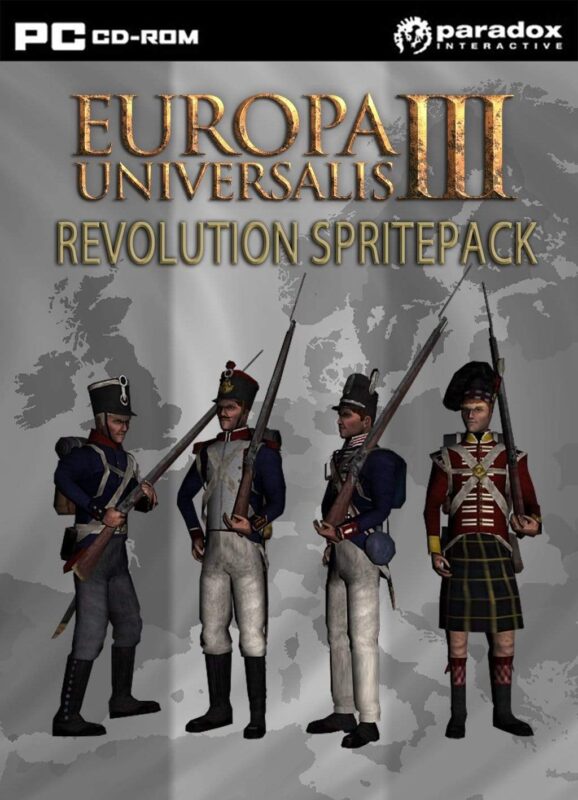
Europa Universalis III – Revolution SpritePack DLC Steam CD Key
5 in stock
copies left5 in stock
Sold by: OMG Gamer






Delivery24/7
supportVerified
Sellers

Product Description
Europa Universalis III – Revolution SpritePack DLC Steam CD Key
Quck Intro
Europa Universalis III: Revolution SpritePack DLC is a visual enhancement pack for Paradox’s grand strategy title Europa Universalis III. Designed for players who enjoy deep historical strategy and empire-building on PC, this DLC focuses on refreshing the look of armies across different nations and eras with updated unit sprites.
While it doesn’t change core mechanics, it adds visual variety to large-scale wars, map progression, and diplomatic campaigns, making long sessions feel more distinct and readable. Players guiding nations through trade, colonization, and conflict will notice richer battlefield identity as armies evolve over time.
It’s a subtle but meaningful addition for those who value presentation alongside complex strategy systems and want a more immersive visual layer to their historical campaigns.
About
Europa Universalis III – Revolution SpritePack DLC is a visual enhancement expansion for the grand strategy game Europa Universalis III, designed for PC players who enjoy large-scale historical empire management. It does not change the core mechanics of the base game but refines how warfare looks across different nations and eras, giving armies a more distinct and polished visual identity on the world map. For players stepping into this experience for the first time, the game itself is about guiding a nation through centuries of political change, trade expansion, diplomacy, and military conflict on a living global stage.
At its core, the gameplay revolves around long-term strategy decisions. Players manage economies, negotiate alliances, explore new lands, and engage in wars that can reshape entire regions. Time moves across centuries, and every choice influences how your empire evolves. The Revolution SpritePack DLC enhances this journey by updating unit appearances, making battles and army movements easier to read while adding visual variety that reflects the shifting power of nations over time.
What sets Europa Universalis III apart from other strategy games is its scale and depth. Instead of focusing on a single war or short campaign, it lets you shape the direction of world history itself. Every faction plays differently, and outcomes emerge from complex systems rather than scripted events. This makes it especially appealing for players who enjoy thoughtful, systems-driven strategy where patience and planning matter more than fast reactions.
This experience is best suited for strategy enthusiasts, history lovers, and players who enjoy detailed simulation-style gameplay. Whether you prefer diplomacy, trade dominance, or military expansion, the game supports multiple playstyles within a single evolving world. The added visual clarity from the SpritePack helps make long campaigns more engaging without changing the strategic depth that defines the series.
For those who enjoy watching empires rise and fall through careful decisions, this DLC adds a subtle but meaningful layer to an already rich grand strategy experience.
Key Features
Improved visual unit representation: The Revolution SpritePack DLC enhances Europa Universalis III by updating army unit sprites across multiple nations and historical eras. While the core grand strategy systems remain unchanged, players can more easily distinguish regional forces on the map, making large-scale wars and territorial conflicts visually clearer during extended campaigns.
Battlefield readability and map clarity improvements help players follow wars without losing strategic overview. As empires expand and borders shift, the updated sprites reduce visual confusion, allowing smoother decision-making during diplomacy, combat planning, and province management in real time across a dynamic global map.
Designed for long-form grand strategy sessions, the DLC supports Europa Universalis III’s deep simulation of politics, economy, and warfare while improving visual storytelling. Each nation’s armies gain a distinct identity, helping players feel the weight of historical progression as centuries unfold across a persistent world sandbox.
Core gameplay remains focused on empire building through diplomacy, trade, exploration, and war. The sprite enhancements complement these systems by making military expansion and territorial control more readable, especially during large-scale conflicts involving multiple regions and alliances.
Replayability benefits from improved visual feedback during repeated campaigns, where different nations and strategies can be observed more clearly. Whether pursuing colonial expansion, defensive play, or aggressive conquest, the updated sprites help distinguish shifting power dynamics over time.
Overall, this DLC is suited for players who enjoy deep strategy games on PC and want a more polished visual layer without altering core mechanics. It enhances readability and immersion, supporting long sessions where careful planning and historical simulation take priority.
It remains lightweight in design, focusing purely on visual enhancements that integrate seamlessly with the base game experience, making it an optional addition for players who value clarity, historical atmosphere, and long-term engagement in grand strategy gameplay without changing balance or systems.
Gameplay
Europa Universalis III – Revolution SpritePack DLC is a visual enhancement for the grand strategy experience of Europa Universalis III, a PC strategy game where players guide a nation through centuries of political, economic, and military change. While this DLC does not alter core systems, it improves how the game’s large-scale gameplay is visually presented, especially during warfare and empire expansion.
At its foundation, the gameplay of Europa Universalis III revolves around long-term strategic decision-making. Players control a nation on a global map, managing diplomacy with other countries, balancing trade routes, expanding territories, and engaging in wars that can reshape entire regions. The main gameplay loop is built around observing the world, making calculated decisions, and reacting to shifting political and military situations as time progresses from one historical era to another.
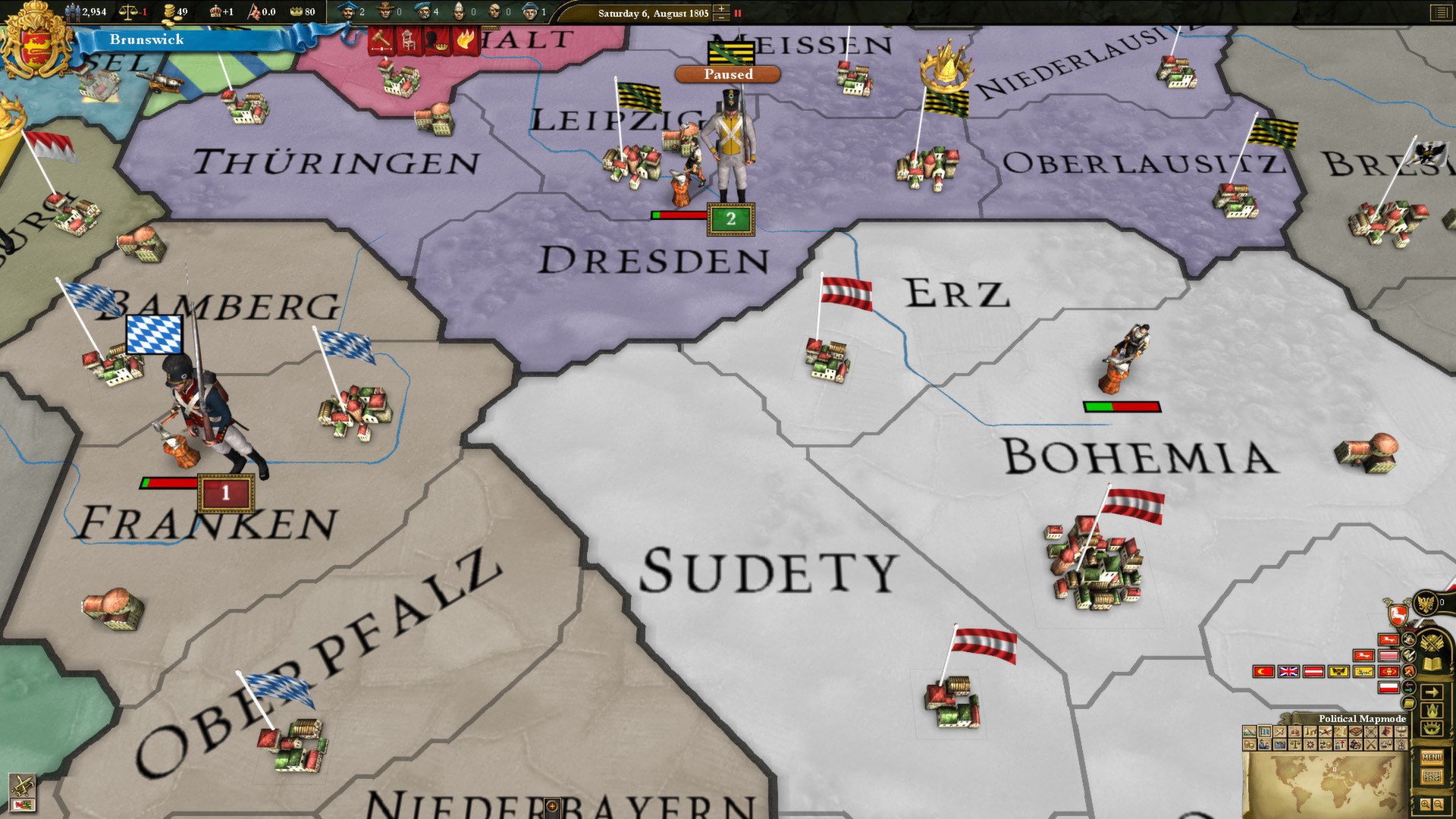
Combat in the base game is not about direct control but about strategic planning, unit composition, and timing. Armies move across provinces, engage in battles, and influence control of regions based on broader tactical choices. With the Revolution SpritePack DLC, these military encounters become easier to visually track, as updated unit sprites give clearer identity to different nations and army types on the battlefield.
Exploration and expansion play a major role in the experience, especially as players discover new territories, establish colonies, or strengthen trade influence. Progression happens organically through technology, economy growth, and political development rather than traditional leveling systems, making every campaign feel shaped by the player’s long-term strategy.
Player freedom is one of the defining aspects of the experience. You can choose aggressive conquest, diplomatic influence, or economic dominance, and each approach creates a different historical outcome. The game supports deep replayability because no two nations develop in exactly the same way, and global events constantly shift the balance of power.
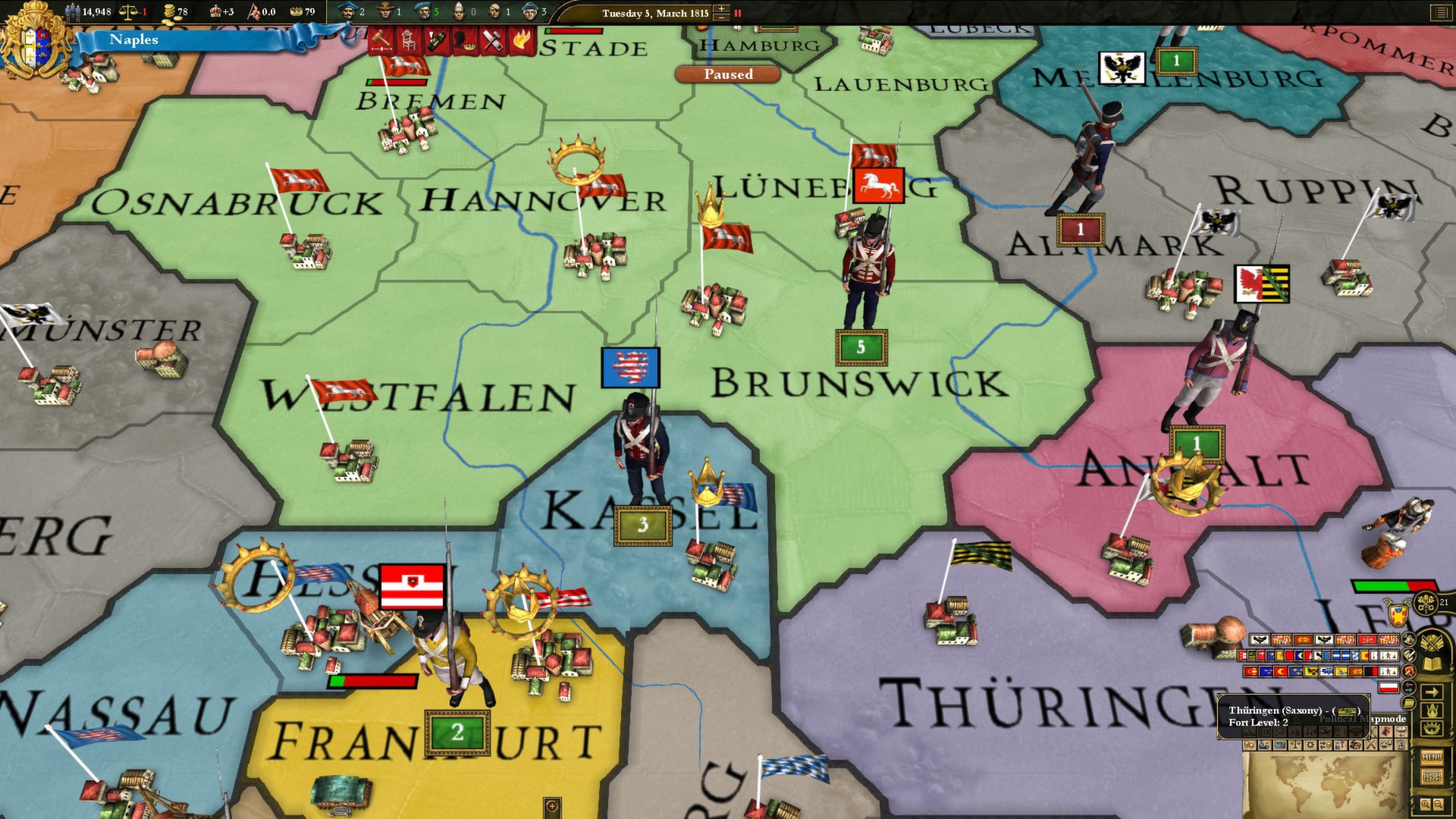
Over time, gameplay evolves as empires grow, alliances shift, and new challenges emerge across the map. The DLC’s visual upgrades support this progression by keeping large-scale wars and changing borders readable, even in complex late-game scenarios, helping players stay focused on strategy across long, unfolding campaigns.
Story & World
Europa Universalis III – Revolution SpritePack DLC exists within the larger historical sandbox of Europa Universalis III, a grand strategy experience set across the transformative centuries of early modern world history. The game world spans a living global map that evolves from the late medieval period into the age of exploration, colonial expansion, and rising global empires. It is not a scripted narrative with a single hero, but a shifting historical stage where nations, cultures, religions, and political systems constantly collide and reshape the balance of power.
In this world, the player steps into the role of a nation’s guiding authority, steering its destiny through centuries of uncertainty. Every region carries its own identity, from the established kingdoms of Europe to the vast empires of Asia, the fragmented states of the Middle East, and the emerging powers across the Americas and Africa. The atmosphere is defined by change: old dynasties weaken, new trade routes open, religious movements reshape societies, and exploration redraws the known world. Nothing remains static for long, and history feels like something being actively written rather than observed.
The central premise of the world is not a single conflict, but an ongoing tension between ambition and survival. Empires rise through diplomacy, trade influence, military expansion, or careful internal development, while simultaneously facing pressure from rivals pursuing the same goals. Borders shift frequently, alliances form and collapse, and global influence is always contested. This creates a sense of a breathing geopolitical ecosystem where every nation has motivations, strengths, and vulnerabilities.
What makes this world feel distinctive is its scale and interconnectedness. A decision made in one region can ripple across continents through trade disruption, colonial competition, or shifting alliances. Major historical themes such as the spread of ideas, religious conflict, and the race for overseas territories give the world a layered identity. It feels grounded in historical inspiration, yet flexible enough to allow alternative outcomes based on player decisions, creating a blend of authenticity and “what if” history.
The Revolution SpritePack DLC subtly enhances this setting by refining the visual identity of armies across different cultures and time periods. While it does not alter the narrative structure of the world, it strengthens how players perceive it. Battles and military movements gain clearer regional distinction, helping the evolving map of nations feel more readable as history unfolds. This supports the atmosphere of a world in constant motion, where shifting power is not only strategic but also visually expressive.
The role of the player in this world is that of a long-term architect of history. Rather than following a predetermined storyline, they witness emergent narratives shaped by decisions, rivalries, and unexpected global events. A small nation can grow into a dominant empire, while established powers can decline under pressure from war, rebellion, or economic strain. This unpredictability gives the world a documentary-like feeling, as if history is being recorded in real time through player influence.
Across centuries of simulated time, the world develops a unique identity in every campaign. Trade empires emerge along coastlines, inland kingdoms consolidate power, and distant continents become part of an increasingly connected global system. The tone remains grounded in historical realism, but with enough flexibility to encourage experimentation and alternate outcomes.
Europa Universalis III’s world, supported visually by the Revolution SpritePack DLC, ultimately feels like a vast evolving chronicle of human ambition. It invites players to observe how fragile and interconnected global history can be, and how even small decisions can echo across continents and eras.
Game Modes
Europa Universalis III – Revolution SpritePack DLC builds on the grand strategy foundation of Europa Universalis III, a game that is primarily experienced through a deep single-player sandbox mode. In this core experience, players choose any nation in the world and guide it across centuries of historical evolution. There is no fixed storyline or mission path; instead, the “mode” is defined by open-ended historical simulation where every campaign unfolds differently depending on political choices, wars, diplomacy, and economic development. This makes it especially appealing for players who enjoy slow-burn strategy gameplay and long-term decision-making.
For solo players, the experience is highly customizable in pace and scope. You can focus on building a peaceful trade empire, expand aggressively through conquest, or attempt to survive as a small nation surrounded by stronger powers. Each run becomes its own narrative shaped by your strategic style, which is why replayability remains one of the strongest aspects of the game.
Multiplayer introduces a different layer of unpredictability. In online sessions, multiple players control different nations within the same evolving world. This turns diplomacy, alliances, and conflict into dynamic, human-driven systems rather than AI behavior. Campaigns in multiplayer often feel more competitive and reactive, as strategies must adapt to real opponents who can form unexpected alliances or shift the balance of power quickly.
There are also scenario-based setups that let players start from specific historical moments or geopolitical conditions. These structured starts are useful for players who want a more focused beginning rather than a fully open sandbox. From there, the experience still evolves freely, but with a clearer initial direction.
The Revolution SpritePack DLC does not change how these modes function, but it enhances how they feel visually during extended play sessions. Across both single-player and multiplayer, army representation becomes clearer and more distinct, which helps during large wars or complex diplomatic conflicts where multiple factions are active at once.
Overall, the game’s modes revolve around a single idea: freedom to shape history at your own pace, whether you prefer thoughtful solo campaigns or unpredictable multiplayer strategy with others.
Visuals & Art Style
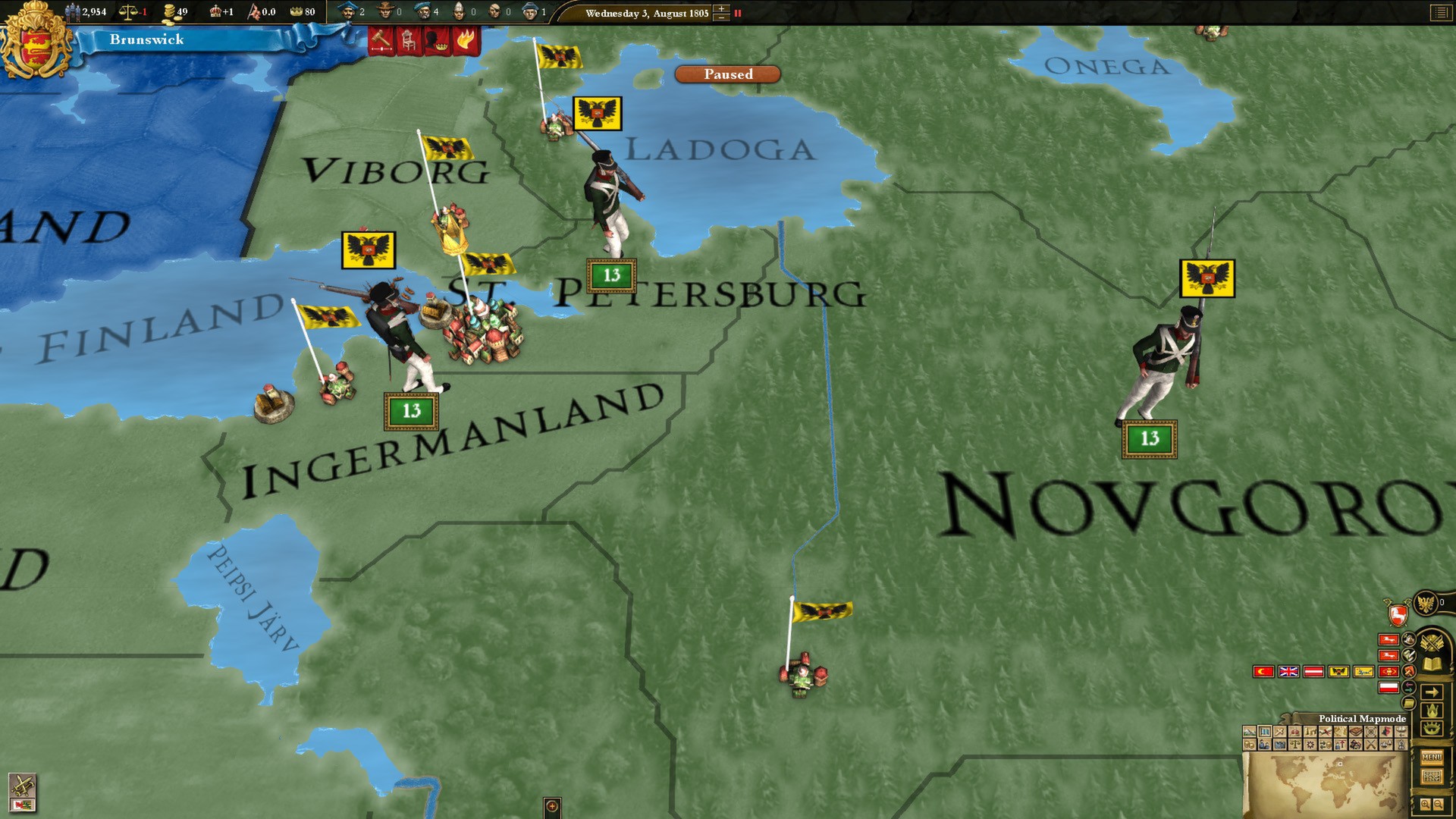
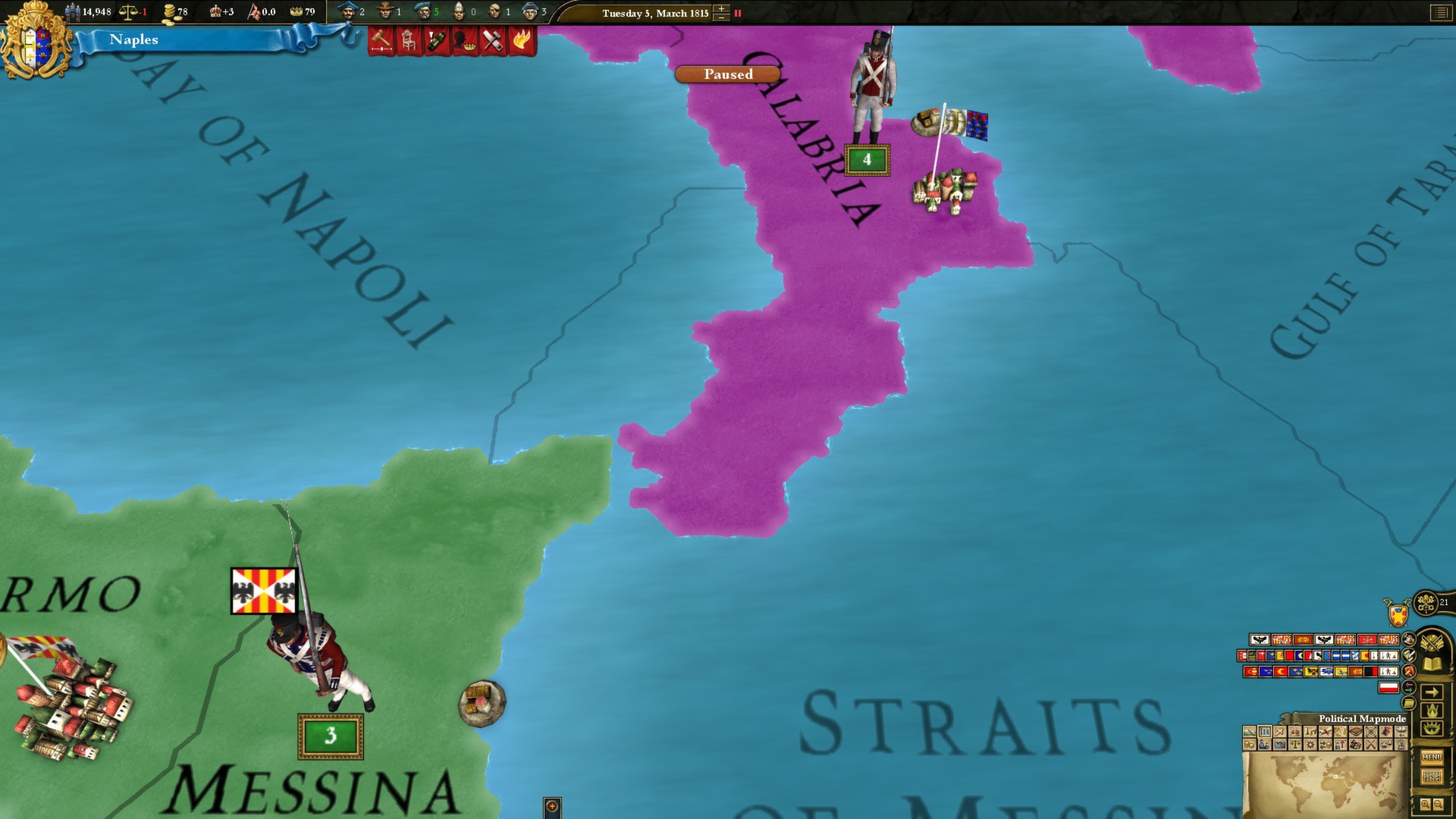
Europa Universalis III – Revolution SpritePack DLC builds on the visual foundation of Europa Universalis III with a focused improvement in how armies appear across its vast historical map. The base game is already known for its clear, functional strategy presentation, and this DLC refines that identity by giving military units more distinct visual styles tied to their regions and eras.
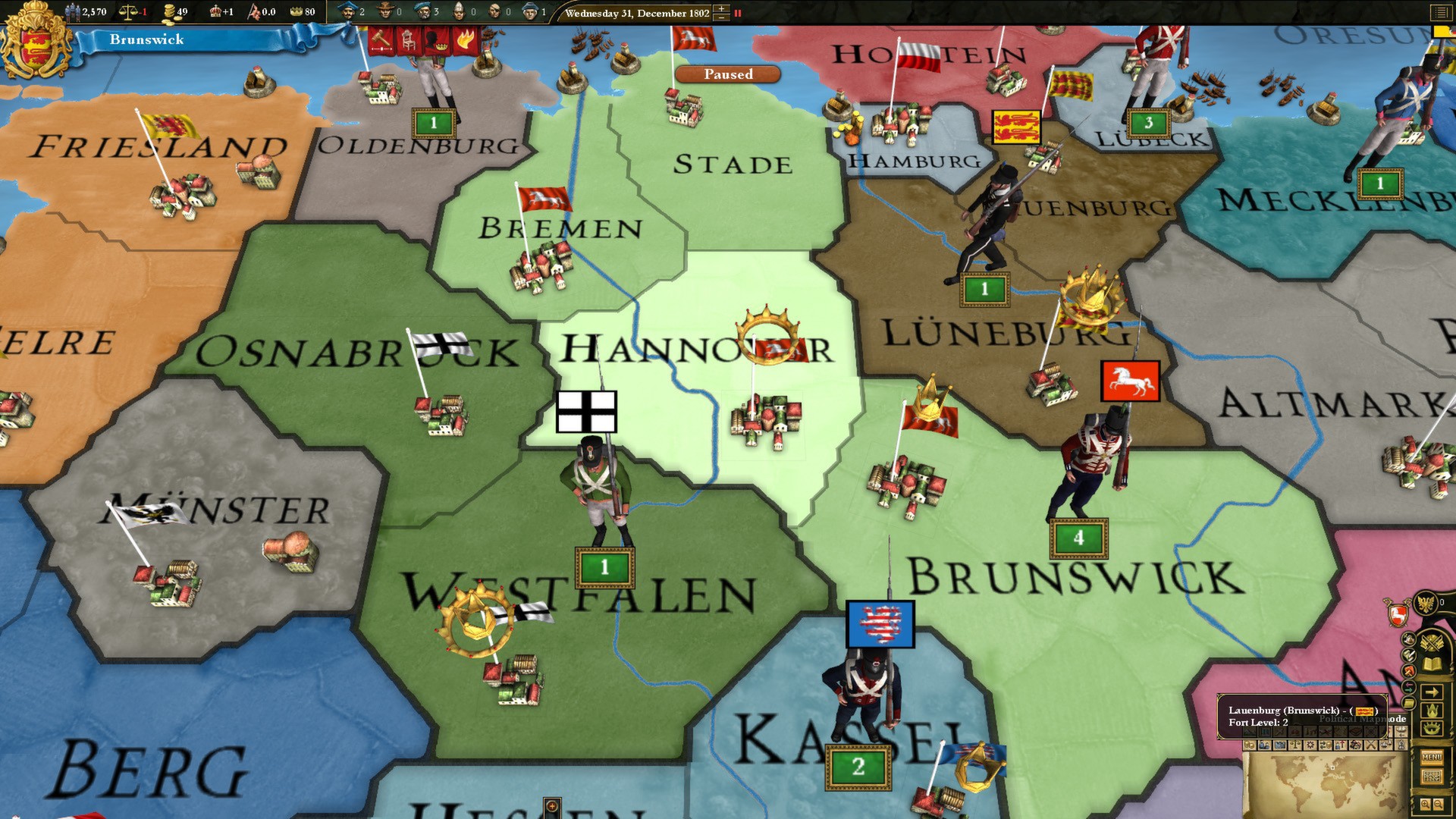
From the moment a campaign begins, the world is presented as a wide, parchment-like map filled with layered political boundaries, terrain variations, and shifting borders. The art direction leans toward a grounded historical tone rather than realism-heavy rendering, which keeps the focus on readability while still maintaining atmosphere. Colors are muted but purposeful, with natural earth tones defining landmasses and softer contrasts helping key strategic elements stand out during long sessions.
The Revolution SpritePack DLC enhances this foundation by updating unit sprites, adding more variety and clarity to how armies move across provinces. Instead of generic formations, different nations now carry subtle visual identities that reflect their historical context. When multiple forces gather on the same battlefield, these distinctions make large-scale conflicts easier to interpret at a glance, especially during late-game scenarios where the map becomes dense with activity.
Animation remains restrained but functional, with smooth transitions that prioritize clarity over spectacle. Army movements, engagements, and occupation states are visually readable rather than heavily stylized, which suits the game’s focus on long-term strategy and decision-making. This approach ensures that visual feedback never overwhelms the player but instead supports the flow of information.
Lighting and effects are minimal yet effective, enhancing seasonal and geographical differences without distracting from gameplay. Snow-covered regions, coastal provinces, and inland territories all maintain subtle visual identity, reinforcing the sense of a living world evolving over centuries.
What makes this visual style effective is its consistency with the game’s strategic depth. It avoids unnecessary complexity while still giving enough variation to keep long campaigns visually engaging. The SpritePack DLC strengthens this balance by adding detail where it matters most—on the battlefield—without changing the overall artistic direction.
The result is a clean, historically grounded presentation that supports immersion through clarity, helping players stay connected to the evolving world without losing focus on strategy.
Technical Requirements
Europa Universalis III – Revolution SpritePack DLC is designed for PC players running the base game Europa Universalis III, and it inherits the same lightweight system footprint as the original grand strategy title. Since this DLC focuses purely on visual unit enhancements, it does not increase system demands, making it suitable for a wide range of modern and older setups. The game runs on Windows PCs, with additional compatibility often available through Linux and macOS environments depending on the storefront or compatibility layer used, especially on platforms like Steam.
In terms of system expectations, even entry-level hardware is typically enough to run the game smoothly. A basic dual-core processor, modest RAM, and integrated or low-end dedicated graphics are generally sufficient for stable performance. Recommended setups benefit from slightly stronger CPU performance for handling large late-game simulations where hundreds of units and provinces are active at once. Load times are generally short on modern systems, and performance remains stable throughout long campaigns, even as the world map becomes more complex.
On higher-end systems, the game maintains consistent frame pacing without demanding modern GPU resources, since its visual style is map-focused rather than graphically intensive. The SpritePack DLC’s updated unit sprites are optimized to integrate seamlessly, ensuring no noticeable impact on performance while improving battlefield clarity and visual distinction during large-scale wars.
Controls are fully centered around keyboard and mouse input, which suits the game’s strategy-driven interface. Players interact primarily through point-and-click map navigation, menus, and hotkeys for faster management of diplomacy, economy, and military actions. While there is no native controller support, the control scheme is highly customizable, with key remapping options that allow players to tailor shortcuts to their preferred playstyle.
Accessibility features are modest, reflecting the game’s original design era. Players can adjust interface scaling, audio levels, and display settings for comfort during long sessions. Subtitles and text-based notifications support readability for event-driven gameplay, while adjustable difficulty settings allow both newcomers and experienced strategy players to shape the challenge level.
Overall, Europa Universalis III – Revolution SpritePack DLC remains highly accessible across a wide range of PC systems, offering stable performance, flexible controls, and a straightforward setup that prioritizes long-term strategic gameplay over hardware demands.
Who Is This Game For?
Europa Universalis III – Revolution SpritePack DLC is best suited for players who enjoy slow-burn, systems-driven strategy games where decisions matter more than reflexes. At its core, this experience is designed for people who like thinking several steps ahead, managing long-term outcomes, and watching complex systems evolve over time. If you enjoy grand strategy gameplay on PC, where nations grow, collapse, and reshape the world through diplomacy, trade, and war, this kind of experience will feel familiar and rewarding.
It appeals strongly to players who enjoy historical simulation and sandbox-style progression. There is no fixed storyline guiding you forward, so the enjoyment comes from creating your own narrative through choices. Whether you prefer careful economic development, aggressive territorial expansion, or diplomatic influence over global politics, the game supports multiple playstyles without forcing a single path. This flexibility makes it a strong fit for strategy enthusiasts who like replayability and experimentation across different nations and scenarios.
Players who enjoy single-player focused experiences will find the most comfort here, especially those who prefer long campaigns that evolve gradually over time. Multiplayer is also available for those who enjoy unpredictable, competitive strategy against real opponents, but the pace remains deliberate rather than fast or action-oriented.
This game is less suited for players looking for immediate action, cinematic storytelling, or short-session gameplay. It does not rely on fast reflexes, real-time combat intensity, or scripted narrative progression. Instead, it rewards patience, attention to detail, and a willingness to learn complex systems over time. Newer players may need a short adjustment period to understand its depth, but the learning curve becomes part of the long-term satisfaction.
The Revolution SpritePack DLC itself is ideal for players who are already interested in the base game and want a more visually distinct battlefield experience. It does not change mechanics, so it is best appreciated by those who already enjoy the core strategic loop and want a clearer, more immersive presentation during extended campaigns.
Overall, this is a game for thoughtful strategists, history enthusiasts, and players who enjoy shaping their own version of world history at their own pace, rather than following a predefined path or chasing fast-paced gameplay loops.
FAQ
What is Europa Universalis III – Revolution SpritePack DLC?
It is a visual enhancement DLC for Europa Universalis III, a grand strategy PC game. It updates and improves unit sprites, giving armies a clearer and more distinct appearance during large historical campaigns without changing core gameplay systems.
What kind of gameplay does Europa Universalis III offer?
The base game focuses on long-term grand strategy where you manage a nation over centuries. Players handle diplomacy, trade, war, and expansion on a global map, creating their own historical outcomes rather than following a fixed story.
Does this DLC change gameplay or add new mechanics?
No, the Revolution SpritePack DLC does not introduce new mechanics or gameplay systems. It focuses entirely on visual improvements, especially army unit designs, to make large-scale conflicts easier to follow.
Is the game single-player or multiplayer?
Europa Universalis III supports both single-player and multiplayer. Single-player is more focused on personal strategy and long campaigns, while multiplayer adds competitive and unpredictable diplomacy with other players.
What platforms is it available on?
The game is primarily available on PC through digital platforms like Steam and other compatible storefronts. It is designed for keyboard and mouse gameplay.
What are the system requirements like?
The game is lightweight compared to modern titles. Most standard PCs and laptops can run it smoothly, even on modest hardware, since it focuses on map-based strategy rather than heavy graphics.
How long is the gameplay experience?
Campaigns can last for dozens or even hundreds of hours depending on your chosen nation and playstyle. Replayability is very high because every run creates different political and historical outcomes.
Who will enjoy this game the most?
It is best suited for players who enjoy deep strategy, historical simulation, and slow, thoughtful gameplay. It may feel complex for casual players at first, but rewarding for those who enjoy learning layered systems.
Do I need to be online to play?
Single-player can be played offline, while multiplayer requires an internet connection.
FAQ
Operating System (OS)
Other Details

Languages


Reviews
There are no reviews yet.