

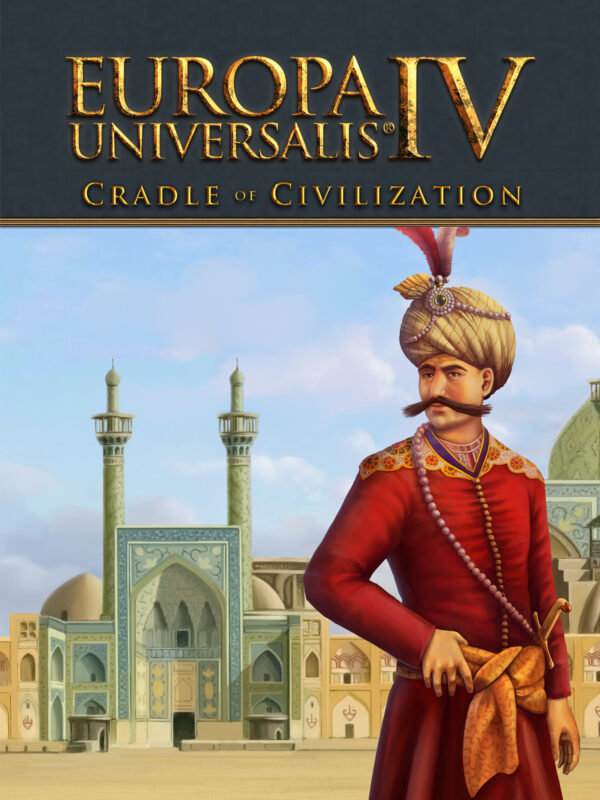
Europa Universalis IV – Cradle of Civilization DLC PC Steam Altergift
5 in stock
copies left5 in stock
Sold by: OMG Gamer






Delivery24/7
supportVerified
Sellers

Product Description
Europa Universalis IV – Cradle of Civilization DLC PC Steam Altergift
Quck Intro
Europa Universalis IV – Cradle of Civilization expands the grand strategy experience by turning its focus to the Middle East and Islamic world, adding new layers of depth to diplomacy, trade, and empire management. Players guide a nation through centuries of history, balancing military ambition with cultural and religious influence. This DLC introduces unique government mechanics, army professionalism systems, and region-specific decisions that reshape how campaigns unfold. Whether you’re managing powerful empires like the Ottomans or building a rising state from smaller beginnings, the experience feels more dynamic and historically grounded. It’s designed for players who enjoy deep strategic planning, long-term decision-making, and evolving narratives across a richly simulated world.
About
Europa Universalis IV – Cradle of Civilization is a grand strategy expansion that deepens the experience of ruling a nation through the early modern era, with a strong focus on the Middle East and Islamic world. It places you in the role of a ruler shaping history over centuries, where every decision political, military, or economic can alter the fate of your empire. Rather than quick matches or isolated scenarios, the game unfolds as a long-form strategy journey built on careful planning and adaptation.
Much of your time is spent managing the delicate balance between expansion and stability. You’ll negotiate alliances, wage calculated wars, oversee trade routes, and guide religious and cultural development within your borders. This DLC enhances that loop with mechanics like army professionalism and unique government interactions, giving more control over how your state evolves. Each campaign tells a different story depending on your choices, making progression feel organic and deeply personal.
What sets it apart from other strategy games is its commitment to historical depth combined with player freedom. It doesn’t just simulate battles; it simulates entire societies, encouraging you to think like a statesman rather than just a commander. The added regional flavor brings authenticity and variety, especially for players interested in exploring lesser-represented parts of global history.
This experience is best suited for strategic thinkers and players who enjoy slow-burning, decision-driven gameplay. If you appreciate complex systems, long-term planning, and the satisfaction of watching your empire grow over time, there’s a quiet thrill in every choice you make and a lasting sense that history is unfolding because of you.
Key Features
Europa Universalis IV – Cradle of Civilization builds on the grand strategy foundation by giving players more control over how their nation evolves, especially across the Middle East and Islamic world. Every decision feeds into a larger loop of expansion, diplomacy, and internal stability, creating a campaign that feels both personal and historically grounded.
- You shape your empire through a constant cycle of planning, acting, and adapting. From managing alliances and trade routes to preparing for war, each system connects, encouraging thoughtful, long-term strategy rather than quick decisions.
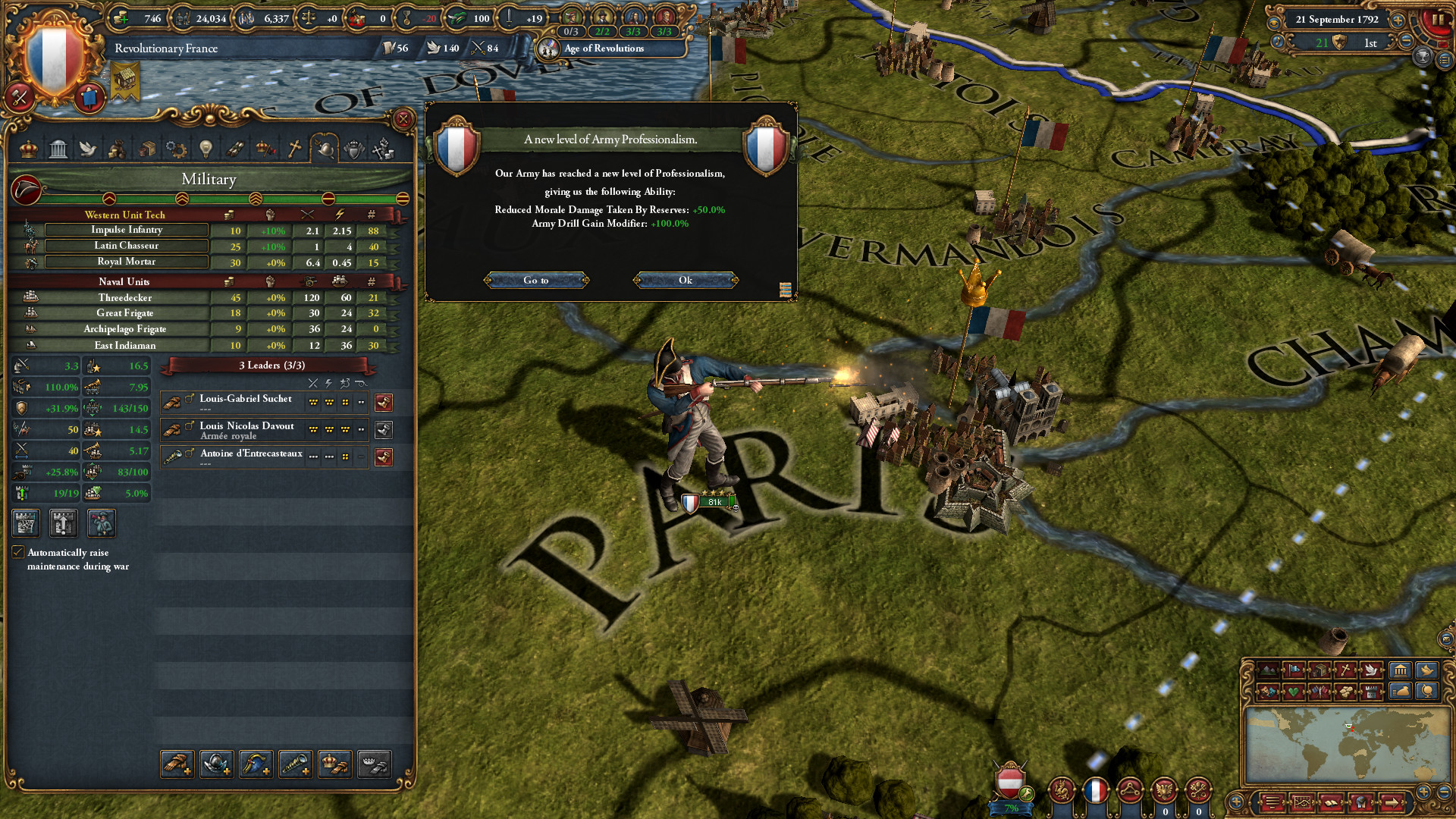
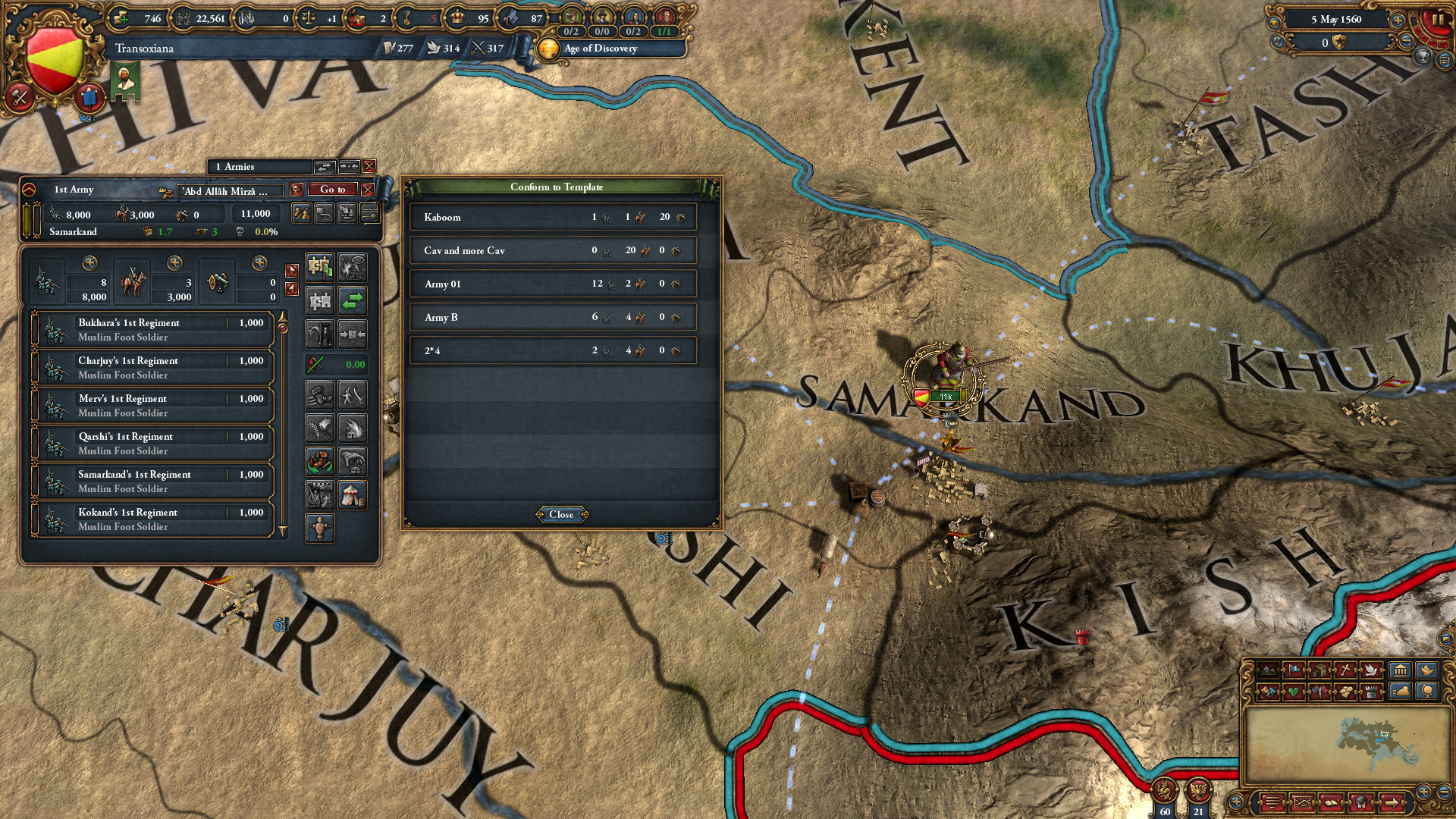
- Military depth is expanded with the army professionalism system, where maintaining a trained, disciplined force brings tangible advantages. It adds a layer of realism, pushing players to think beyond simply raising troops and into how armies are built and sustained.
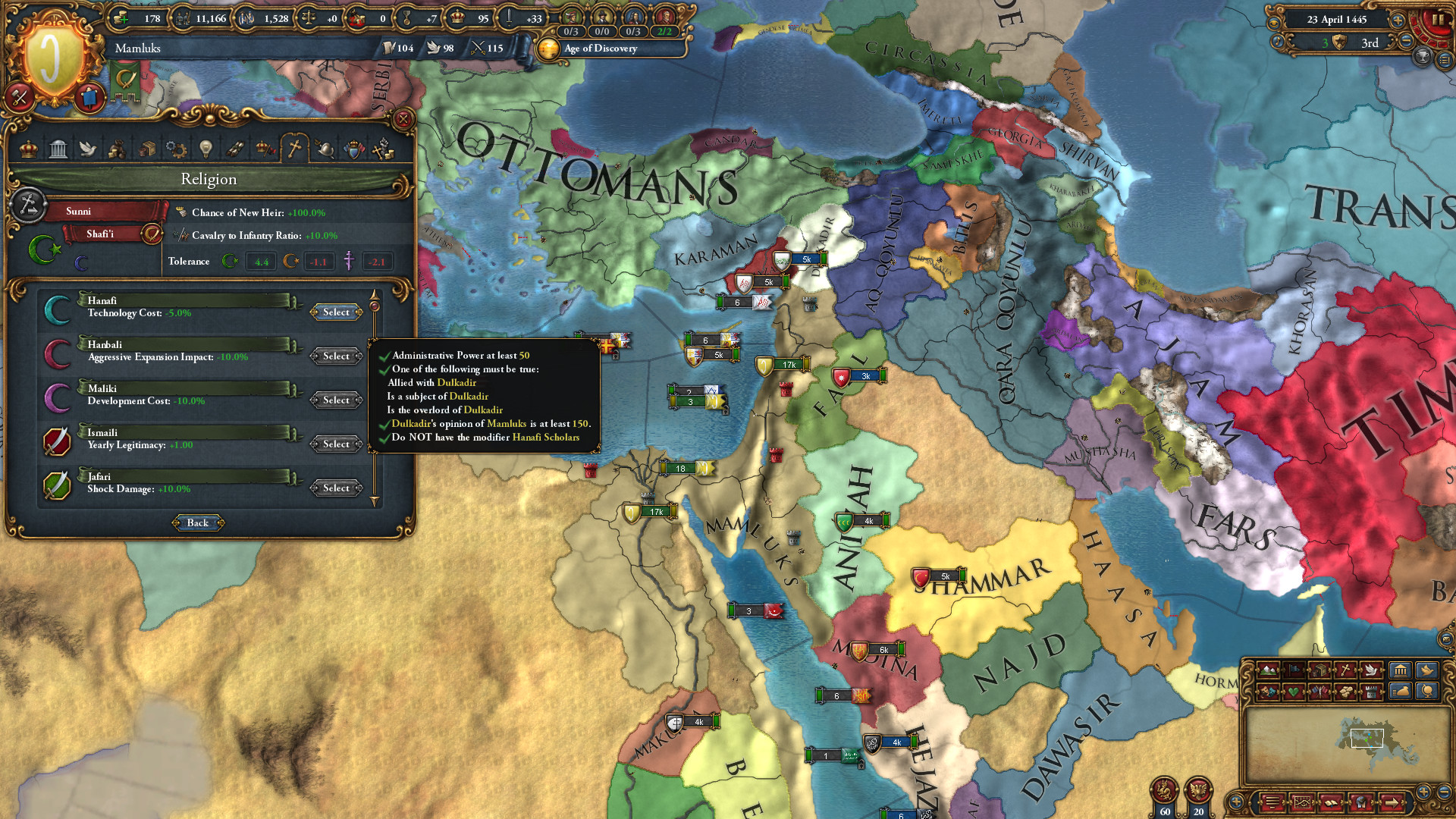
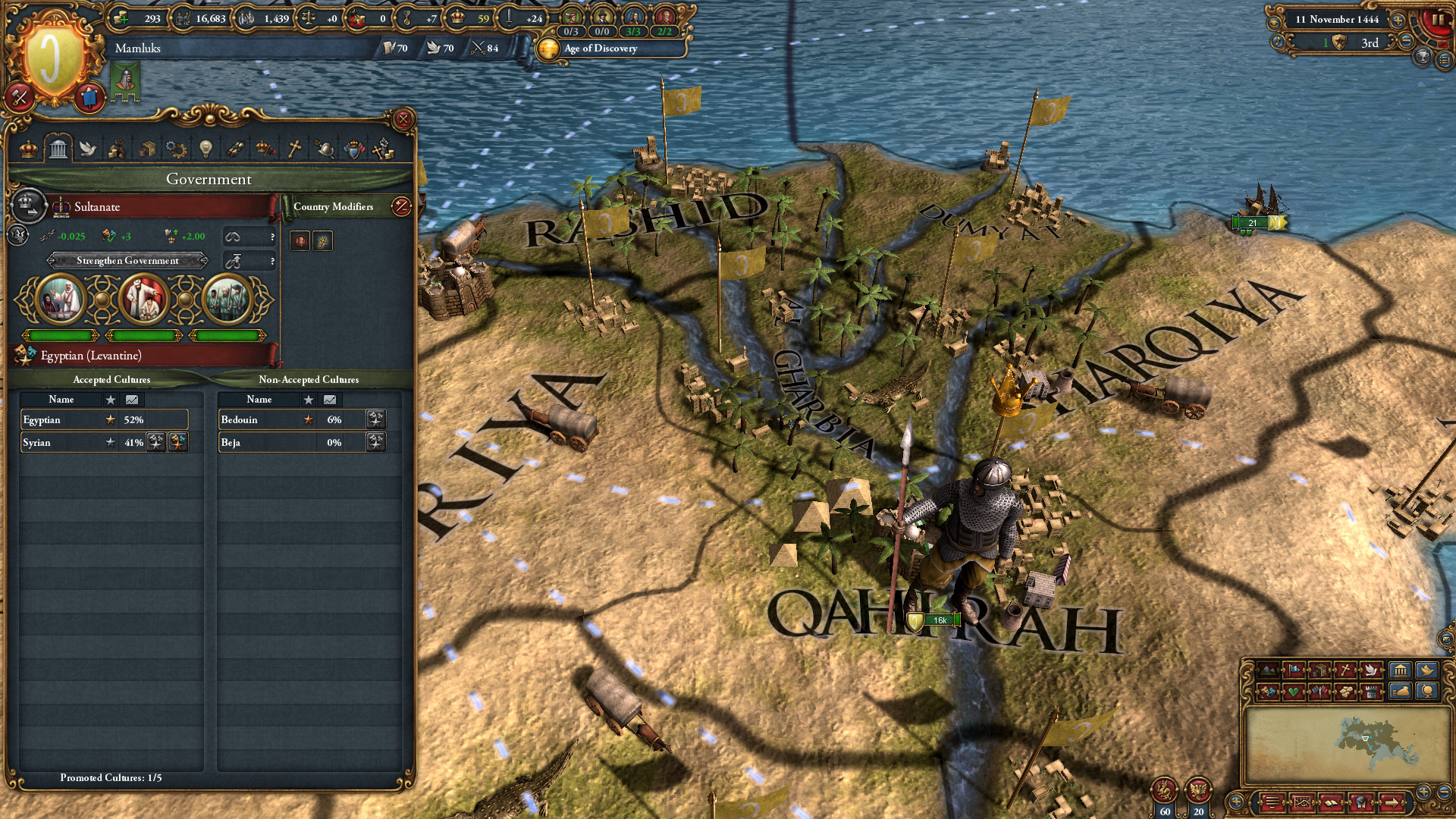
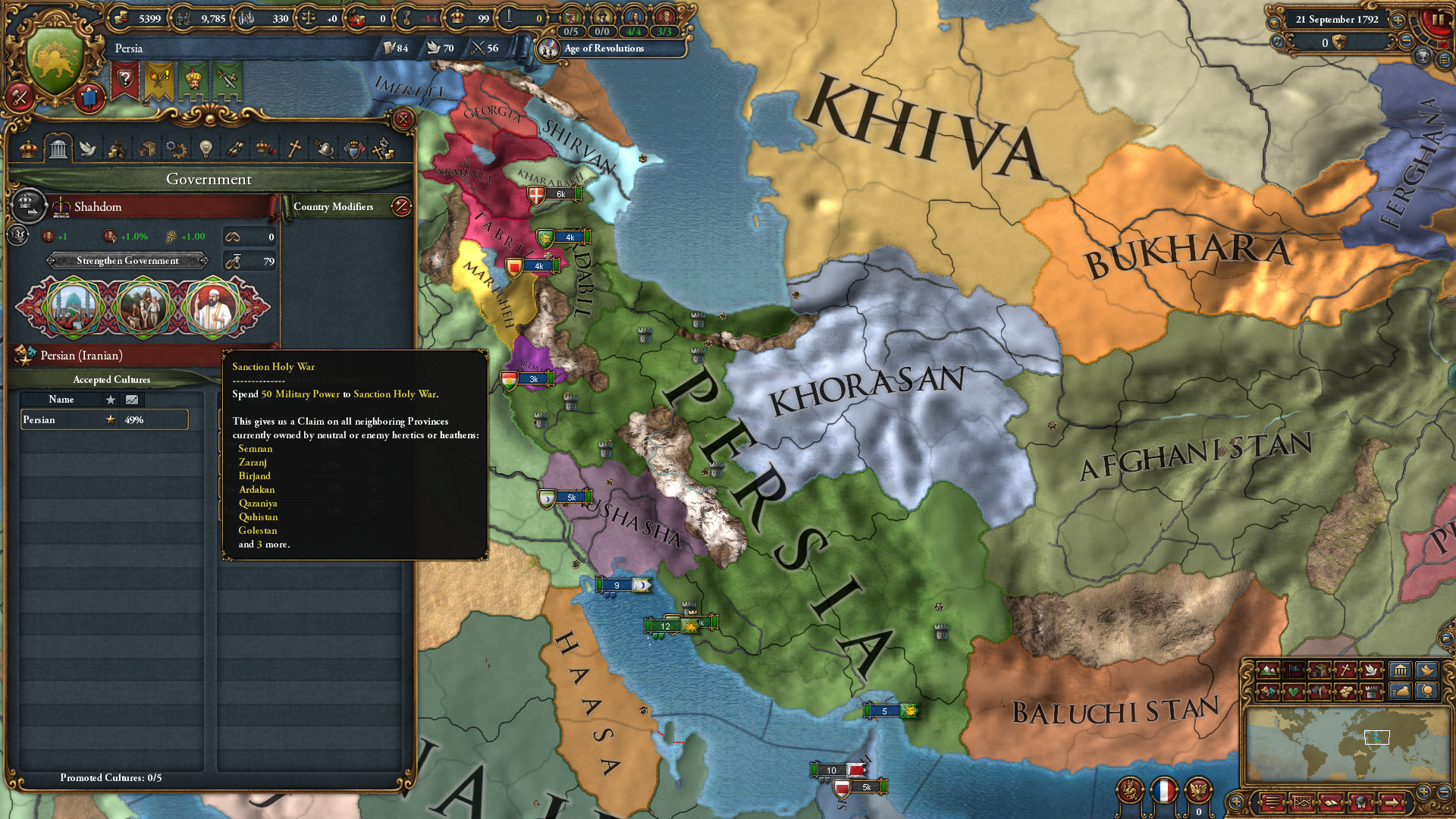
- Government and religion mechanics are more dynamic, offering unique interactions for Islamic nations and region-specific policies. These systems influence how your state functions internally, making cultural and political choices just as impactful as battlefield victories.
- The world feels more alive through tailored events and decisions tied to the region, allowing campaigns to unfold in distinct ways. No two playthroughs feel identical, as outcomes shift based on your priorities and strategy.
- Player freedom remains central, with open-ended progression that lets you expand aggressively, build a trade empire, or focus on internal development. There’s no single path to success, only the one you create.
- Designed for PC strategy players who enjoy deep systems and evolving narratives, the experience rewards patience and experimentation. Over time, your decisions form a unique version of history, shaped entirely by your approach and ambition.
Gameplay
Europa Universalis IV – Cradle of Civilization expands the grand strategy experience of managing a nation across centuries of political, economic, and military change. Players control a country on a global map, issuing decisions that shape diplomacy, warfare, trade, and internal development in a real-time historical sandbox focused on long-term strategy rather than fast action.
At its core, the gameplay loop revolves around expanding influence while maintaining stability. You negotiate alliances, manage resources, direct armies in tactical warfare, and build trade networks that support your economy. With this DLC, the Middle East and surrounding regions gain deeper systems, including unique government interactions and regional mechanics that influence how empires grow and compete.
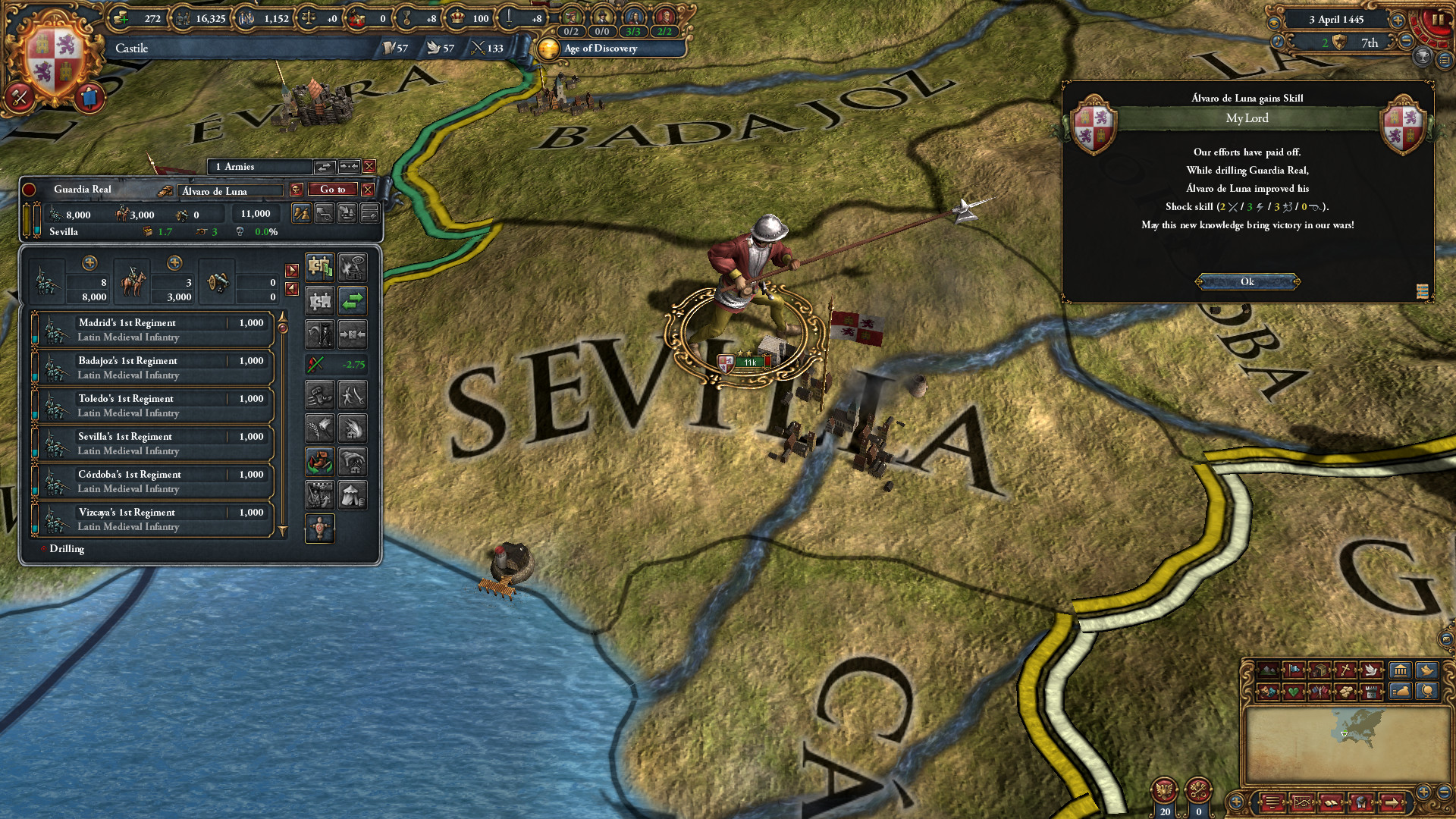
Military gameplay gains added depth through systems like army professionalism, rewarding investment in training and long-term force quality over sheer numbers. Warfare is closely tied to diplomacy and economy, meaning every conflict affects your broader strategic position. Players must constantly decide when to expand aggressively and when to consolidate power through development, stability management, and internal reforms.
Progression is driven by adaptive choices rather than linear upgrades. As your nation evolves, new decisions, events, and regional opportunities appear, shaping distinct playstyles such as trade-focused empires, expansionist powers, or diplomatic states. The experience supports both single-player campaigns and multiplayer strategy sessions, where human unpredictability adds an additional layer of challenge.
Over time, gameplay escalates in complexity as borders shift, alliances break, and new powers emerge. This creates a dynamic strategy experience where no two campaigns feel identical, encouraging replayability and experimentation with different nations, regions, and approaches to global influence or survival.
Story & World
Europa Universalis IV – Cradle of Civilization is set within the early modern world, a period where empires rise, trade routes reshape continents, and religion and politics are tightly intertwined. The DLC focuses especially on the Middle East and surrounding regions, a crossroads of civilizations where ancient legacy meets expanding global power.
You step into the role of a ruler guiding a nation through centuries of uncertainty and opportunity. The world is not static; borders shift, alliances form and break, and every region carries its own identity shaped by history, faith, and ambition. Rather than following a fixed storyline, the narrative emerges from your decisions and the consequences they create over time.
This expansion adds greater depth to regions that have historically been at the center of global exchange. The Islamic world, Anatolia, Persia, and the Arabian Peninsula are portrayed as dynamic spaces of cultural influence and political rivalry. Cities grow as trade hubs, dynasties compete for legitimacy, and empires struggle to maintain unity while expanding their reach across continents.
Across the wider world, powerful states in Europe, Asia, and Africa interact through diplomacy, conflict, and commerce, creating a living global map where no nation exists in isolation. Each faction carries its own traditions, goals, and internal pressures, giving the setting a sense of realism and constant motion. The scale encourages you to think beyond borders and consider how distant events can reshape your own domain.
The atmosphere of the game is defined by tension and transformation. It captures a world transitioning into global modernity, where old systems are challenged by new ideas and expanding networks of trade and influence. As time progresses, the world evolves in visible and meaningful ways, reflecting shifting power structures and cultural exchange. Your actions become part of this larger historical flow, influencing how regions develop and how societies respond to change.
What makes this world compelling is its sense of continuity and unpredictability. Every campaign unfolds differently, shaped by the rise and fall of powers and the decisions made across centuries. It is a world that feels both familiar and uncertain, where history is not just observed but actively written through your presence. In this space, every choice leaves a trace, and every era becomes a story shaped by ambition, survival, and legacy.
Beyond familiar centers of power, the world stretches into regions shaped by unique traditions and evolving identities. From bustling port cities connected by maritime trade to inland territories defined by shifting dynasties, every area contributes to a broader historical tapestry. The Middle East in particular stands as a meeting point between continents, where ideas, goods, and ambitions intersect. Cultural diversity is not background detail but a defining feature of how societies interact and change over time. In this historical setting, even distant events can ripple outward, altering the balance of influence across regions. It is a world that rewards curiosity, patience, and long-term thinking, where understanding context is as important as any single decision. As centuries pass, the map becomes a record of transformation, shaped by countless rulers whose actions together form an evolving global history.
Game Modes
Europa Universalis IV – Cradle of Civilization is experienced primarily through a single, deeply flexible grand strategy sandbox, where “game modes” are less about separate menus and more about how you choose to approach a living historical world. Whether you prefer careful planning or bold expansion, the structure supports multiple styles of play without forcing a fixed path.
In single-player campaigns, the experience is slow-burning and highly personal. You select a nation and guide it across centuries of political change, economic growth, and military conflict. This mode is ideal for players who enjoy thoughtful, strategy-driven gameplay where every decision carries long-term consequences. With the Cradle of Civilization expansion, regions like the Middle East feel more distinct, offering new government systems and military mechanics that change how a solo campaign unfolds.
Multiplayer adds a different rhythm entirely. Here, the same grand strategy systems become unpredictable as human players negotiate, compete, and form shifting alliances. Diplomacy becomes more tense, wars more dynamic, and long-term planning far less certain. It’s a mode that appeals to competitive strategy players and groups who enjoy deep, session-based experiences that can last for hours or even weeks.
There is also a flexible “sandbox-style” approach built into every campaign. Instead of following a scripted narrative, players create their own goals whether building a trade empire, restoring a fallen dynasty, or dominating through military conquest. This freedom is a key reason the game remains highly replayable, as no two campaigns develop in the same way.
Across all modes, progression is continuous rather than segmented. The world evolves in real time, and your nation adapts alongside it. Whether playing alone or with others, the experience is shaped by long-term planning, emerging events, and the constant tension between expansion and stability.
Visuals & Art Style
Europa Universalis IV – Cradle of Civilization presents a visual style that is grounded, detailed, and designed to reflect the weight of history unfolding over centuries. Instead of chasing realism or cinematic spectacle, the game leans into a clean, map-focused presentation where clarity and atmosphere work together. The world is seen from a strategic perspective, yet it never feels abstract. Every province, border, and city carries subtle visual identity that helps you understand the world at a glance.
The art direction is defined by rich but restrained color palettes. Warm desert tones spread across the Middle East, contrasting with greener European regions and the varied textures of Asia and Africa. This natural separation of regions helps players immediately read the map while still appreciating its historical depth. As time progresses, the map evolves visually, with changing borders, expanding empires, and shifting political landscapes giving a quiet sense of transformation.
Rather than character-driven animation or close-up cinematic sequences, the visual storytelling happens through layered systems on the map itself. Armies move as distinct units across terrain, fleets navigate detailed coastlines, and trade routes create a sense of global connection. The interface is designed to remain readable while still blending into the historical tone of the world, supporting long strategic sessions without visual fatigue.
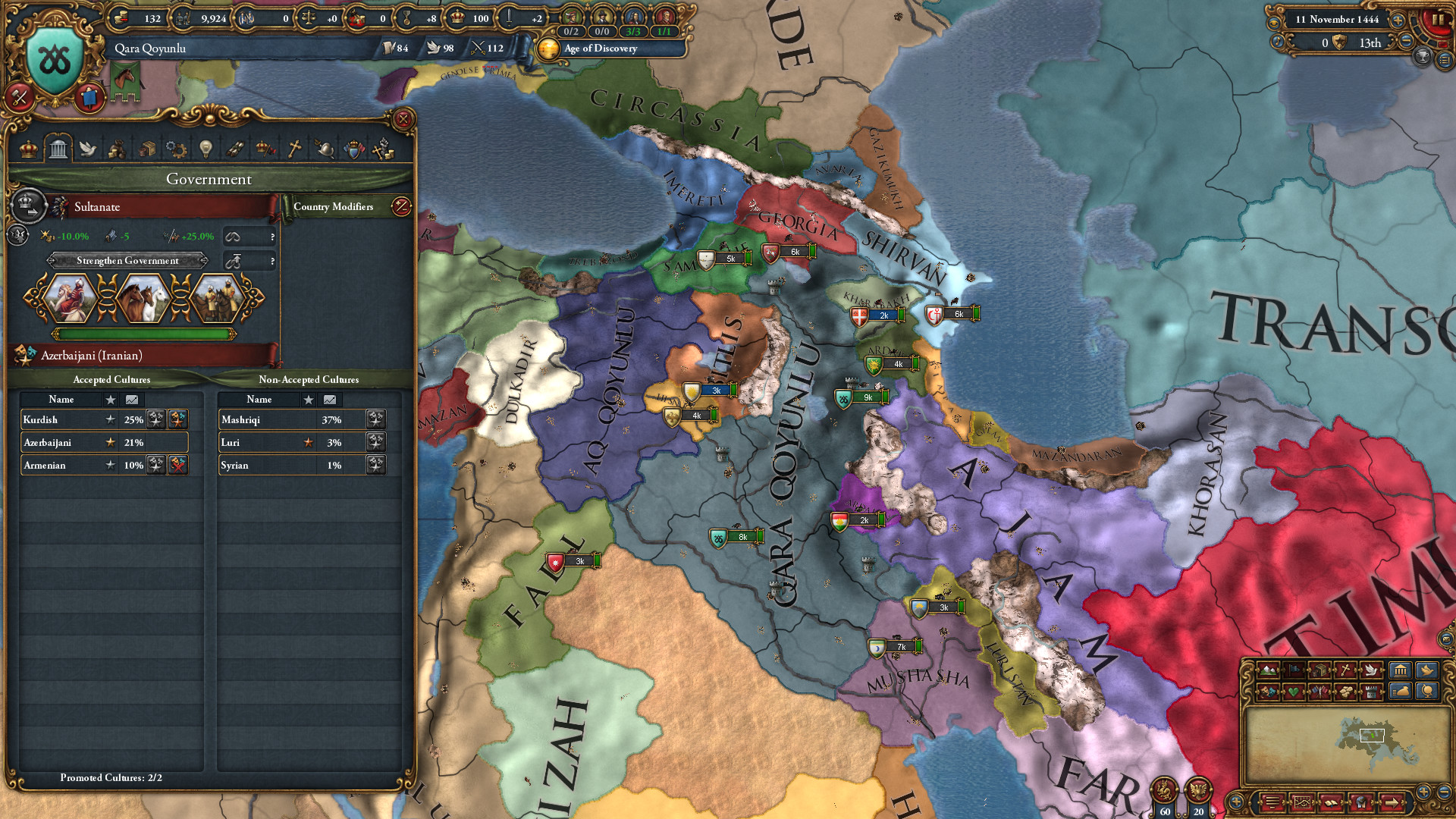
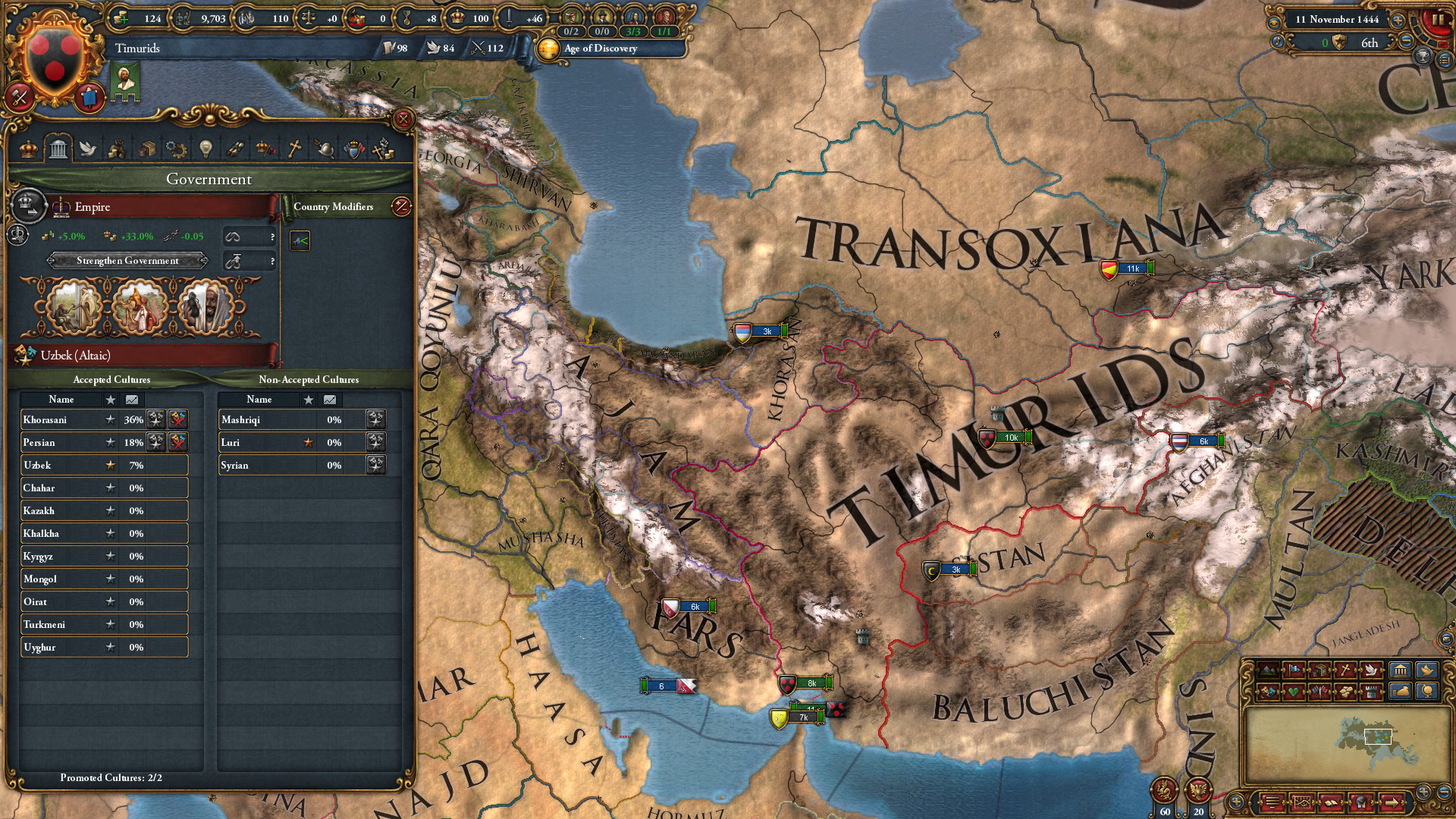
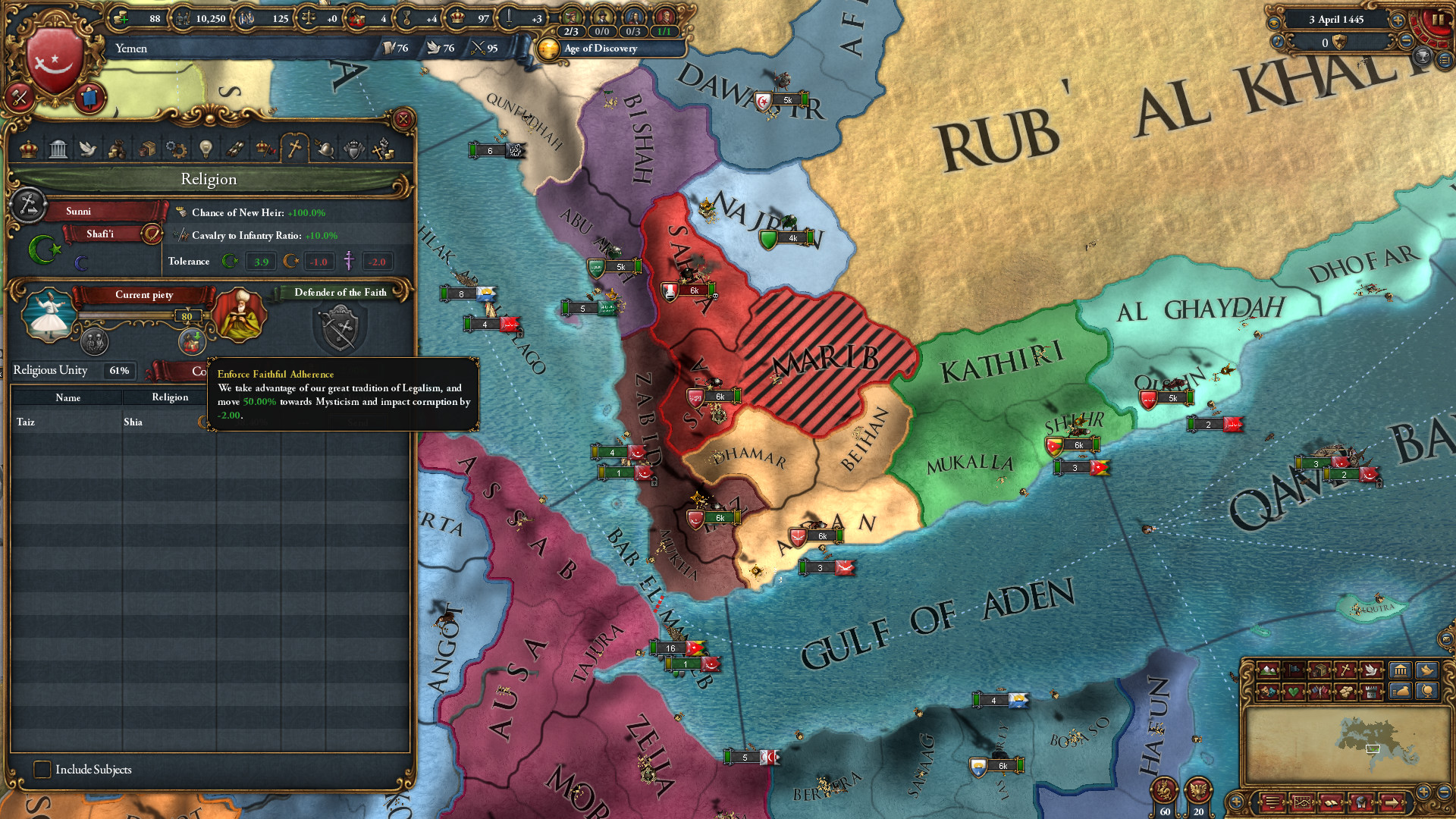
Cradle of Civilization enhances this identity through region-specific visual flavor, especially in Islamic and Middle Eastern territories. Cultural details, city representations, and government visuals add distinction without overwhelming the core map readability. These subtle artistic touches help reinforce the feeling that different regions operate under their own historical rhythms.
Overall, the visual experience is not about spectacle but about immersion through clarity and consistency. It creates a steady, evolving world map that reflects centuries of political change, allowing players to “see” history unfold through shifting borders and expanding influence. The result is a style that quietly supports deep strategic thinking while maintaining a strong sense of place and atmosphere throughout every campaign.
Technical Requirements
Europa Universalis IV – Cradle of Civilization runs as an expansion to the base grand strategy game, meaning it shares the same technical foundation and remains lightweight by modern PC standards. The experience is designed primarily for PC, with full support across Windows, macOS, and Linux through major digital storefronts like Steam and the Paradox launcher ecosystem. There are no console versions, as the game is built around precise mouse-and-keyboard strategy control.
In terms of system requirements, even modest hardware can handle the game smoothly. A basic modern processor, integrated or entry-level graphics, and 8GB of RAM are generally enough for stable gameplay. Recommended setups benefit more from stronger single-core CPU performance, since large-scale simulations and late-game empires rely heavily on processing power rather than graphics intensity. The DLC itself does not significantly increase hardware demands, as it expands systems rather than visual complexity.
Performance is generally stable across a wide range of machines, with smooth frame pacing during early and mid-game play. In longer campaigns where the world becomes densely populated with nations and calculations increase, the game may slow slightly on lower-end systems, but settings like map detail and simulation speed help maintain a playable experience. Load times are relatively short on SSDs, while traditional drives may take a bit longer when starting large campaigns.
Controls are fully optimized for keyboard and mouse, which remain essential for navigating the map, issuing commands, and managing layered strategic menus. The interface supports customization, including hotkeys and UI scaling, allowing players to adjust the layout for comfort during long sessions. Controller support is not a focus, as the gameplay is built around precision and dense information management.
Accessibility options are practical rather than extensive, with scalable text, adjustable interface sizes, and audio settings that help tailor the experience. The pause-and-play structure also makes the game naturally approachable, letting players take time to think through decisions without pressure. Overall, the system design prioritizes clarity, flexibility, and long-term stability over visual intensity, ensuring the experience remains accessible to a wide range of PC setups.
Who Is This Game For?
Europa Universalis IV – Cradle of Civilization is best suited for players who enjoy deep, systems-driven strategy where patience and long-term thinking matter more than fast reactions. If you like games where you shape history rather than simply follow it, this experience will feel familiar and rewarding. It appeals strongly to strategy enthusiasts who enjoy managing economies, diplomacy, warfare, and internal politics across long campaigns that unfold over centuries.
This is a game for players who enjoy thinking several steps ahead. If you find satisfaction in planning an empire’s growth, balancing alliances, and watching complex systems interact over time, the gameplay loop can be highly engaging. It also fits well for players who prefer single-player experiences where they can learn at their own pace, experiment with different nations, and slowly improve their understanding of large-scale strategy mechanics.
Multiplayer adds another layer for those who enjoy competition and unpredictability. It suits players who like negotiating with others, forming temporary alliances, and adapting strategies in real time based on human decisions rather than predictable AI behavior. The DLC enhances this with regional depth, especially in the Middle East, making different starts feel more distinct and strategic.
At the same time, this may not be ideal for players looking for quick sessions, action-heavy gameplay, or immediate rewards. The learning curve is steep, and early hours can feel overwhelming due to the number of systems involved. However, those who enjoy learning complex games often find that this depth becomes one of its strongest rewards over time.
Ultimately, this experience is for players who value strategic freedom, historical simulation, and replayability over fast pacing. It rewards curiosity, patience, and experimentation, gradually turning complexity into clarity as you become more comfortable shaping the fate of nations across a living, evolving world.
FAQ
What kind of game is Europa Universalis IV – Cradle of Civilization DLC?
It is a grand strategy expansion that adds more depth to the historical simulation of Europa Universalis IV – Cradle of Civilization. Players manage a nation over centuries, focusing on diplomacy, war, trade, and internal development in a living global map.
Do I need the base game to play this DLC?
Yes, this is an expansion and requires the base Europa Universalis IV game on PC. It is not a standalone title and is designed to enhance existing campaigns with new regional mechanics and systems.
What does the gameplay feel like?
The experience is slow, strategic, and decision-driven. You spend your time managing armies, negotiating alliances, and shaping your country’s economy and politics. It’s less about action and more about long-term planning and adapting to changing world conditions.
Is it single-player or multiplayer?
It supports both. Single-player is ideal for relaxed, personal campaigns where you can learn at your own pace. Multiplayer adds unpredictability, as other players bring negotiation, rivalry, and shifting alliances into the same world.
What platforms does it support?
The DLC is available on PC through major digital platforms and works on Windows, macOS, and Linux. It is not available on consoles, as the game relies heavily on mouse-and-keyboard precision.
How demanding is it on hardware?
It runs on a wide range of systems. Even mid-range PCs can handle it smoothly, though longer campaigns may require stronger CPU performance due to large-scale simulations.
Is it good for casual players?
It is more suited to players who enjoy complex strategy and are willing to invest time learning systems. It may feel challenging at first, but it becomes highly rewarding with experience.
Does it offer replay value?
Yes, each campaign plays differently depending on the nation you choose, making every run feel unique and historically dynamic.
FAQ
Operating System (OS)
Other Details

Languages


Reviews
There are no reviews yet.