

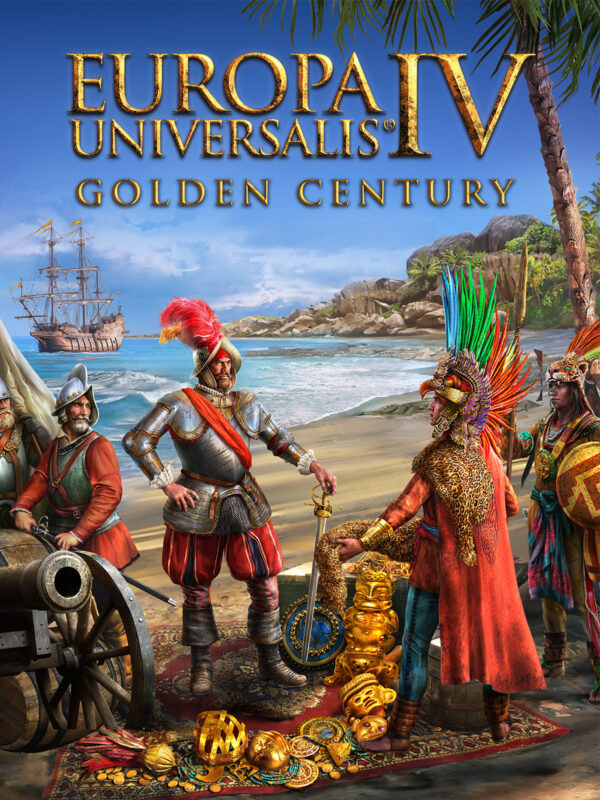
Europa Universalis IV – Golden Century DLC PC Steam Altergift
5 in stock
copies left5 in stock
Sold by: OMG Gamer






Delivery24/7
supportVerified
Sellers

Product Description
Europa Universalis IV – Golden Century DLC PC Steam Altergift
Quck Intro
Europa Universalis IV – Golden Century DLC expands the grand strategy experience of Paradox Interactive’s historical simulation, focusing on the rise and conflict of Iberian powers during a transformative era. This expansion adds new depth to colonial expansion, naval warfare, and religious dynamics, especially for nations like Spain, Portugal, and North African states. Players can shape sprawling empires through exploration, trade control, and maritime dominance while navigating the political and cultural tensions of the Mediterranean world. New mechanics such as pirate republics, expulsion of minorities, and enhanced mission trees give each campaign more variety and strategic weight. Whether you prefer careful diplomacy or aggressive empire building, the DLC enriches the core Europa Universalis IV gameplay with more layered decision-making and historical flavor, making every playthrough feel more dynamic and interconnected across land and sea.
About
Europa Universalis IV – Golden Century DLC is an expansion for Paradox Interactive’s grand strategy game that deepens the historical simulation of early modern Europe, with a strong focus on Iberian empires and Mediterranean power struggles. It places players in the role of a ruler guiding a nation through exploration, conquest, trade expansion, and political transformation during a pivotal age of global discovery.
The core experience revolves around managing a living, evolving empire where every decision shapes long-term outcomes. Players spend their time balancing diplomacy, warfare, economic growth, and religious influence while reacting to shifting alliances and rival ambitions. In this DLC, the gameplay loop gains additional texture through regional mechanics that highlight naval dominance, colonial expansion, and internal state management, especially for nations tied to Spain, Portugal, and surrounding regions.
What sets this expansion apart is how it enriches the historical depth of Europa Universalis IV without changing its foundation. It introduces more localized systems and narrative flavor, allowing campaigns to feel more distinct depending on where and how you play. Pirate republics, cultural decisions, and mission-driven progression add variety to strategic planning, making long campaigns feel less predictable and more reactive to the world around you.
This experience is best suited for strategy enthusiasts who enjoy slow-burn decision making, political planning, and long-form empire building. It appeals to players who like thinking several steps ahead, adapting to emerging threats, and shaping history through careful management rather than fast action.
At its heart, Europa Universalis IV – Golden Century DLC is about control, ambition, and the unpredictable nature of power across oceans and continents. It invites you into a world where every choice echoes forward in time, and where the rise of your empire depends on how well you understand both opportunity and consequence.
Key Features
- Golden Century DLC expands Europa Universalis IV, a grand strategy PC game focused on historical empire building during the early modern era. It enhances the experience of guiding nations through exploration, colonization, diplomacy, and warfare, with a special focus on Iberian powers and Mediterranean influence. Players shape long-term history through political and economic decisions.
- Naval systems feel more meaningful as control of seas becomes central to expansion. New pirate republic mechanics introduce alternate playstyles where disruption, raiding, and coastal pressure become valid strategies. Maritime routes, trade protection, and regional dominance create a more dynamic ocean-focused layer of gameplay that rewards timing and positioning over brute force.
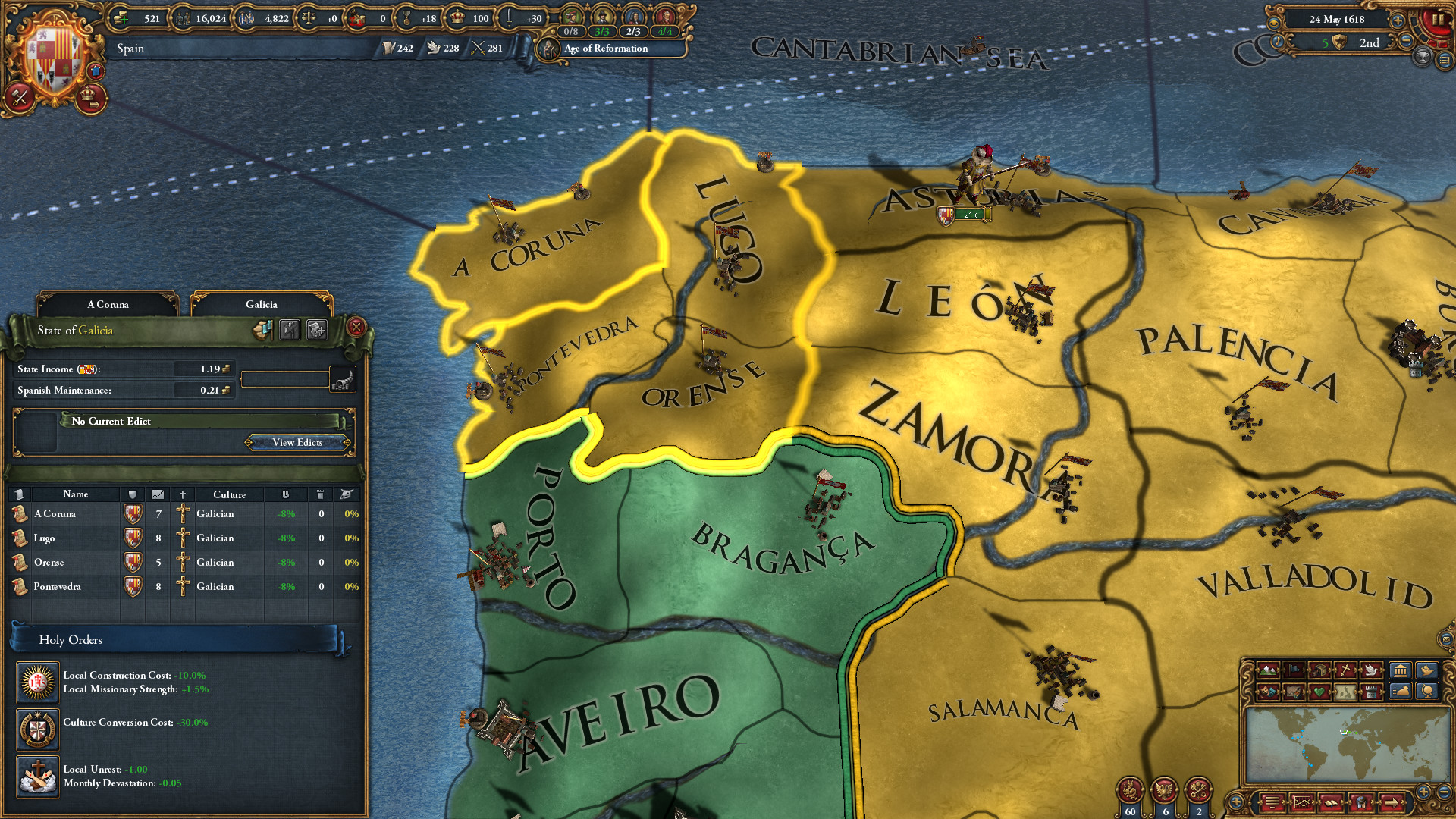
- Internal empire management gains additional depth through cultural and religious decisions, including the expulsion of minorities. These systems affect stability, economy, and long-term development, forcing players to weigh short-term gains against lasting consequences. Every decision reshapes population structure and influences how efficiently provinces contribute to the wider empire.
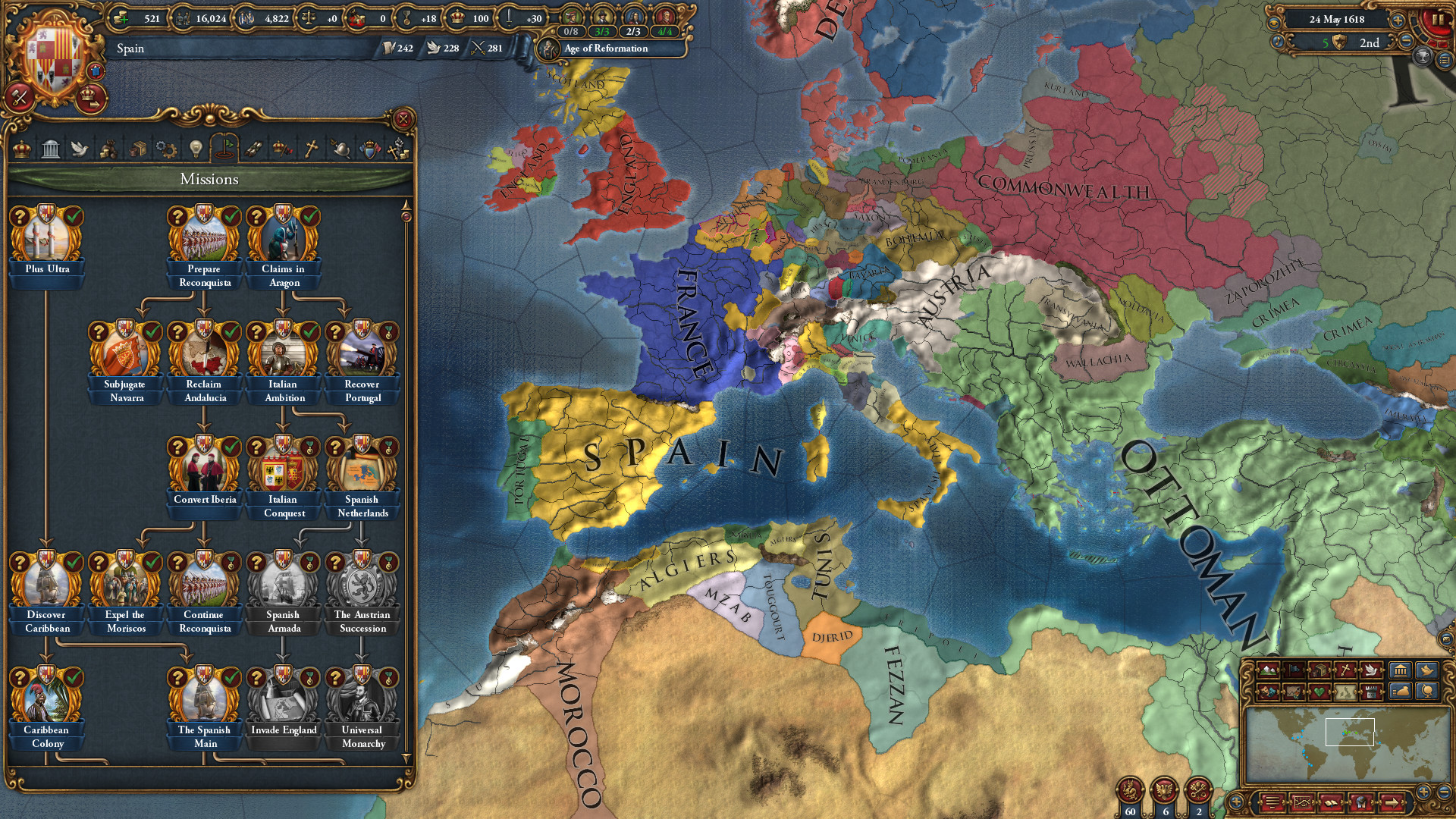
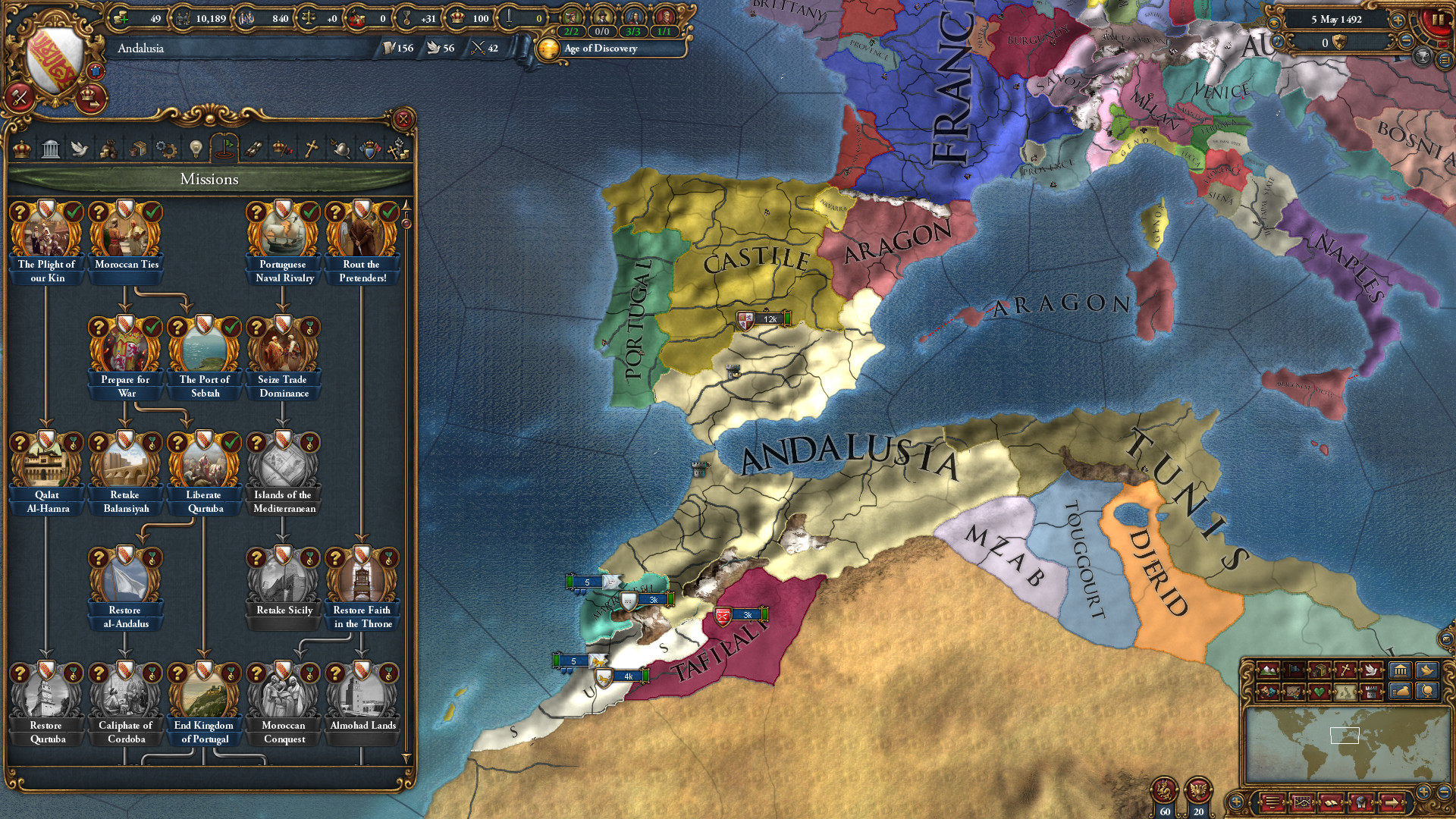
- New mission trees for Spain, Portugal, and nearby regions guide players through historically inspired objectives without restricting freedom. Colonial expansion, North African campaigns, and trade empire building offer varied paths depending on strategy. These structured goals help new and experienced players find direction while still allowing open-ended sandbox gameplay.
- The DLC integrates tightly with Europa Universalis IV’s core loop of diplomacy, warfare, trade management, and technological progression. Players continuously balance alliances, manage economies, and respond to shifting global power dynamics. The added regional systems enhance decision-making without breaking the familiar grand strategy structure.
- Replayability increases as each nation and region offers different challenges shaped by geography and history. Players who enjoy strategic planning, long campaigns, and adaptive decision-making will find deeper variety in each playthrough, especially when experimenting with alternative political or colonial outcomes.
Gameplay
Europa Universalis IV – Golden Century DLC builds on the grand strategy gameplay of Europa Universalis IV, where players guide a nation through the early modern world using diplomacy, war, trade, and exploration. The experience is played on a real-time map with pause, allowing careful planning of every decision while global events unfold continuously.
Players regularly manage economies, form alliances, declare wars, and expand territory while adapting to shifting political landscapes. In this DLC, Iberian nations gain deeper systems around colonial expansion, naval control, and Mediterranean influence, making maritime strategy more important than ever. Trade routes and regional dominance become key drivers of long-term success.
Naval combat and piracy mechanics introduce alternative ways to pressure rivals without direct land conquest, encouraging disruption of trade and coastal regions. Players can support pirate republics, suppress them, or use them strategically to weaken larger empires. Progression comes through missions, national ideas, and evolving government systems that shape long-term development.
The gameplay also supports multiplayer, where human players compete or cooperate across a shared historical world, often forming unpredictable alliances or rivalries. Over time, nations evolve through technology, reforms, and territorial expansion, gradually increasing complexity and strategic depth. Different playstyles emerge, from aggressive conquest to careful economic planning or diplomatic control.
Players experience a living strategy sandbox where each campaign unfolds differently based on geography, chosen nation, and player decisions, ensuring high replayability. The Golden Century DLC adds more regional flavor and decision paths that subtly change how Iberian and Mediterranean campaigns develop, making each playthrough feel distinct without altering the core grand strategy foundation. Whether managing sprawling empires or smaller coastal states, players continuously balance risk and opportunity as the world shifts around them.
It appeals especially to strategy fans who enjoy long-form planning, adaptive decision-making, and historical simulation depth on PC platform.
Story & World
Europa Universalis IV – Golden Century DLC is set in the turbulent early modern period, a time when the foundations of the modern world are being reshaped through exploration, conquest, religion, and trade. It places the player in a living historical simulation where continents are not yet fully connected, empires are still fragile, and the balance of power can shift dramatically within a generation. The world feels vast and uncertain, defined by ambition and the constant struggle for influence across Europe, Africa, and the newly discovered Americas.
At the heart of this setting is the rise of Iberian powers, particularly Spain and Portugal, whose maritime reach is beginning to stretch across oceans. The Atlantic becomes a stage for discovery and exploitation, while the Mediterranean remains a contested space of trade, culture, and military tension. In the south, North African states maintain their own identities and resist external pressure, creating a layered geopolitical landscape where no region exists in isolation. Every coastline, strait, and trade route carries strategic importance, shaping how civilizations interact and evolve.
The central premise of this world is not a single narrative, but a shifting historical canvas where countless stories emerge from political ambition and survival. Nations rise and fall based on diplomacy, conflict, and economic strength. Religious divisions deepen tensions within and between states, while cultural identities influence stability and expansion. The Golden Century expansion adds more texture to this environment by emphasizing Iberian influence and Mediterranean dynamics, bringing attention to regions often defined by maritime power, contested borders, and cultural exchange.
Players step into the role of a ruler or governing authority guiding a nation through this uncertain age. Rather than following a fixed storyline, the experience unfolds as a consequence of decisions made on a global scale. A kingdom may become a colonial empire, a trading powerhouse, or a fractured state struggling to maintain unity. This sense of authorship over history gives the world a personal dimension, where outcomes feel earned rather than scripted.
What makes this setting distinctive is its scale and continuity. The world is not static; it reacts, adapts, and remembers. Alliances form across unexpected cultural lines, rivalries develop over centuries of conflict, and distant discoveries reshape the priorities of entire continents. Even small states can influence global direction through careful diplomacy or opportunistic expansion, making the world feel interconnected in a way that mirrors real historical transformation.
The atmosphere blends political tension with the slow expansion of global awareness. Unknown lands gradually come into focus as exploration advances, while established powers grapple with internal reform and external pressure. Trade routes link regions that were once isolated, creating economic dependencies that influence diplomacy and warfare alike. The result is a world that feels both grounded in history and open to alternate outcomes shaped by player intent.
Europa Universalis IV – Golden Century DLC deepens this historical setting by focusing attention on the Iberian world and its surrounding regions, where ambition, faith, and maritime exploration collide. It presents a world in motion, defined by uncertainty and opportunity, where every decision contributes to a larger evolving story of empires, cultures, and global transformation.
Game Modes
Europa Universalis IV – Golden Century DLC is experienced through a flexible grand strategy sandbox where the “modes” of play come less from fixed menus and more from how you choose to engage with its single shared historical world. At its core, the game is built around a single-player experience that lets you guide any nation through centuries of political change, and this remains the most accessible way to learn its deep systems at your own pace. In this format, players can pause time, plan decisions carefully, and focus on long-term empire building without pressure.
For those who enjoy shared competition or cooperation, multiplayer opens the same world to multiple players controlling different nations at the same time. Here, the experience shifts into a more unpredictable political simulation, where alliances form and break based on trust, strategy, and opportunity rather than scripted outcomes. It often becomes a dynamic mix of diplomacy, rivalry, and negotiation that changes the flow of every campaign.
The DLC content itself integrates into both of these experiences, shaping how Iberian and Mediterranean regions evolve regardless of mode. Whether you are playing solo or with others, new systems around maritime expansion, piracy, and regional decision-making influence how campaigns unfold. This ensures that no matter how you play, the focus remains on adapting to historical pressure while pursuing your own strategic goals.
There is also a sandbox-style freedom that defines the entire experience. Players are not locked into a single narrative path, which means each run can feel like a different historical experiment. One session might focus on colonial expansion across oceans, while another might revolve around controlling trade routes or stabilizing a fragmented realm. This flexibility is what gives the game its long-term replay value.
Across all modes, the experience remains slow-paced, strategic, and deeply decision-driven. Whether you prefer careful solo planning or unpredictable multiplayer diplomacy, Europa Universalis IV – Golden Century DLC adapts to your style while maintaining a consistent, evolving historical world.
Visuals & Art Style
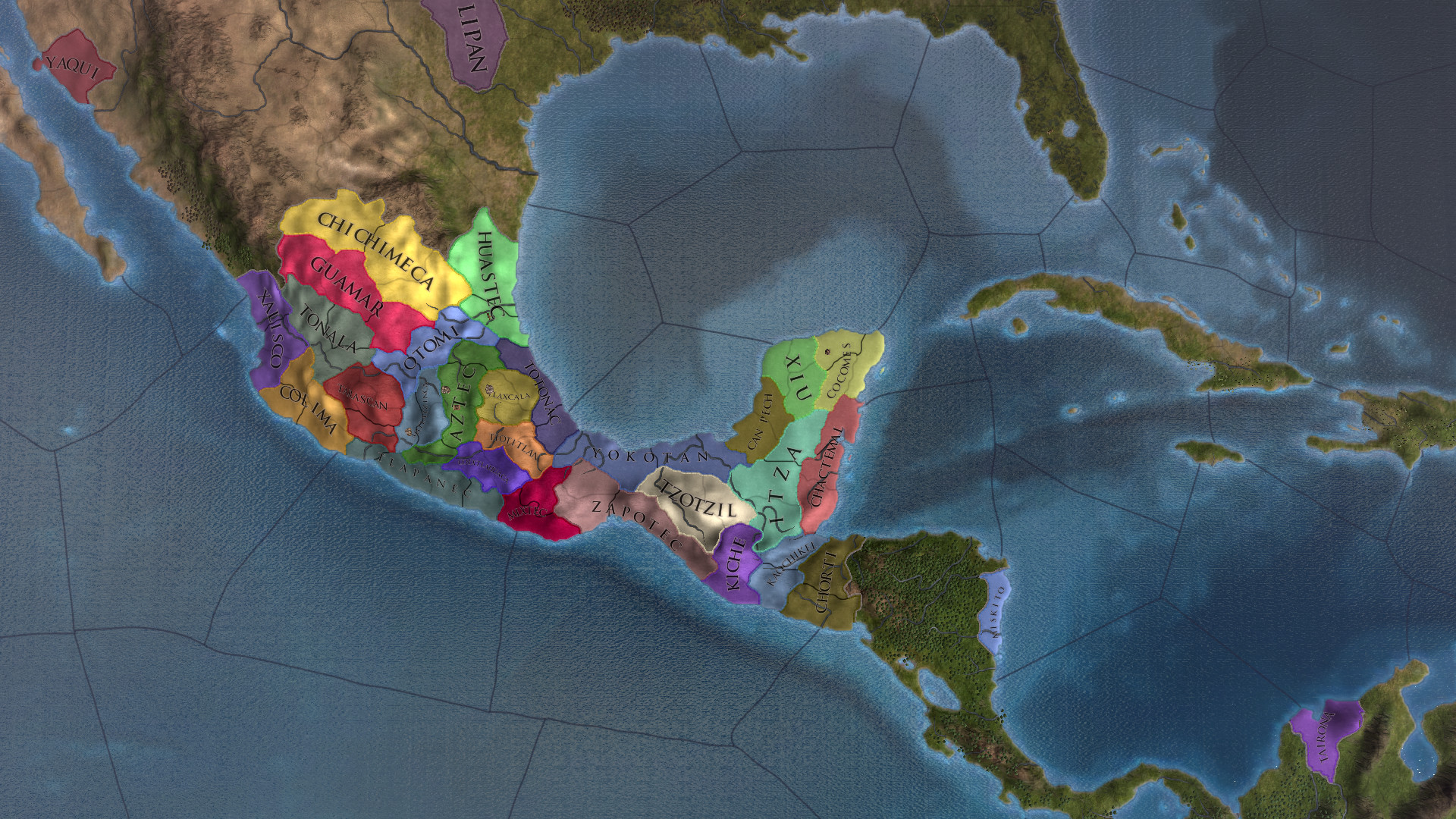
Europa Universalis IV – Golden Century DLC presents a visual identity that is grounded, map-driven, and designed to support long-term strategic immersion rather than cinematic spectacle. From the moment the world loads in, the experience is shaped by a richly detailed political map that becomes the player’s primary lens into history. Continents, seas, and borders are rendered with a clean, readable clarity, allowing complex global situations to feel understandable at a glance while still holding a sense of scale and depth.
The art style leans into a muted, historical palette—earthy tones for land, deep blues for oceans, and subtle color shifts that reflect political control and cultural regions. This restrained approach helps the world feel grounded in an early modern atmosphere, where exploration and empire-building are still unfolding. Rather than overwhelming visual effects, the game relies on clarity and contrast, making each region feel distinct without breaking immersion.
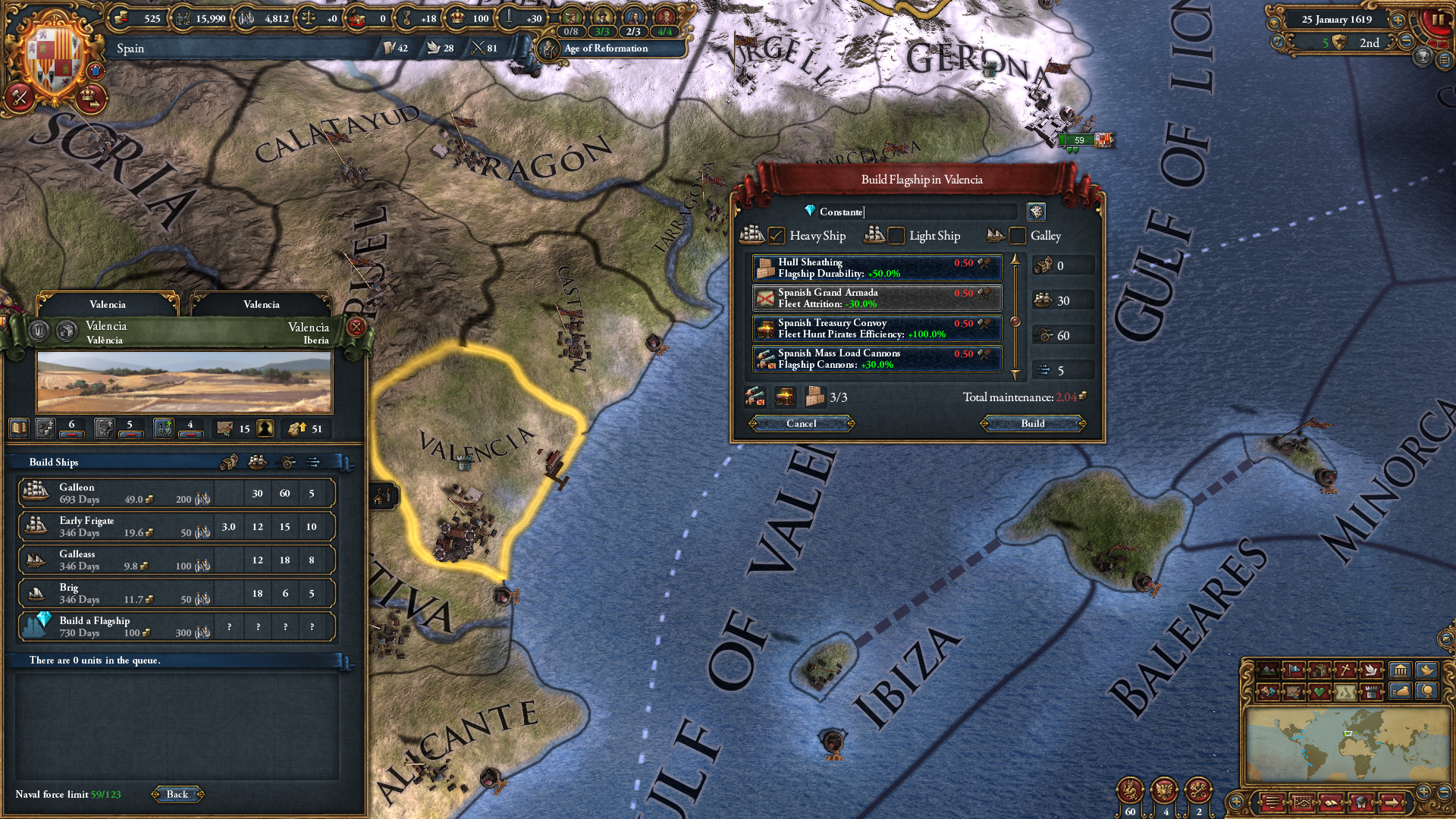
In Golden Century, Iberian and Mediterranean regions gain additional visual flavor through regional UI elements and contextual detail that reinforce their maritime identity. Coastlines, trade nodes, and naval routes stand out more naturally as focal points, subtly guiding the eye toward expansion across seas. These visual cues support the strategic rhythm of the game, making navigation and decision-making feel intuitive even in large-scale campaigns.
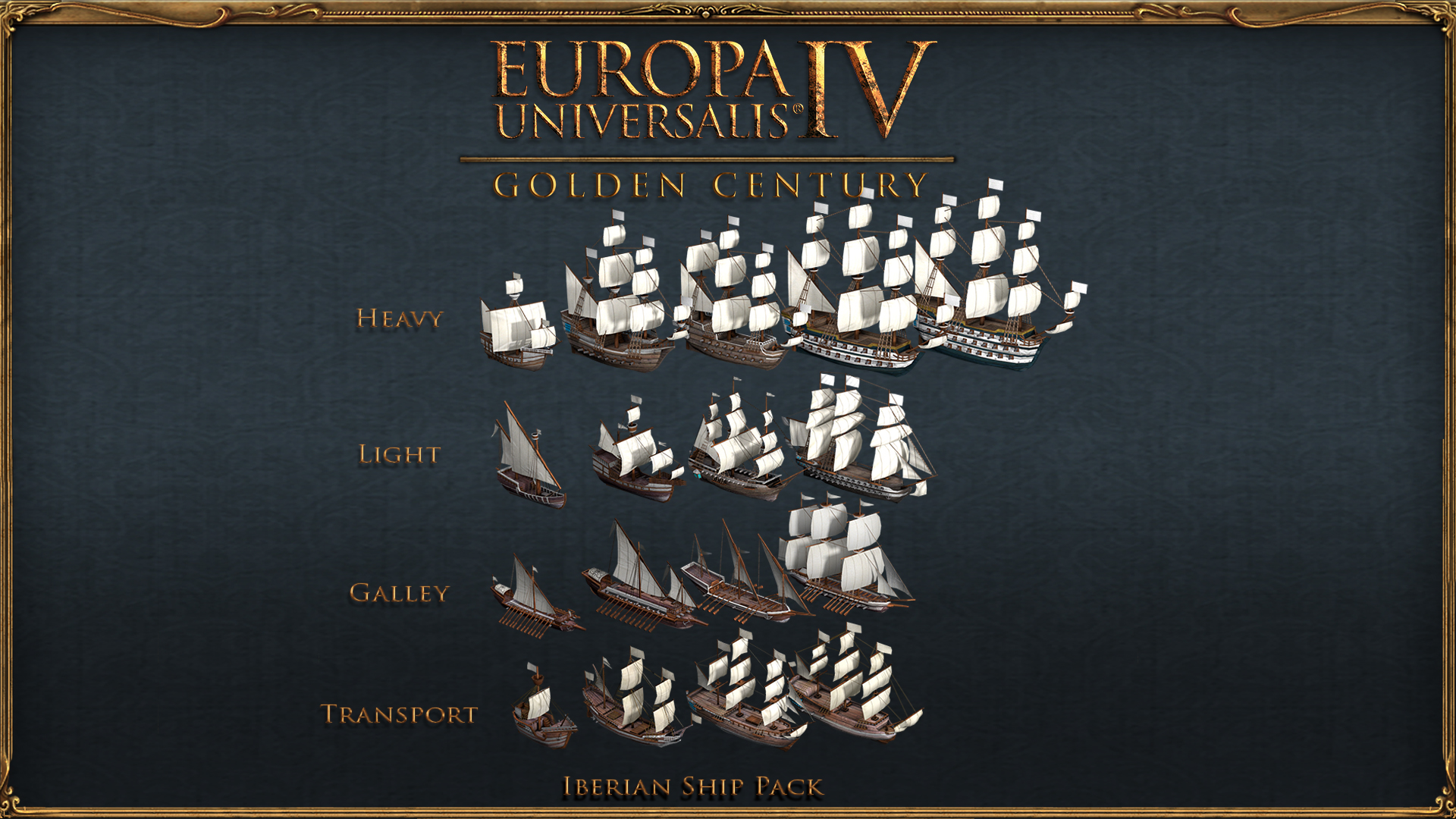
While individual characters and units are represented with simplified iconography rather than detailed models, this design choice keeps attention on the evolving world map, where the real storytelling happens. Animations are minimal but purposeful, with smooth transitions that reflect political changes, warfare, and economic shifts without disrupting the flow of play.
What makes the visual style stand out is how consistently it supports the game’s identity as a historical grand strategy experience. Instead of chasing realism or cinematic intensity, it builds atmosphere through readability, scale, and subtle historical texture. The result is a world that feels alive not through dramatic visuals, but through the quiet accumulation of change across centuries.
Technical Requirements
Europa Universalis IV – Golden Century DLC is designed for PC as an expansion to the base game Europa Universalis IV, and it runs through major PC storefronts such as Steam, requiring the main game to be installed. Because it builds on an established grand strategy engine, the system demands remain relatively accessible for most modern desktops and laptops. At minimum, players with a dual-core processor, 4 GB of RAM, and integrated or entry-level graphics can run the game smoothly at lower settings. For a more stable experience with faster map loading and smoother late-game performance, a mid-range CPU, 8 GB of RAM, and a dedicated GPU are recommended, especially during large-scale empire management in extended campaigns.
Performance is generally well-optimized for long sessions, with the game prioritizing strategic depth over graphical intensity. Frame rates remain stable even as the world becomes more complex over time, though late-game scenarios with multiple nations may require slightly stronger hardware for optimal responsiveness. The game scales well across different setups, allowing players on modest systems to still enjoy the full experience, while higher-end machines benefit mainly from faster processing of large-scale simulations and quicker load times.
Controls are centered around a keyboard and mouse interface, designed for precision and ease of navigation across the world map. The UI supports extensive tooltips, customizable shortcuts, and remappable controls, making it flexible for different play styles. While controller support is limited due to the genre’s complexity, the interface is highly intuitive for PC users and built for long-term strategic planning.
Accessibility options include adjustable UI scaling, subtitle support for key events, and color-coded map modes that help distinguish political and economic information more clearly. Players can also modify difficulty settings and game speed, allowing both newcomers and experienced strategy fans to tailor the pacing to their comfort level. Overall, the DLC maintains the same accessibility foundation as the base game while adding depth without increasing hardware strain.
Who Is This Game For?
Europa Universalis IV – Golden Century DLC is best suited for players who enjoy deep, long-form strategy experiences where patience, planning, and adaptability matter more than fast reactions. It appeals strongly to fans of grand strategy and historical simulation games who like the idea of guiding an entire nation through centuries of political change, expansion, and conflict. If you enjoy games where every decision has long-term consequences and where success is built gradually over time, this DLC naturally fits that mindset.
Players who are drawn to empire-building, diplomacy-heavy gameplay, and open-ended progression will find a lot to appreciate here. The experience is especially rewarding for those who enjoy experimenting with different nations, testing alternate historical outcomes, and learning complex systems over multiple playthroughs. It is not about quick wins or short sessions, but about watching your decisions unfold across a living world that reacts and evolves continuously.
This content also works well for players who prefer single-player strategy campaigns where they can think at their own pace, pause when needed, and carefully plan each move. At the same time, multiplayer fans who enjoy unpredictable political interactions and competitive diplomacy may find additional depth when playing against others, where alliances and rivalries can shift without warning.
However, this is not a fast-action or casual pick-up-and-play experience. Players who prefer instant feedback, short gameplay loops, or heavily guided narratives may find the learning curve and complexity challenging at first. The systems require time to understand, and the pacing is deliberately slow to reflect the scale of managing nations across centuries.
Overall, Europa Universalis IV – Golden Century DLC is ideal for strategy enthusiasts, history lovers, and patient thinkers who enjoy replayability, systemic depth, and freedom of choice. It rewards curiosity and long-term engagement, offering a layered experience where each campaign feels like a different version of history shaped entirely by the player’s decisions.
FAQ
What type of game is Europa Universalis IV – Golden Century DLC?
It is an expansion for Europa Universalis IV, a grand strategy PC game focused on managing nations through diplomacy, war, trade, and exploration during the early modern historical period. The DLC adds regional depth, especially around Iberian empires and Mediterranean power struggles.
Do I need the base game to play this DLC?
Yes, this is an expansion and requires Europa Universalis IV to run. It cannot be played as a standalone game.
Is it single-player or multiplayer?
It supports both. You can play a long single-player campaign against AI-controlled nations or join multiplayer sessions where multiple players control different countries in the same evolving world. Both modes offer very different experiences depending on whether you prefer planning or competitive diplomacy.
What kind of gameplay should I expect?
The gameplay is slow-paced and strategic. You’ll manage economies, armies, alliances, and trade networks while reacting to global political changes. Most of the experience is about long-term decision-making rather than fast action.
Which platforms is it available on?
It is available on PC through platforms like Steam. It is designed specifically for desktop play with keyboard and mouse controls.
What are the system requirements like?
The DLC itself doesn’t increase system requirements significantly. If your PC can run Europa Universalis IV, it will handle this expansion. Mid-range systems will offer smoother late-game performance.
Is it suitable for casual players?
It can be challenging for beginners due to its depth, but casual players who enjoy learning complex systems at their own pace can still enjoy it over time.
Does it have replay value?
Yes, very high. Each nation and campaign plays differently depending on your choices, making every playthrough unique and historically flexible.
FAQ
Operating System (OS)
Other Details

Languages

Reviews
There are no reviews yet.