

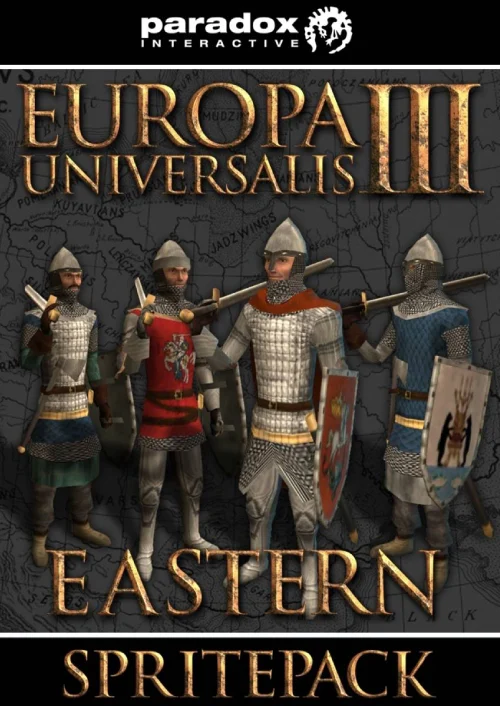
Europa Universalis III – Eastern AD 1400 Spritepack DLC Steam CD Key
1 in stock
copies left1 in stock
Sold by: OMG Gamer






Delivery24/7
supportVerified
Sellers

Product Description
Europa Universalis III – Eastern AD 1400 Spritepack DLC Steam CD Key
Quck Intro
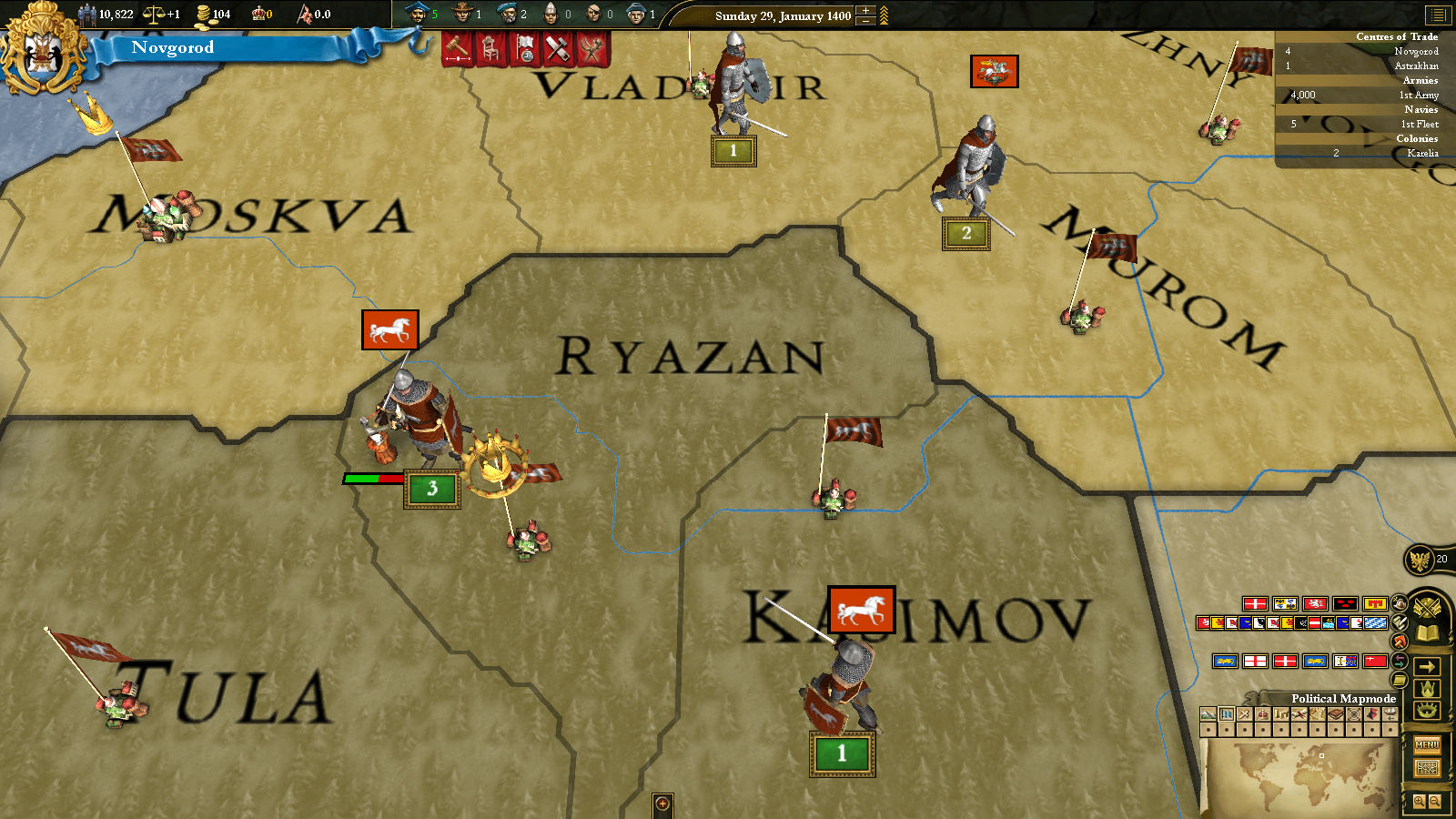
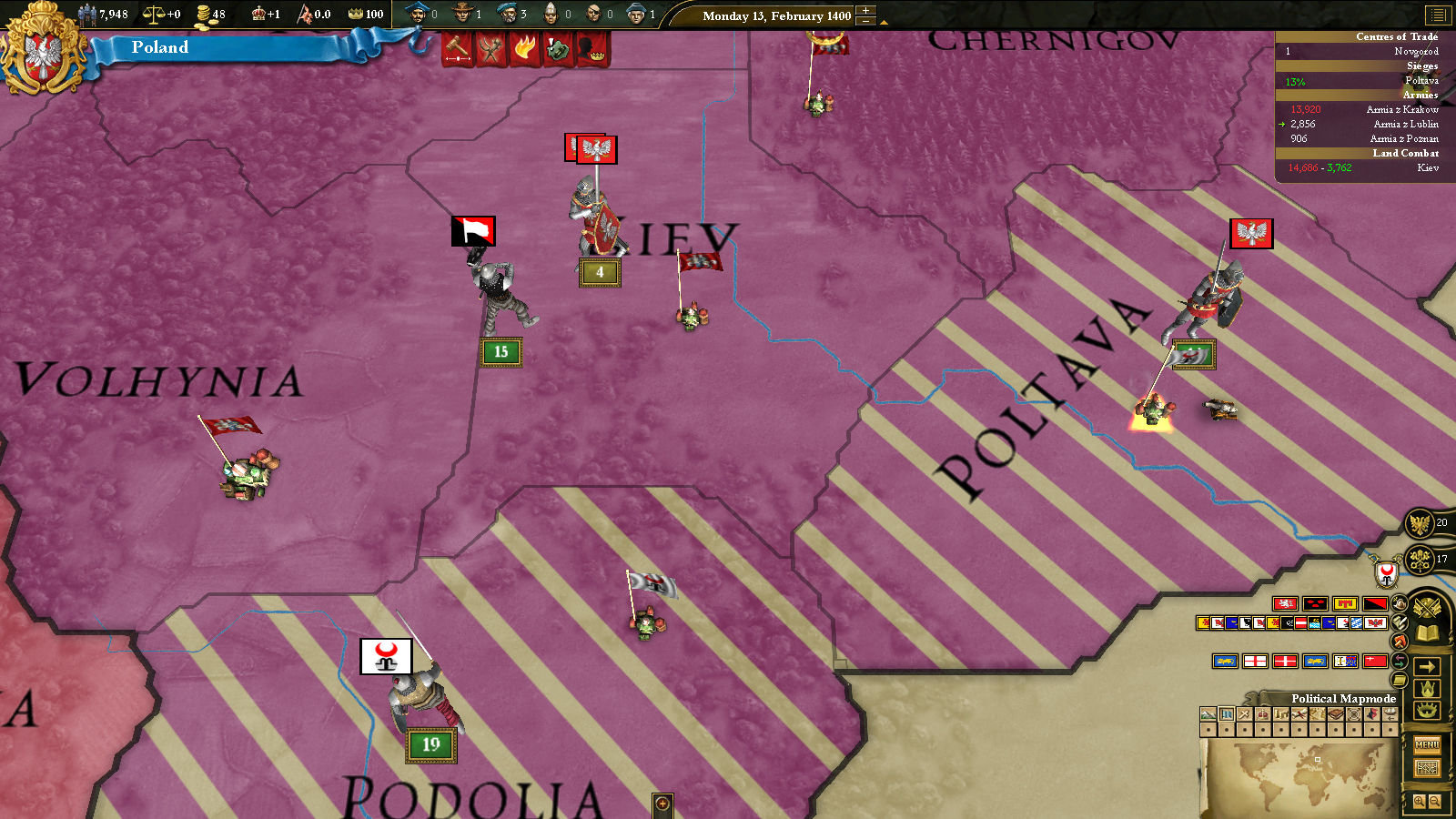
Europa Universalis III – Eastern AD 1400 Spritepack DLC expands the grand strategy experience by refreshing the visual identity of the game’s Eastern regions during a crucial historical period. Set within the deep, systems-driven world of Europa Universalis III, this DLC focuses on enhancing immersion rather than changing core mechanics. Players can continue guiding nations through diplomacy, warfare, trade, and empire-building, but with updated unit sprites that reflect the aesthetics of the early 15th century Eastern civilizations.
The pack is designed for strategy fans who appreciate historical authenticity and visual detail while managing complex, long-term campaigns across a living world map. It blends seamlessly into the base game, offering a more atmospheric presentation of Eastern Europe and Asia without altering gameplay balance, making each campaign feel more grounded and visually distinct.
About
Europa Universalis III – Eastern AD 1400 Spritepack DLC is a visual enhancement for the grand strategy game Europa Universalis III, focused on refreshing the Eastern regions during the early 15th century. It does not change the core gameplay systems, but it deepens immersion by updating unit sprites to better reflect the historical look and feel of Eastern Europe and parts of Asia. For players who enjoy long-form historical strategy, this DLC adds a more grounded and atmospheric layer to their campaigns.
At its core, Europa Universalis III is about guiding a nation through centuries of political tension, war, trade, and exploration. With this spritepack installed, those familiar systems feel more vivid on the map as armies and cultures take on a clearer visual identity. Players still spend their time managing diplomacy, expanding influence, balancing economies, and engaging in large-scale wars, but the presentation now better supports the historical tone of the Eastern world in the 1400s.
What sets this DLC apart from many visual packs in the grand strategy genre is its focus on historical consistency rather than flashy redesigns. It is built for players who value authenticity and want the visual layer of the game to match its deep simulation systems. Instead of altering mechanics, it strengthens immersion, helping the world feel more coherent as empires rise and fall across centuries.
This experience is best suited for strategy enthusiasts who enjoy methodical decision-making, long campaigns, and historically inspired gameplay. It also appeals to players who appreciate subtle visual improvements that enhance clarity without distracting from complex systems. Whether you are replaying familiar scenarios or continuing an ongoing campaign, the updated Eastern sprites bring a fresh perspective to the same strategic depth.
For returning players or newcomers exploring grand strategy for the first time, this DLC adds a quiet but meaningful sense of presence to every decision on the map, making each moment feel more connected to the world it represents.
Key Features
Europa Universalis III – Eastern AD 1400 Spritepack DLC focuses on enhancing the visual identity of the grand strategy experience by updating unit sprites across Eastern regions during the early 15th century. It keeps the original gameplay systems intact while refining how players perceive armies, cultures, and movement on the map, making large-scale strategy sessions feel more immersive and readable.
The core gameplay of Europa Universalis III remains centered on long-term nation management, where players guide a country through diplomacy, warfare, trade, colonization, and internal development. This DLC supports that loop by giving Eastern factions a clearer and more historically grounded visual presence, helping players better track conflicts and territorial changes during complex campaigns.
One of the standout aspects is its attention to historical atmosphere. Instead of altering mechanics or adding new systems, it strengthens the visual storytelling of the game world. As empires expand and borders shift, updated sprites help distinguish regional forces, adding clarity during wars and political struggles that unfold over centuries.
The experience is designed for players who enjoy deep, slow-burn strategy games where every decision shapes long-term outcomes. Whether managing alliances, balancing economies, or engaging in large-scale military campaigns, the visual updates make it easier to stay connected to the flow of the world without breaking immersion.
Players benefit from improved map readability, especially in densely contested regions where multiple factions interact at once. This makes strategic planning smoother during both peacetime development and active warfare, supporting the game’s emphasis on thoughtful decision-making.
Replayability remains a key strength of Europa Universalis III, and this spritepack enhances that by giving familiar campaigns a refreshed look. Returning players can experience well-known regions with a new visual layer, while new players get a clearer sense of historical distinction between Eastern powers.
For grand strategy fans who value depth, patience, and historical framing, this DLC adds a subtle but meaningful enhancement to every campaign, making each session feel more grounded in its era.
Gameplay
Europa Universalis III – Eastern AD 1400 Spritepack DLC does not change how the game is played, but it reshapes how the gameplay experience is visually interpreted during long, system-driven strategy sessions. Built as an enhancement for Europa Universalis III, it supports the core grand strategy gameplay where players control a nation across centuries, managing politics, warfare, trade, and expansion on a global scale.
At its core, gameplay revolves around decision-making on a living historical map. Players issue diplomatic commands, negotiate alliances, declare wars, manage provinces, and balance economies while watching nations rise and fall over time. The spritepack adds updated unit visuals for Eastern regions in the 1400s, helping players better identify armies and factions during large-scale conflicts, which improves clarity during tactical planning and real-time map observation.
The main gameplay loop remains deeply strategic. You spend time analyzing borders, responding to rival empires, and adjusting long-term plans as new political situations emerge. Wars unfold through calculated movement of armies rather than fast action combat, making timing, positioning, and resource management more important than reflexes. Exploration and expansion also play a role, especially when managing new territories and maintaining stability across diverse regions.
Player freedom is a major part of the experience. You can choose aggressive expansion, diplomatic influence, trade dominance, or a balanced historical approach depending on your preferred playstyle. Over time, nations evolve through technology, governance improvements, and shifting alliances, which naturally changes the difficulty and pacing of each campaign.
Single-player campaigns form the core experience, offering long-form strategic progression with high replayability due to the dynamic world simulation. Each playthrough feels different as borders, powers, and conflicts shift unpredictably across the timeline.
With this spritepack, the gameplay flow becomes easier to visually interpret, especially in crowded Eastern regions where multiple factions interact. It supports immersion by making the same deep grand strategy mechanics feel clearer and more grounded as your campaign unfolds.
Story & World
Europa Universalis III – Eastern AD 1400 Spritepack DLC is set within the vast historical world of Europa Universalis III, focusing visually on the Eastern regions during the early 15th century, a time when medieval power structures were beginning to shift and reshape global influence. While the DLC itself does not introduce a new narrative campaign, it enhances how this already richly simulated historical world is perceived, giving additional depth to the Eastern landscape as it exists within the grand strategy experience.
The world of Europa Universalis III is not told through a linear story, but through centuries of evolving history that unfolds dynamically based on player decisions and AI-driven events. In this setting, the player takes the role of a ruling power guiding a nation through an era defined by fragile alliances, territorial ambition, religious influence, and emerging global trade routes. The Eastern AD 1400 Spritepack specifically enhances the visual identity of regions spanning Eastern Europe, the Middle East, and parts of Asia, areas historically shaped by shifting empires and cultural intersections.
In this world, nothing remains static. Borders are constantly redrawn, dynasties rise and fall, and political influence moves across continents through diplomacy and conflict. Rather than following a scripted storyline, the narrative emerges organically from the interaction between nations, where every campaign produces a different historical outcome. The atmosphere is grounded in a sense of slow historical transformation, where the passage of time feels significant and every decade brings noticeable change.
Eastern regions during this period carry a distinct identity shaped by powerful empires, fragmented principalities, and expanding trade networks connecting Europe and Asia. These areas feel alive through their diversity, as different cultures, languages, and governing systems coexist and compete for influence. The spritepack enhances this sense of place by visually distinguishing these factions, reinforcing the idea that each region contributes uniquely to the broader historical tapestry.
The player exists as both observer and architect of history, guiding a nation through uncertainty while reacting to an unpredictable world shaped by diplomacy, warfare, and economic pressure. There is no single heroic narrative, only the evolving story of nations responding to opportunity and crisis across generations. This creates a layered, open-ended historical sandbox where every decision subtly redirects the course of centuries.
What makes this world compelling is its scale and authenticity. It does not rely on fixed characters or scripted arcs, but instead on the feeling of watching history unfold in real time. Empires expand, collapse, and adapt, while cultural identities persist and evolve across regions. The Eastern AD 1400 Spritepack enhances this atmosphere by giving visual clarity to these transformations, making the world easier to read while preserving its complexity.
For players who appreciate historical depth, political simulation, and large-scale strategic worlds, this setting offers a space that feels both grounded and constantly in motion. It is a world shaped by systems rather than scripts, where the most meaningful stories are the ones created through time, pressure, and choice.
Game Modes
Europa Universalis III – Eastern AD 1400 Spritepack DLC does not introduce new game modes on its own, but it enhances how existing Europa Universalis III experiences feel when playing campaigns set across the Eastern regions during the early 1400s. The core structure of the game revolves around a single deep grand strategy sandbox, where every session becomes a different historical outcome shaped by player decisions and AI-driven world simulation.
In single-player campaigns, the experience is slow, methodical, and highly strategic. Players guide a nation through centuries of political change, managing diplomacy, warfare, trade networks, and internal stability. This mode is ideal for players who prefer long-form strategy games where planning matters more than speed, and where each decision can influence the balance of power across entire regions. The spritepack enhances this experience by making Eastern factions more visually distinct, helping players better read large-scale conflicts during extended campaigns.
Multiplayer campaigns offer a different layer of engagement, where multiple players control different nations within the same evolving historical world. Here, diplomacy becomes more unpredictable, alliances shift more frequently, and wars often depend on negotiation as much as military strength. The visual clarity provided by the Eastern AD 1400 sprite updates helps keep large multiplayer maps easier to follow during complex interactions between players.
There is also a sandbox-style freedom built into every campaign, whether solo or multiplayer, allowing players to shape their own goals instead of following a fixed storyline. Some may focus on expansion, others on economic dominance or political influence, and this flexibility naturally creates replay value as no two campaigns unfold the same way.
Over time, each mode evolves as nations develop, technologies advance, and geopolitical landscapes shift. The pacing remains intentionally gradual, rewarding patience and long-term thinking rather than short bursts of action. For players who enjoy thoughtful strategy, historical simulation, and open-ended decision-making, these modes work together to create a consistent yet highly replayable experience.
Visuals & Art Style
Europa Universalis III – Eastern AD 1400 Spritepack DLC refines the visual identity of Europa Universalis III by focusing on one of its most defining strengths: the clarity and atmosphere of its historical map. Instead of changing the core art direction, this DLC enhances the Eastern regions of the world during the early 15th century with updated unit sprites that better reflect the era’s cultural and military diversity.
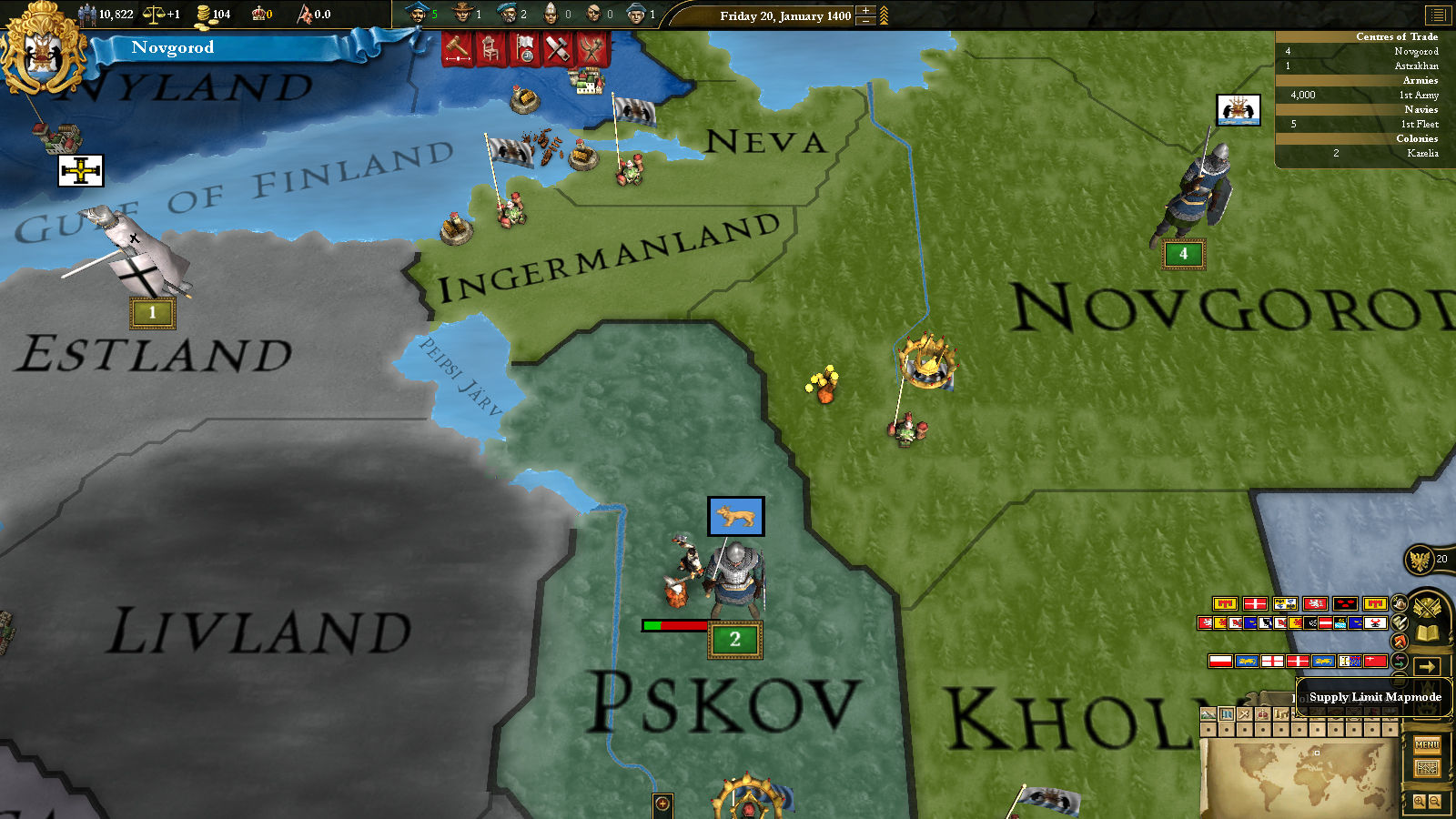
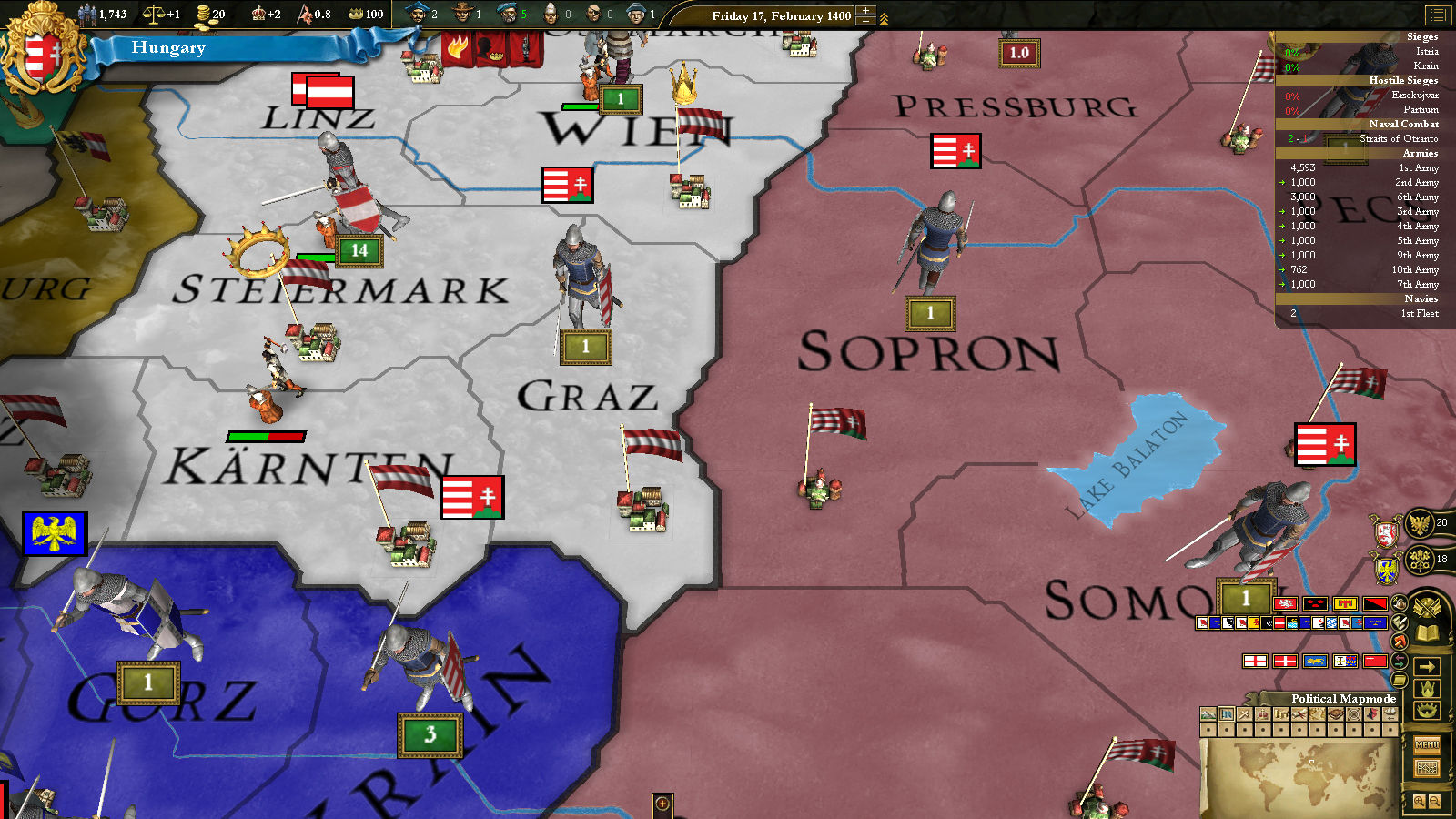
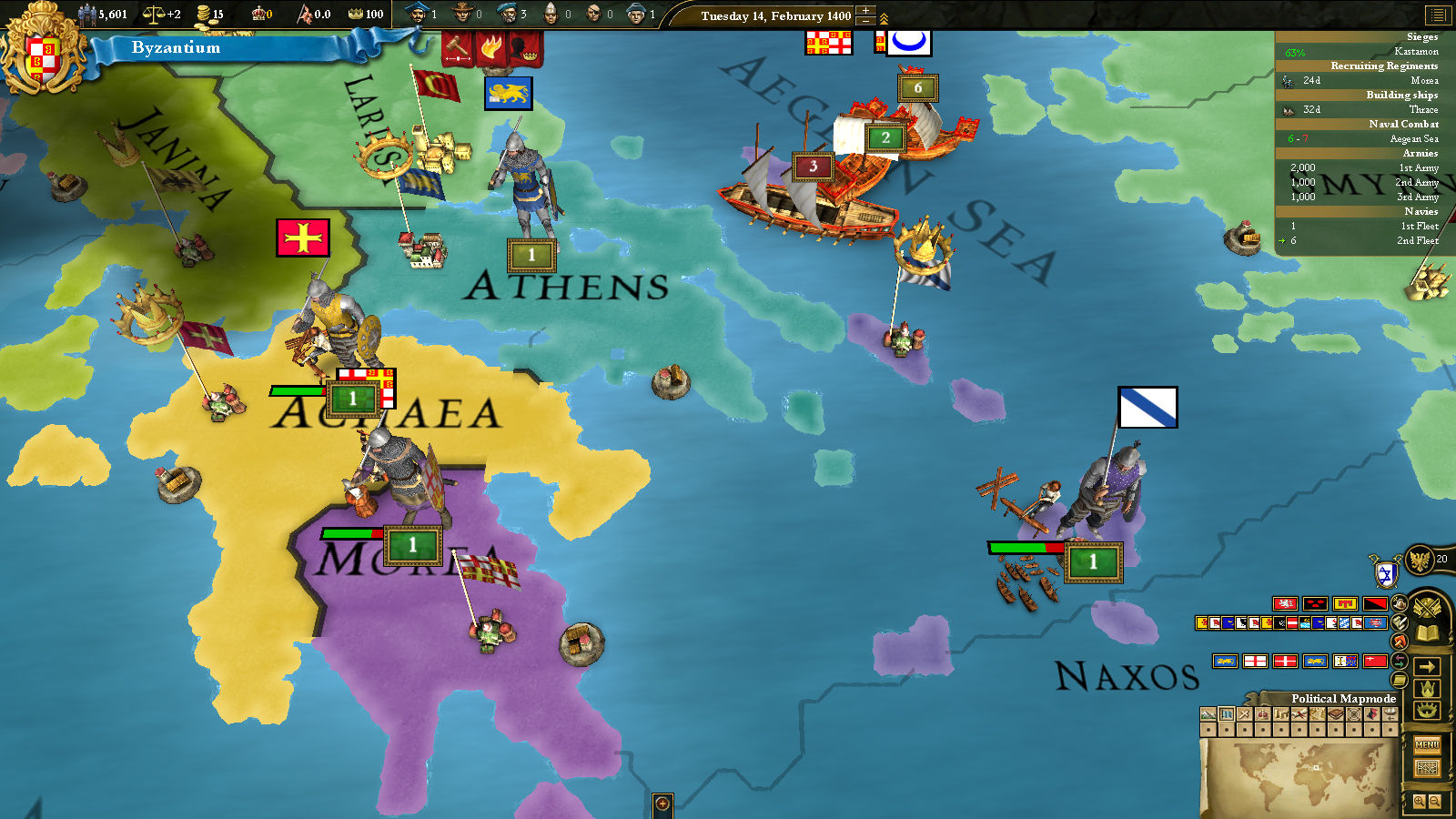
From the moment a campaign begins, the world presents itself as a living historical map viewed from a strategic perspective. Nations are represented through clean, readable visuals that prioritize information while still carrying a strong sense of place. The Eastern AD 1400 Spritepack adds more detailed and era-appropriate unit designs, making armies in Eastern Europe, the Middle East, and surrounding regions feel visually distinct without breaking the game’s overall aesthetic consistency.
The color palette remains grounded in a muted, parchment-like historical tone, which keeps the focus on political borders, movement, and large-scale strategic decisions. Within this framework, the updated sprites introduce subtle visual variety—armor styles, formations, and cultural design cues that help players immediately recognize regional identity during wars and campaigns. This improves not just immersion, but also readability during complex conflicts involving multiple factions on the same front.
Animation work stays understated but functional, with smooth transitions that support the game’s slow, deliberate pacing. Instead of cinematic spectacle, the visual design emphasizes clarity over chaos, allowing players to understand shifting power dynamics at a glance. This approach gives every battle and territorial change a sense of weight without overwhelming the screen.
What makes this visual style stand out is its consistency with the game’s grand strategy identity. Rather than chasing realism or high-detail rendering, it focuses on readability and historical atmosphere, creating a map that feels both informative and alive. The Eastern AD 1400 sprite updates deepen that feeling by making one of the most geopolitically complex regions of the game visually richer and easier to interpret.
For players, the result is a world that feels coherent, grounded, and thoughtfully designed, where every visual detail quietly supports long-term strategic thinking and historical immersion.
Technical Requirements
Europa Universalis III – Eastern AD 1400 Spritepack DLC is designed for PC players and integrates seamlessly with the base Europa Universalis III experience on Windows and Linux platforms through supported storefronts and launchers. Since this is a spritepack DLC rather than a standalone game, it inherits the same system requirements as the base title, making it accessible even on older hardware while still benefiting from modern systems for smoother large-scale campaigns.
On minimum settings, the game is playable on modest dual-core processors with around 2 GB RAM and a basic DirectX-compatible GPU, which allows strategy fans with older PCs to still run long campaigns without major performance issues. For a more stable and responsive experience, especially during late-game scenarios with many active nations, a mid-range processor, 4 GB or more RAM, and a dedicated graphics card are recommended. The spritepack itself does not significantly increase hardware demand, as it focuses on replacing visual assets rather than adding heavy graphical effects.
Performance remains largely consistent across systems, with Europa Universalis III scaling well between low-end and high-end setups. Load times and map transitions remain lightweight, and the game maintains steady performance even during large-scale wars involving multiple factions. Higher-end systems benefit mainly in smoother camera movement and faster processing of late-game AI calculations rather than dramatic visual upgrades.
Controls are built around a classic keyboard and mouse interface, optimized for precision and fast access to complex menus. Players can navigate diplomatic screens, military commands, and economic systems efficiently through point-and-click interactions. While full controller support is limited due to the game’s interface-heavy design, key bindings can be customized to suit personal preferences, improving comfort for long play sessions.
Accessibility options are simple but functional, including adjustable UI scaling, readable text settings, and audio volume controls for balancing music and effects. Subtitles are available where applicable, and the interface is designed to remain clear even during dense late-game scenarios. Difficulty settings allow players to tailor AI challenge levels, making the experience approachable for newcomers while still rewarding for veteran grand strategy players.
Overall, the DLC maintains the game’s lightweight performance profile while enhancing visual clarity, ensuring a stable and accessible experience across a wide range of PC setups.
Who Is This Game For?
FAQ
What is Europa Universalis III – Eastern AD 1400 Spritepack DLC?
It is a visual enhancement DLC for Europa Universalis III that updates unit sprites in Eastern regions during the early 1400s. It does not change core gameplay or mechanics, but improves how armies and factions look on the grand strategy map, making the historical setting feel more detailed and immersive.
Does it change how the game is played?
No. The gameplay experience remains the same as the base Europa Universalis III. You still manage nations through diplomacy, warfare, trade, and expansion in a deep historical simulation. The DLC only affects visual presentation.
Who is this DLC for?
It is best suited for players who already enjoy grand strategy gameplay and want a more immersive visual experience. If you appreciate historical accuracy, clearer unit representation, and long-form strategy campaigns, this enhancement adds value without altering complexity.
Is it single-player or multiplayer?
The base game supports both single-player and multiplayer campaigns. This DLC works in both modes and simply updates visuals, so it does not affect how multiplayer sessions function.
What platforms does it support?
It is available for PC versions of Europa Universalis III on supported storefronts and launchers. It runs on both Windows and Linux systems that meet the base game requirements.
Will it run on low-end systems?
Yes. Since it is only a sprite update, performance impact is minimal. It runs on the same system requirements as the base game, making it accessible even on older PCs.
Does it add new content or story?
No new story or gameplay content is included. It focuses entirely on visual upgrades for Eastern factions during the 1400s period.
Is it suitable for casual players?
Casual players can use it, but it is primarily aimed at players who already enjoy or plan to explore deep grand strategy systems with long campaign sessions and replayable sandbox gameplay.
FAQ
Operating System (OS)
Other Details

Languages

Reviews
There are no reviews yet.