

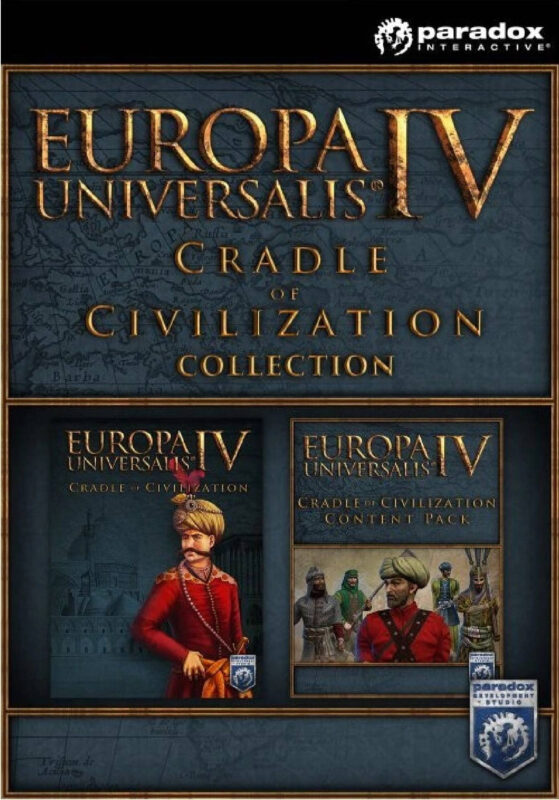
Europa Universalis IV – Cradle of Civilization Collection DLC PC Steam CD Key
2 in stock
copies left2 in stock
Sold by: OMG Gamer






Delivery24/7
supportVerified
Sellers

Product Description
Europa Universalis IV – Cradle of Civilization Collection DLC PC Steam CD Key
Quck Intro
Europa Universalis IV – Cradle of Civilization Collection DLC expands the grand strategy experience of EU4 by focusing on the historical and political depth of the Islamic world during the early modern era. Players step into a complex geopolitical landscape where empires like the Ottomans, Mamluks, and Persian states shape trade routes, military power, and regional influence. This expansion introduces new mechanics that refine army management, including professionalization, drilling, and more flexible command over forces, alongside updated systems for trade policies and regional governance. It also enhances the role of estates and internal administration, making nation-building feel more dynamic and historically grounded. Designed for players who enjoy deep strategy, diplomacy, and long-term empire planning, this DLC adds new layers of decision-making that reshape how campaigns unfold across the Middle East, North Africa, and beyond in Europa Universalis IV.
About
Europa Universalis IV – Cradle of Civilization Collection DLC is an expansion for the grand strategy game Europa Universalis IV, where players guide a nation through centuries of political change, warfare, and global expansion during the early modern period. This collection focuses on the Middle East and surrounding regions, adding depth to how empires like the Ottomans, Mamluks, and Persian states evolve, trade, and compete for dominance.
At its core, the experience is about long-term nation building and strategic decision-making. Players manage diplomacy, warfare, economy, and internal stability while watching a living world shift through alliances, betrayals, and shifting borders. In this DLC, much of the gameplay revolves around improving military organization, shaping trade networks, and managing internal estates in a more detailed way. The addition of mechanics like army professionalism and drilling gives more control over how forces grow and perform, making military planning feel more deliberate and rewarding.
What sets this expansion apart is its focus on regional identity and historical depth. Instead of treating nations as uniform systems, it highlights how governance, culture, and military structure differ across the Islamic world, adding variety to how campaigns unfold. This creates a more nuanced grand strategy experience compared to many other games in the genre, where systems often feel more generalized.
Players who enjoy slow-burn strategy, historical simulation, and complex decision-making will find this especially engaging. It suits those who like planning multiple moves ahead, optimizing systems, and shaping alternate histories rather than fast-paced action. Whether you prefer diplomacy, expansion, or internal development, the DLC supports multiple playstyles within the broader Europa Universalis IV framework.
Every session becomes a long narrative of ambition, survival, and adaptation. Watching a small state grow into a regional power or seeing a great empire struggle under pressure gives a strong sense of ownership over history itself. Cradle of Civilization Collection DLC deepens that journey, making each campaign feel more grounded and personal, inviting players to step back into a world where every decision echoes across centuries.
Key Features
Europa Universalis IV – Cradle of Civilization Collection DLC builds on the core grand strategy experience of Europa Universalis IV by adding deeper control over military organization, trade systems, and regional governance, especially across the Middle East and surrounding regions. Players guide nations through centuries of political tension, expansion, and survival in a living historical simulation where every decision shapes long-term outcomes.
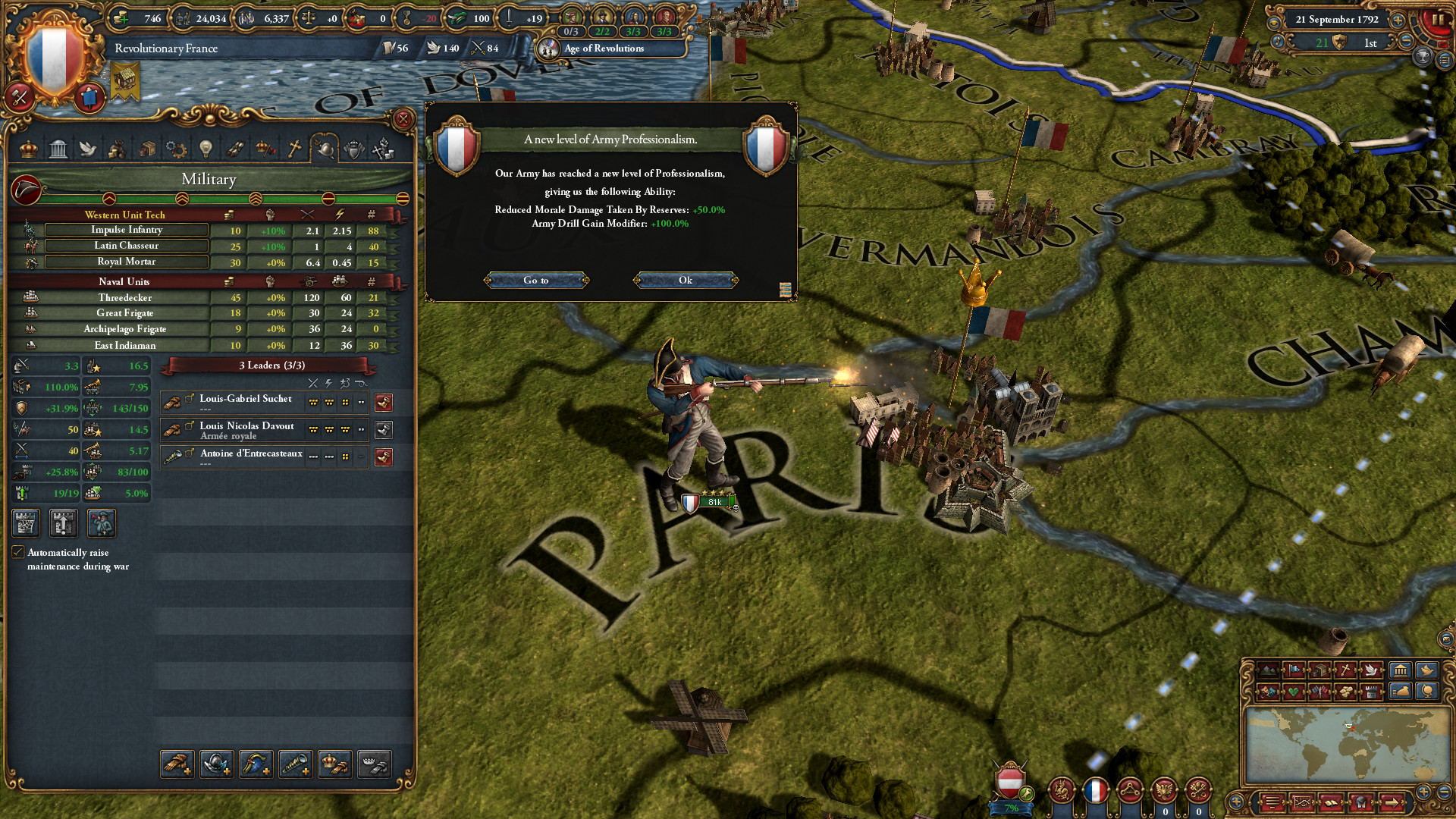
One of the most noticeable gameplay additions is the refined army system, where players can drill their troops, improve professionalism, and manage armies with more strategic depth. Instead of simply raising forces for war, you gradually shape disciplined military institutions that perform differently depending on preparation and leadership.
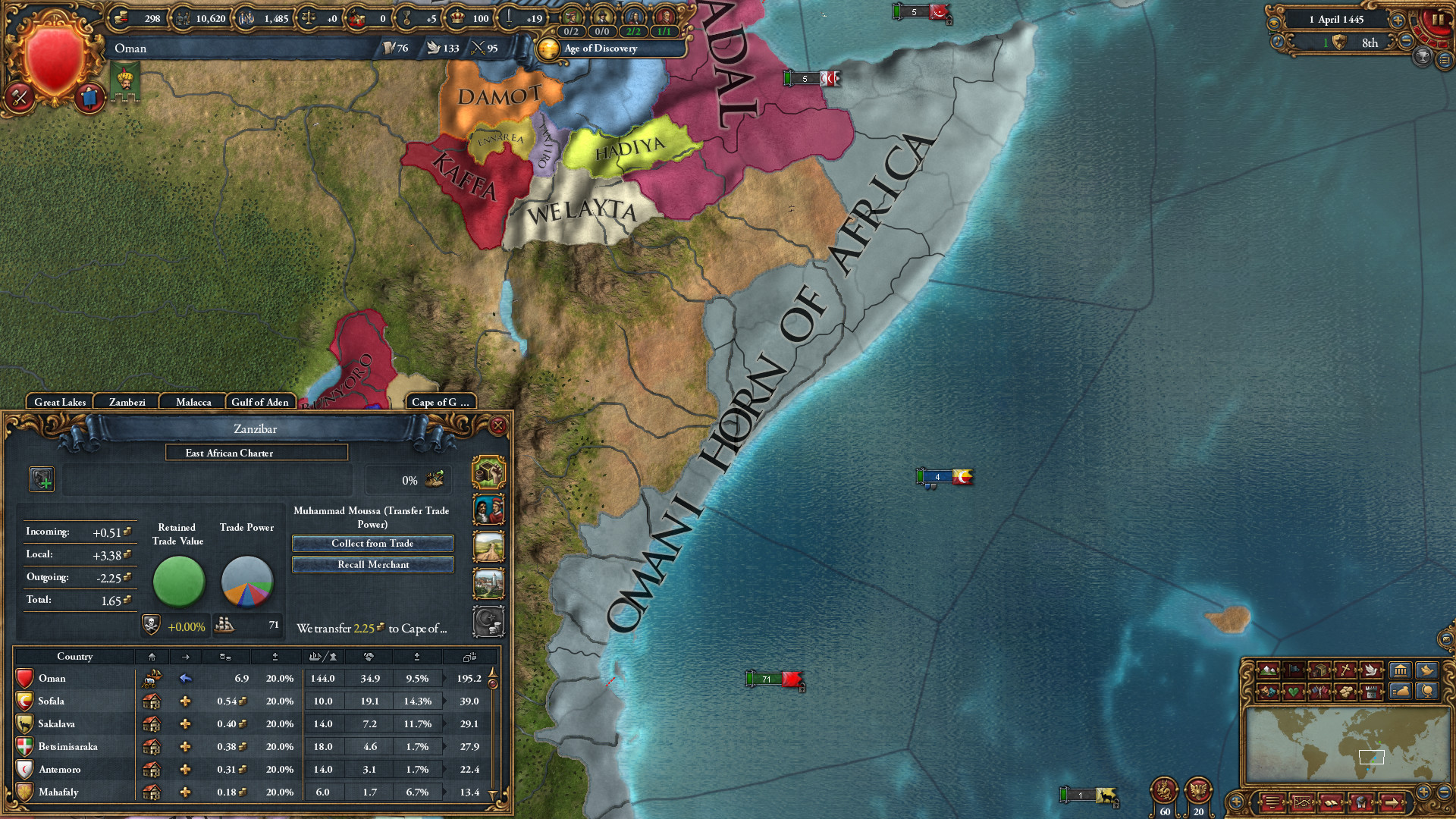
Trade and economy systems gain more regional nuance, encouraging players to think carefully about trade routes, node control, and how wealth flows between continents. Managing economic strength becomes just as important as winning battles, especially when balancing expansion with internal stability.
The DLC also enhances estate interactions, giving more meaningful choices when dealing with internal factions. Players must balance noble influence, religious authority, and merchant power, which can directly impact stability and long-term national growth. These systems add pressure but also create opportunities for clever political play.
Set in a historically rich early modern world, the expansion emphasizes the unique identities of empires like the Ottomans, Mamluks, and Persian states. Each region feels more distinct, with different strengths and strategic challenges that change how campaigns unfold across multiple playthroughs.
Combat remains deeply tactical, but now rewards preparation, logistics, and timing even more than before. Success often depends on planning years ahead rather than reacting in the moment, which strengthens the game’s slow, thoughtful pacing.
Replayability is a core strength, as no two campaigns develop the same way. Player choice drives everything from diplomacy and warfare to economic development and cultural influence, making each run feel like a new historical path.
Designed for strategy-focused players who enjoy long-form decision-making and sandbox-style historical simulation, this DLC adds another layer of depth to Europa Universalis IV, where patience and planning gradually turn small nations into lasting powers across the world stage.
Gameplay
Europa Universalis IV – Cradle of Civilization Collection DLC is a grand strategy experience built around managing nations across centuries of political, economic, and military change. As part of Europa Universalis IV, it places players in control of a country during the early modern era, where the main gameplay revolves around decision-making on a global scale rather than direct character control. This DLC deepens that experience by refining how armies, trade, and internal governance work, especially in regions like the Middle East and surrounding empires.
The core gameplay loop focuses on observing the world map, issuing strategic commands, and reacting to shifting political situations. Players manage diplomacy, form alliances, declare wars, and negotiate peace while constantly balancing resources like manpower, money, and stability. Every in-game year brings new challenges, and progress is measured through long-term expansion, survival, and influence rather than short-term victories.
Combat in this expansion remains tactical and system-driven. Players recruit and organize armies, then decide when and where to engage based on terrain, morale, leadership, and preparation. With added mechanics like army drilling and professionalism, warfare becomes more about preparation and long-term military development than simple numerical advantage.
Economic and trade systems play a major role in progression. Players shape trade routes, control key regions, and build economic strength that supports both military campaigns and domestic growth. This creates a steady cycle where economic planning directly fuels expansion and defense.
Player freedom is a defining feature, allowing multiple playstyles such as aggressive conquest, diplomatic influence, or internal nation-building. The experience evolves over time as nations grow stronger, unlock new strategic options, and face increasingly complex global politics. Each campaign naturally develops differently depending on player choices and regional dynamics.
While primarily a single-player sandbox strategy experience, Europa Universalis IV also supports multiplayer, where human opponents create unpredictable political landscapes. This adds another layer of depth, as alliances and rivalries shift in real time.
Over extended play sessions, the game becomes a layered simulation of history where patience, planning, and adaptation shape outcomes. Cradle of Civilization Collection DLC enhances that journey by adding more detail and variation to how nations develop, making every campaign feel like a unique strategic story unfolding across time.
Story & World
Europa Universalis IV – Cradle of Civilization Collection DLC is set within the broader historical world of Europa Universalis IV, a grand strategy simulation that recreates the early modern period, roughly from the late 15th century onward. This is a world in transition, where medieval structures are giving way to centralized empires, global trade networks are beginning to connect continents, and religious, cultural, and political identities are constantly being reshaped. The DLC narrows its focus to the Islamic world and surrounding regions, adding depth to an already complex historical sandbox.
In this setting, the player does not follow a single scripted protagonist or linear narrative. Instead, they take on the role of a ruling power, guiding a nation’s destiny through centuries of change. Whether controlling a rising empire, a fragmented state, or a long-established dynasty, the player becomes the unseen force shaping history through policy, war, diplomacy, and internal governance. The story is not told through cutscenes, but through evolving borders, shifting alliances, and the rise and fall of civilizations.
The world itself feels vast and interconnected, stretching from Europe and North Africa to the Middle East and Central Asia. Cities, trade hubs, and strategic regions gain meaning through their historical and economic importance. In the Cradle of Civilization expansion, regions like the Ottoman Empire, Persia, and the Mamluk Sultanate are given greater depth, reflecting their real-world influence during this era. Cultural identity, religious authority, and political ambition all intersect, creating a layered narrative environment where every region feels distinct.
What makes this world stand out is its sense of historical momentum. Empires are not static; they expand, fracture, adapt, and sometimes collapse under pressure. The atmosphere is shaped by uncertainty and opportunity at the same time. A small nation can rise through careful planning, while great powers must constantly maintain control over vast and diverse territories. This creates a living geopolitical landscape that feels reactive and unpredictable.
Rather than following a predetermined storyline, the experience is driven by emergent history. Conflicts arise naturally from competing interests, trade rivalries, and cultural tensions. The world reacts to player decisions in subtle but meaningful ways, creating a sense that history is being written in real time. Each campaign becomes a unique alternate version of early modern history, shaped by both global systems and local decisions.
The Cradle of Civilization Collection DLC enhances this world by deepening the identity of key regions and empires, making their histories feel more grounded and differentiated. It adds texture to how power is expressed, how authority is maintained, and how civilizations interact across borders. For players who enjoy immersive historical strategy worlds with a strong sense of scale and authenticity, this setting offers a richly detailed backdrop where every decision contributes to an unfolding global narrative.
Game Modes
Europa Universalis IV – Cradle of Civilization Collection DLC expands the way players experience the broader Europa Universalis IV sandbox by deepening the strategic options available across different playstyles rather than introducing separate traditional “game modes.” At its core, the experience is built around a single, continuous grand strategy sandbox where every campaign unfolds differently based on the nation you choose and the decisions you make over time.
For solo players, the main experience revolves around long-form single-player campaigns. This is where the game truly feels like a historical simulation, allowing you to guide a nation through centuries of political change, military conflict, and economic development. The Cradle of Civilization DLC enhances this mode by adding more depth to regional powers, especially in the Middle East, making single-player campaigns feel more varied and historically grounded with each playthrough.
Multiplayer adds another layer of unpredictability. Here, the same systems are placed in the hands of other players, turning diplomacy, alliances, and rivalries into dynamic, human-driven narratives. Instead of AI responses, you are dealing with real strategies and shifting intentions, which often leads to unexpected outcomes and long-term political tension across shared campaigns. It suits players who enjoy competitive thinking and negotiation just as much as warfare.
There is also a more relaxed sandbox-style approach for players who prefer experimentation over strict goals. In this format, you can explore different nations, test alternate historical outcomes, and focus on building economies or cultural influence without necessarily pursuing conquest. The DLC’s added systems make these experimental runs more interesting, especially when managing unique regional mechanics and military development options.
Across all these ways of playing, the experience remains persistent and evolving. There is no fixed storyline or linear progression; instead, the game rewards patience, planning, and adaptation. Whether playing solo for immersion or multiplayer for unpredictability, Europa Universalis IV with the Cradle of Civilization Collection DLC offers a flexible grand strategy experience where each campaign becomes a distinct political journey shaped entirely by player choice.
Visuals & Art Style
Europa Universalis IV – Cradle of Civilization Collection DLC presents its world through a clean, map-driven visual style that prioritizes clarity, scale, and historical atmosphere over cinematic realism. At first glance, the game’s presentation is understated, but the more time you spend with it, the more you notice how carefully every visual layer is designed to support long-term strategic thinking and immersion.
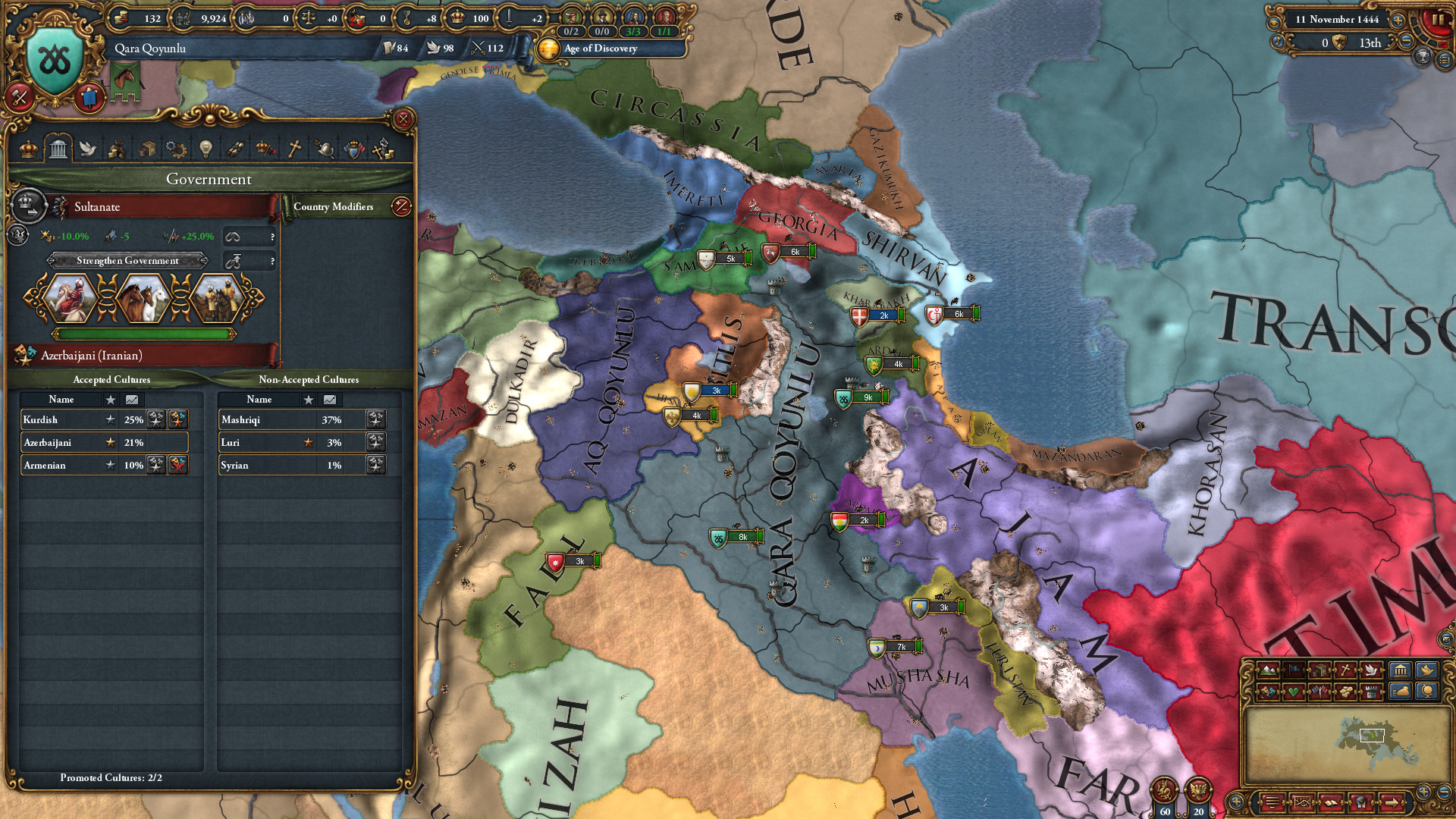
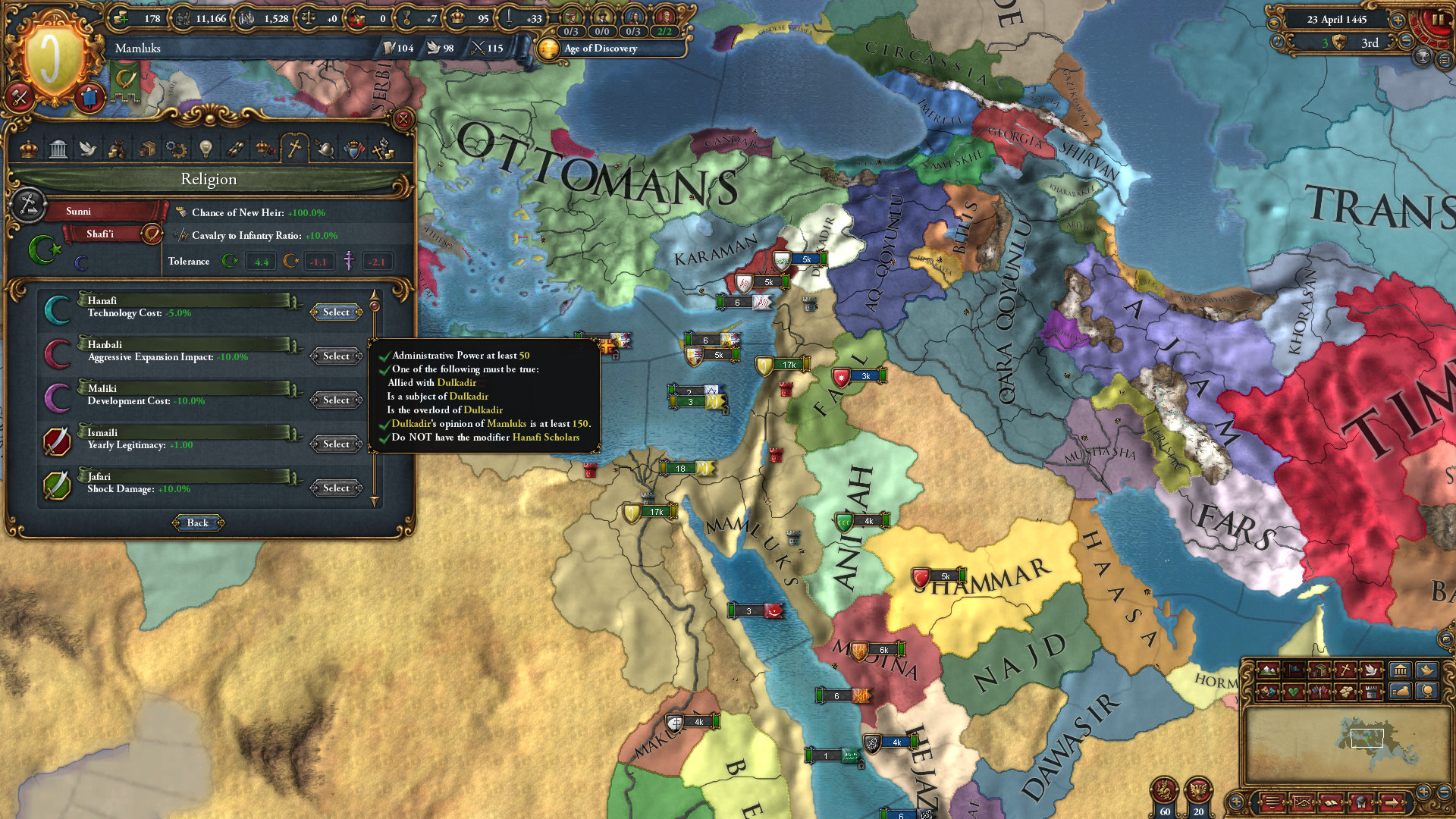
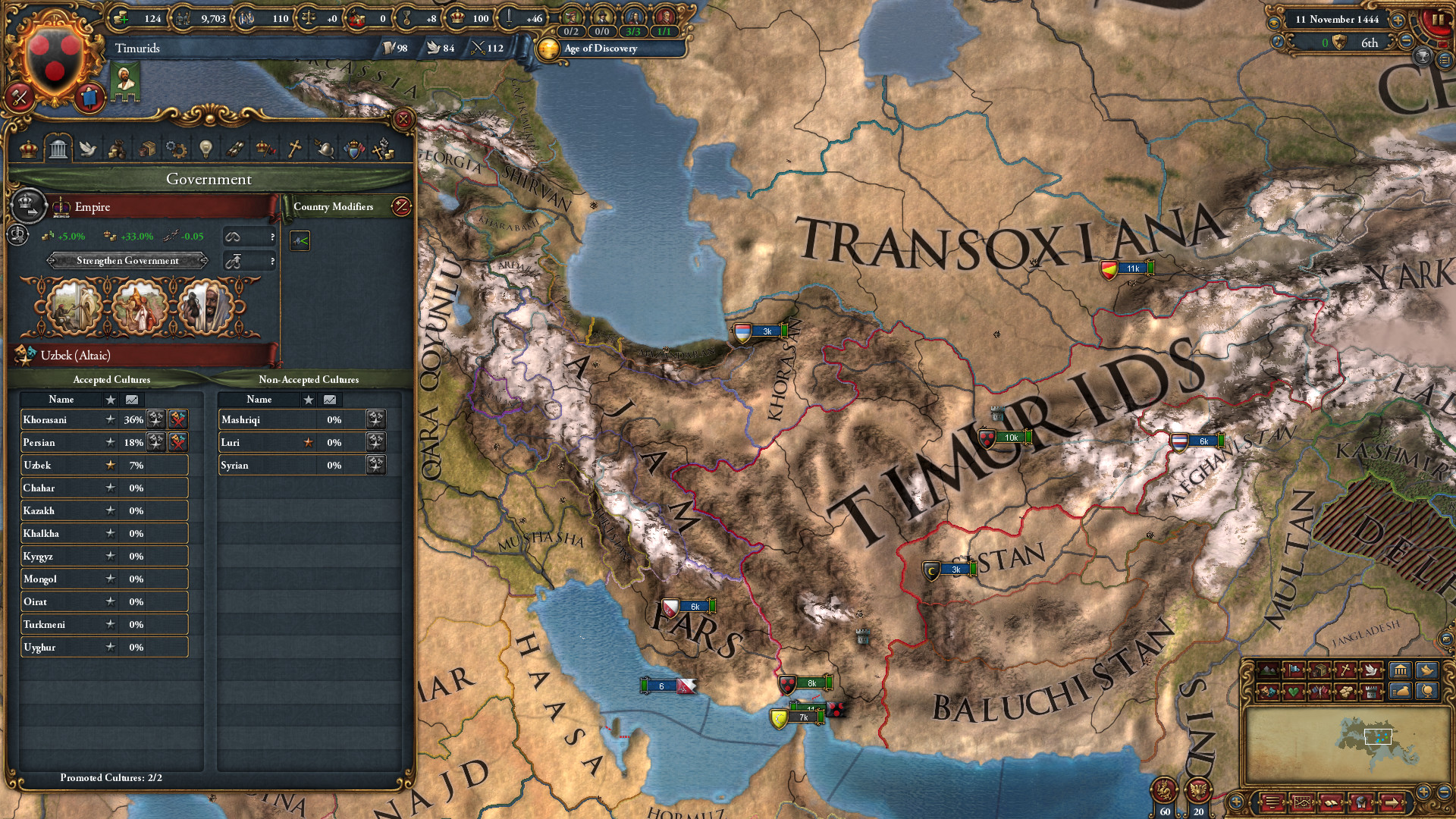
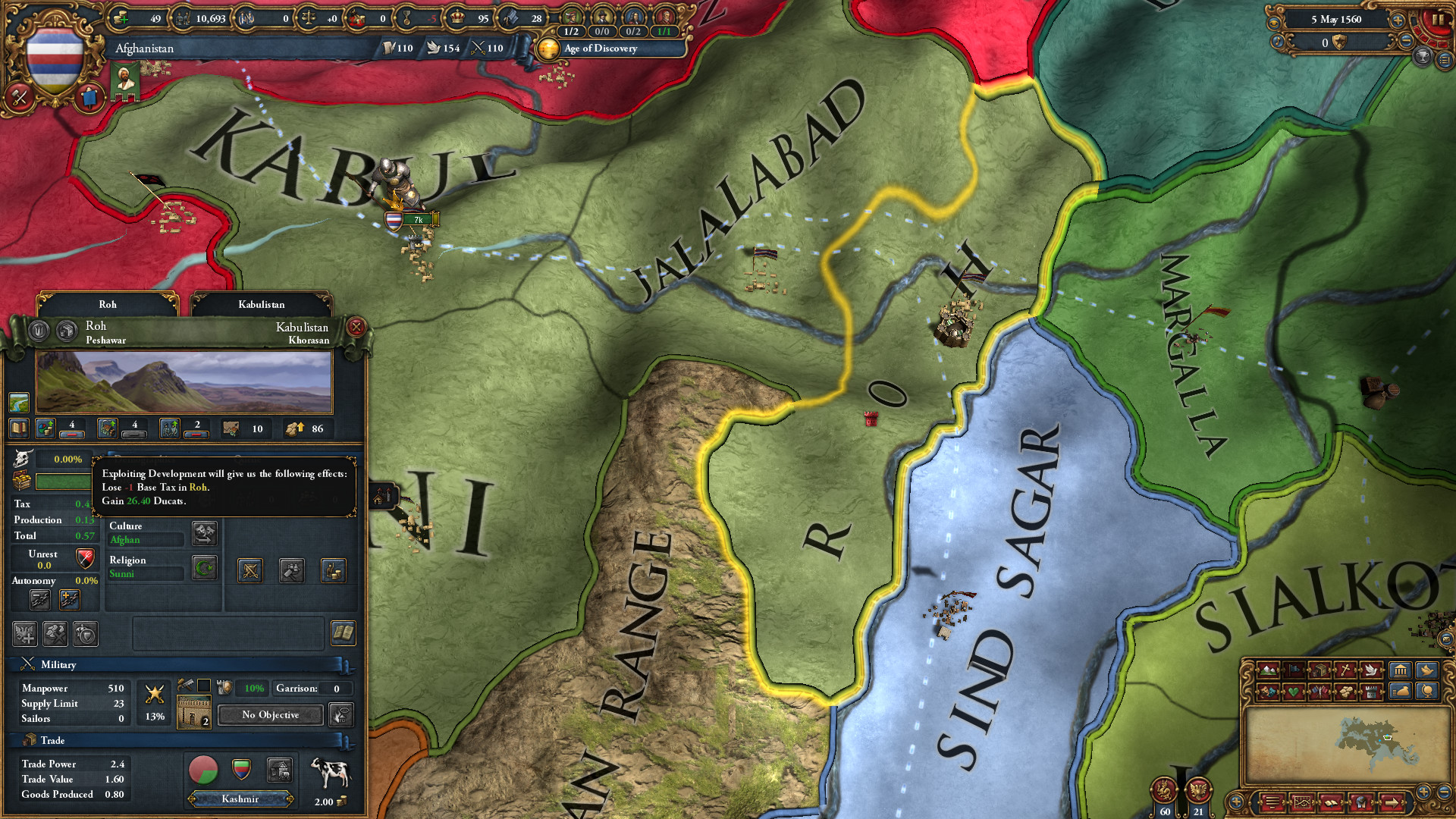
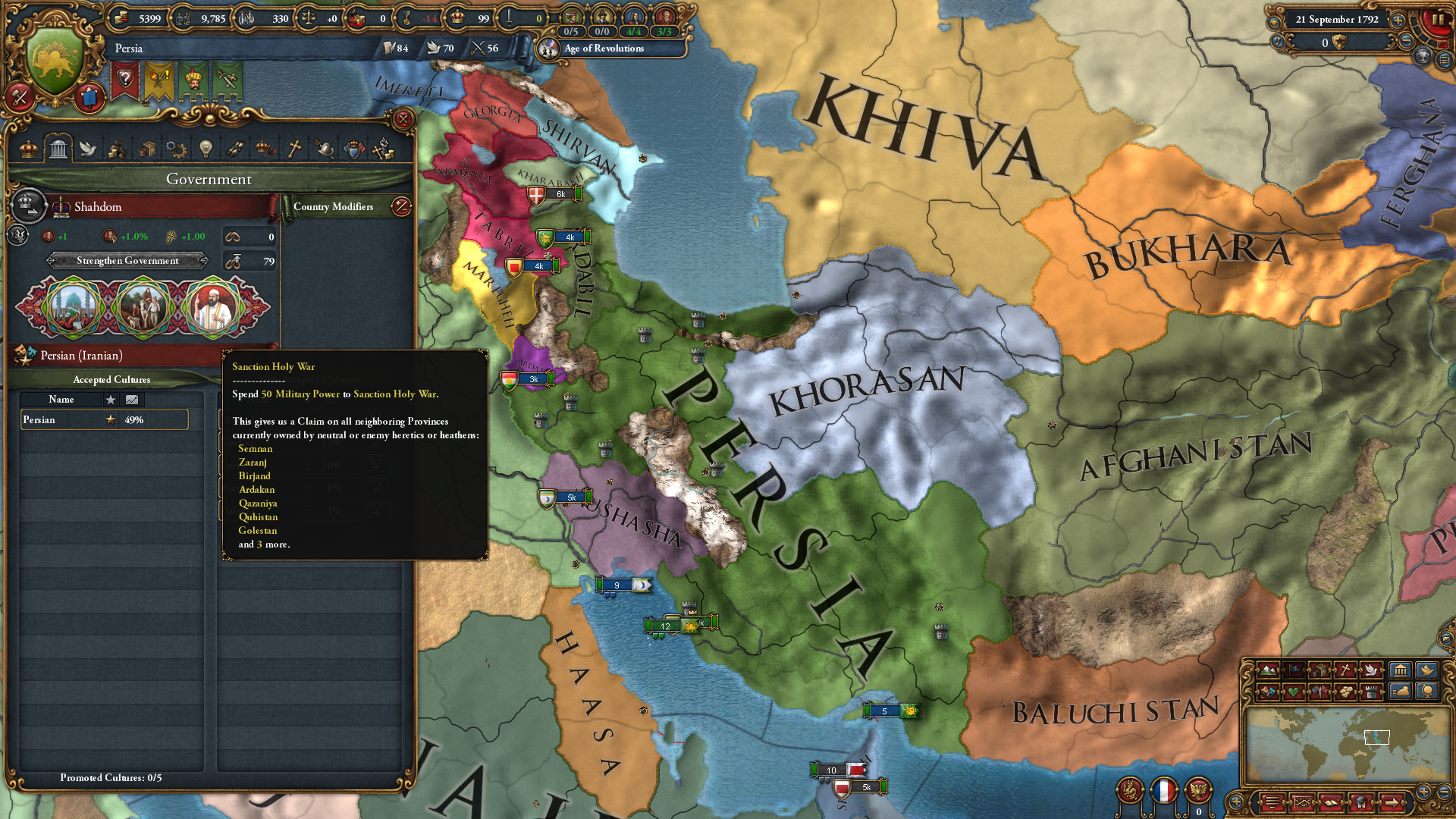
The map is the heart of the experience, and it carries a distinct parchment-inspired aesthetic that reflects the early modern period. Regions are color-coded in a way that makes political boundaries instantly readable, while terrain details like mountains, deserts, rivers, and coastlines subtly shape how the world feels as you zoom in and out. In the Cradle of Civilization expansion, the Middle East and surrounding regions gain added visual nuance, with more distinct cultural and regional identity reflected in how territories are presented on the map.
Lighting and visual effects are used sparingly but effectively. Day and night cycles shift the mood of the map without distracting from gameplay, while seasonal and weather effects gently reinforce the passage of time. Rather than overwhelming the player with constant motion, the visuals stay calm and functional, allowing focus to remain on decision-making while still maintaining a living world feel.
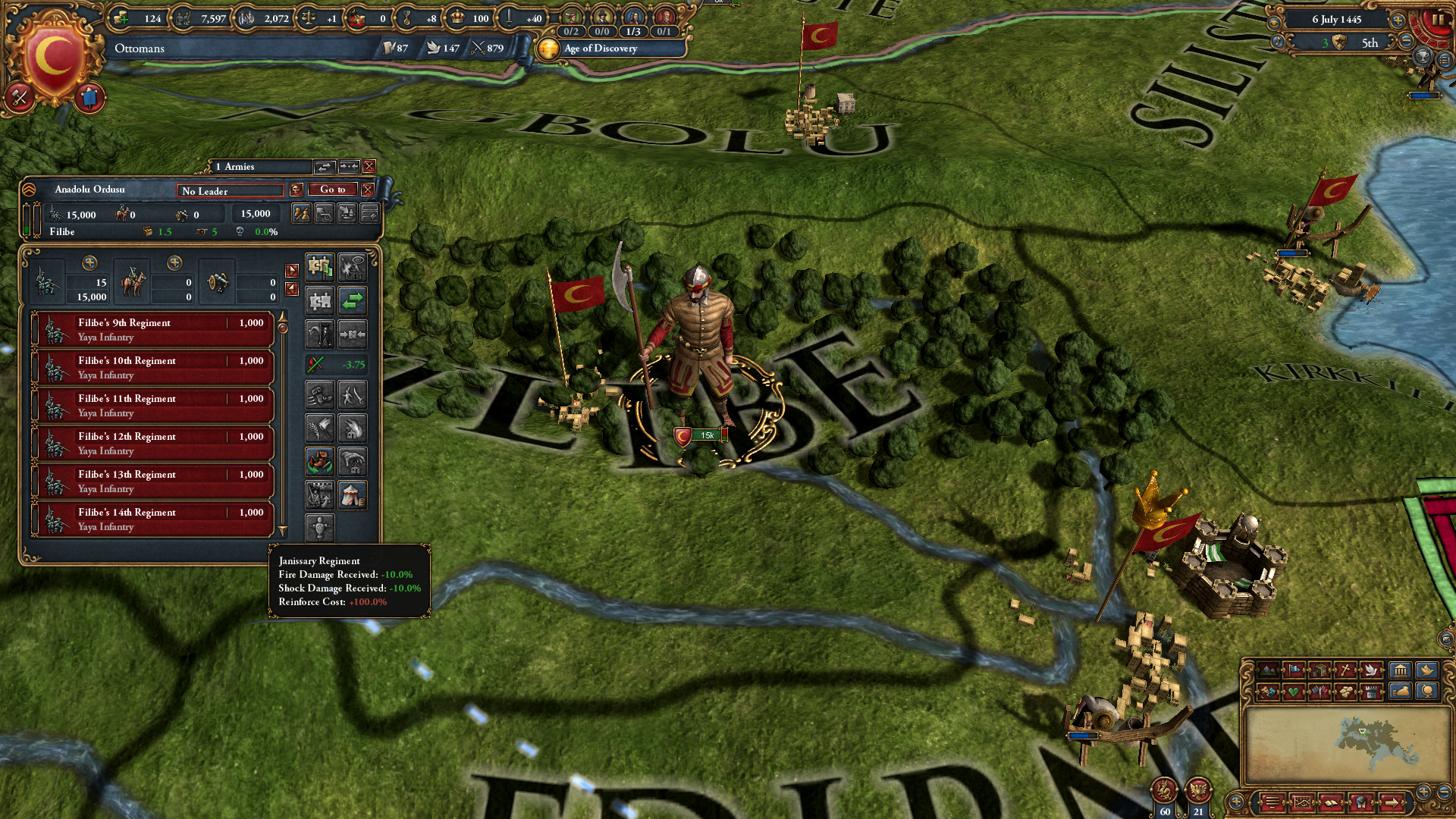
City and province representations evolve visually as nations develop, giving a subtle sense of progress over time. These changes are not flashy, but they create a quiet satisfaction as small settlements grow into influential centers of power. Army and naval units are represented with simple but recognizable models that prioritize readability during large-scale conflicts.
What makes the visual style stand out is its consistency with the game’s grand strategy identity. Everything is designed to support long-term thinking, where the map itself becomes a storytelling tool. Borders shifting, colors expanding or collapsing, and regions changing hands all communicate history in motion without the need for cinematic cutscenes.
The result is a visual experience that may appear minimal at first, but gradually reveals depth through clarity and detail. It supports immersion not by overwhelming the player, but by letting the world’s political and cultural changes speak through the map itself, making every campaign feel like a living historical record unfolding on screen.
Technical Requirements
Europa Universalis IV – Cradle of Civilization Collection DLC is available on PC through major storefronts, designed primarily for Windows-based systems, with support for Linux in the broader Europa Universalis IV environment. As a grand strategy title, it is optimized for long campaign sessions rather than high-end graphical performance, making it accessible to a wide range of systems.
On minimum settings, the game runs smoothly on older quad-core processors, 4 GB RAM, and integrated or entry-level dedicated graphics, provided the system can handle large-scale map processing and AI calculations. Recommended setups typically include a modern multi-core CPU, 8 GB RAM or more, and a mid-range GPU for improved late-game stability, faster turn processing, and smoother map interactions. While visuals are not GPU-intensive, performance is more closely tied to CPU strength due to the simulation-heavy nature of the game, especially in late-game scenarios where empires expand and calculations increase.
The DLC integrates seamlessly into the base Europa Universalis IV experience, meaning there are no separate platform restrictions or standalone launch requirements. Load times and performance scale well across hardware tiers, with SSD storage providing noticeably faster campaign loading and reduced in-game pauses during large world updates.
Controls are fully built around keyboard and mouse input, offering precise map navigation, quick menu access, and layered UI interactions suited for complex strategy management. Players can fully remap controls and adjust interface scaling, making it comfortable for both high-resolution monitors and smaller displays. While controller support is not the primary focus, the interface is designed to remain readable and navigable with minimal friction.
Accessibility options include adjustable UI scaling, customizable audio levels, and subtitle support for in-game notifications and events. Difficulty is inherently flexible, as players can choose nations with varying levels of challenge and adjust AI behavior settings to suit their preferred experience. Tooltips and guided information systems also help new players understand mechanics without overwhelming them.
Overall, Europa Universalis IV – Cradle of Civilization Collection DLC is optimized for long-term stability and strategic depth rather than graphical intensity. It runs reliably across a broad range of PCs while scaling up gracefully on stronger hardware, making it a dependable choice for both casual strategy players and dedicated grand strategy enthusiasts.
Who Is This Game For?
Europa Universalis IV – Cradle of Civilization Collection DLC is best suited for players who enjoy slow, thoughtful strategy games where patience and long-term planning matter more than quick reflexes. If you like managing complex systems, shaping nations over centuries, and watching a world evolve based on your decisions, this expansion fits naturally into that mindset. It appeals strongly to grand strategy fans, history enthusiasts, and players who enjoy simulation-style gameplay where outcomes emerge gradually rather than being scripted.
This is also a good match for players who appreciate deep single-player campaigns. You spend most of your time making political decisions, managing economies, negotiating alliances, and planning wars across a living world map. The Cradle of Civilization DLC adds extra depth for those who enjoy regional variety, especially if you are interested in the historical dynamics of the Middle East and surrounding empires. It rewards players who like learning systems over time and improving through experience rather than fast progression or immediate success.
Multiplayer strategy fans will also find value here, particularly those who enjoy unpredictable human-driven diplomacy. If you prefer competition that unfolds through negotiation, betrayal, and long-term planning instead of direct action combat, this game offers a very different kind of challenge compared to typical competitive titles.
However, this is not designed for players looking for fast-paced action, short sessions, or instant rewards. The learning curve can feel steep at first, and understanding the interconnected systems takes time. Players who prefer straightforward objectives or cinematic, story-driven experiences may find the pacing slower than expected.
That said, once the systems start to click, the experience becomes highly rewarding. Every campaign feels unique, and every decision carries long-term consequences that shape the direction of your nation. It is a game that values curiosity, experimentation, and strategic thinking.
In short, Europa Universalis IV – Cradle of Civilization Collection DLC is for players who enjoy deep strategy gameplay, historical simulation, and long-form progression where the satisfaction comes from seeing your choices reshape a world that never plays out the same way twice.
FAQ
What kind of game is Europa Universalis IV – Cradle of Civilization Collection DLC?
It is a grand strategy expansion for Europa Universalis IV, a historical simulation game where you manage a nation over several centuries. The focus is on diplomacy, warfare, economy, and political decision-making rather than direct character control or action gameplay.
Do I need the base game to play this DLC?
Yes, this is an expansion and requires Europa Universalis IV to run. It adds new systems, regional depth, and gameplay improvements to the main experience rather than functioning as a standalone game.
What does the gameplay feel like?
The experience is slow, strategic, and decision-heavy. You spend most of your time managing nations on a world map, planning long-term growth, forming alliances, and responding to changing global situations. The Cradle of Civilization content adds extra depth to military and regional systems, especially in the Middle East.
Is it single-player or multiplayer?
Both are supported. Single-player focuses on long historical campaigns against AI-controlled nations, while multiplayer allows you to compete or cooperate with other players in shared strategy sessions where diplomacy and rivalry feel more dynamic.
What platforms does it support?
It is available on PC, including Windows and Linux support through the broader Europa Universalis IV platform ecosystem. It is designed for keyboard and mouse control rather than consoles.
How demanding are the system requirements?
The game is not graphically heavy, so most modern and even older PCs can run it. Performance depends more on your CPU than GPU, especially in late-game stages when the world becomes more complex.
Is it beginner-friendly?
It can feel complex at first due to deep systems, but in-game tooltips and gradual learning make it manageable for new players who enjoy strategy games.
Does it have replay value?
Yes, extremely high. Every campaign unfolds differently based on the nation you choose and the decisions you make, offering long-term replayability for strategy fans.
FAQ
Operating System (OS)
Other Details

Languages

Reviews
There are no reviews yet.